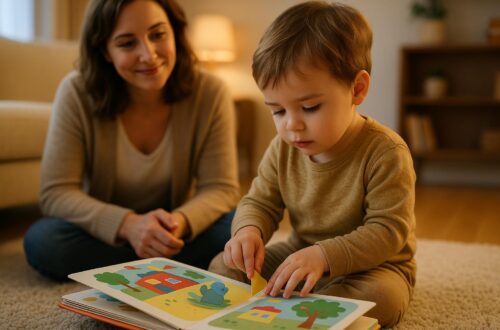
Play is more than just fun – it’s essential for memory growth in children. Research shows that play strengthens memory by building neural connections, supporting learning, and improving problem-solving skills. Different types of play, like pretend play, physical activities, and language games, uniquely contribute to memory development. Here’s what you need to know:
- Imaginative play (storytelling, role-playing) helps kids organize and recall information.
- Physical play improves spatial memory and motor skills.
- Language-based play (word games, rhyming) boosts verbal memory.
- Regular, varied play is key to consistent memory improvements.
Parents can integrate memory-building activities into daily routines with games like matching, storytelling, and treasure hunts. Even simple tasks like grocery shopping or cooking can be turned into memory challenges. These activities create richer, long-lasting memories by engaging multiple senses and brain regions.
Bottom line: Play supports memory and cognitive growth in ways traditional methods can’t. It’s a powerful tool for learning that fits naturally into everyday life.
VISUAL MEMORY CHALLENGE for Kids | Are you up for it? | Increase Concentration Through Play 🧠
Research Findings: How Play Improves Memory in Children
Recent studies shed light on how play significantly aids memory development in children. Research shows that play not only enhances working memory but also supports long-term retention. It plays a key role in memory consolidation by helping stabilize newly acquired information. By engaging multiple senses simultaneously, play creates richer and more durable memory connections.
Different Types of Play and Their Effects on Memory
The type of play a child engages in can have unique impacts on their cognitive abilities:
- Pretend play: Activities like role-playing improve episodic memory by helping children encode and recall actions and conversations.
- Block building: Games involving construction boost spatial awareness and memory.
- Rule-based games: These games strengthen working memory by requiring children to remember and apply specific rules.
- Musical and cooperative play: These forms of play integrate auditory processing with socio-emotional skills, enhancing memory in both areas.
For instance, construction activities such as building with LEGOs or solving puzzles improve visual-spatial memory by encouraging kids to remember patterns and spatial relationships. Meanwhile, dramatic play, like storytelling, helps children develop narrative memory structures, enabling them to better organize and recall sequences of complex information.
How Neural Plasticity Supports Play-Based Learning
The cognitive benefits of play are deeply connected to neural plasticity – the brain’s ability to adapt and form new connections. Play encourages collaboration between different brain regions, creating more interconnected memory networks. Alternating between active play and quieter moments creates the ideal environment for memory consolidation. Research also highlights how play fosters a low-stress, engaging atmosphere that promotes neural adaptability and strengthens memory retention.
The Brain Science Behind Play: Why It Works
Research has long linked play to brain adaptability, and now we understand why it’s so effective. Play creates the perfect environment for learning and memory by engaging multiple areas of the brain at once. These changes in brain chemistry and neural activity explain the incredible cognitive benefits that play offers.
When the brain is at play, it reacts very differently compared to traditional learning settings. Stress hormones like cortisol drop, while dopamine and endorphins – chemicals that boost mood and motivation – rise. This chemical balance makes it easier for the brain to form new memories and strengthen existing ones. In this relaxed, focused state, the hippocampus, the brain’s memory hub, operates at its best.
Cognitive Benefits of Hands-On Play
Hands-on play sparks unique brain activity patterns that are key to building memory. Activities like manipulating objects, constructing things, or physical play engage multiple brain regions at once, including the prefrontal cortex (which handles working memory and attention), the motor cortex, and the somatosensory cortex. This interaction between different areas creates what’s known as embodied learning, where physical actions reinforce mental processes.
The tactile feedback from these activities creates multi-sensory memories – memories that involve multiple senses and are therefore easier to recall. This is why kids often retain lessons learned through hands-on activities better than those taught through lectures or written exercises.
Additionally, the repetitive nature of hands-on play strengthens the brain’s neural connections over time, laying the groundwork for the executive function skills that are vital throughout life.
Language-Based Play and Memory Development
Language-based play, such as storytelling, role-playing, or word games, taps into different brain pathways to support memory. These activities activate Broca’s and Wernicke’s areas, the brain’s main language centers, which work with the hippocampus to store verbal information. Storytelling, in particular, takes advantage of the brain’s natural ability to organize and remember sequences of events.
During these activities, the temporal lobe – responsible for processing sequences – becomes highly active, leading to strong episodic memories. These are memories tied to specific experiences, making them easier for children to recall and build upon.
Repetition is another key factor in language-based play. Activities like singing songs, repeating chants, or revisiting story elements strengthen memory through spaced repetition. Each repetition reinforces the neural pathways, making the information more permanent over time.
Role-playing adds an emotional and social layer to memory formation. When kids act out stories or characters, the limbic system (which processes emotions) works alongside language centers. This emotional involvement triggers the release of neurotransmitters that enhance memory. That’s why children often have vivid memories of the stories and characters they’ve brought to life during play.
The social interactions in language-based play also activate mirror neurons, which fire in response to others’ actions and words. These neurons help children absorb and remember social behaviors, emotional cues, and communication patterns, embedding them into long-term memory.
sbb-itb-e558fb0
Practical Play Activities to Improve Memory
Now that we’ve looked at how play impacts the brain, let’s dive into some specific activities parents can use to help their children develop stronger memory skills. These activities stimulate the brain’s neural pathways, promoting memory growth in fun and engaging ways.
Memory-Building Play Activities
Matching and sequencing games are fantastic for activating the brain’s pattern recognition abilities. For younger kids, simple card-matching games are perfect. Older children can tackle more complex challenges, like recreating sequences using colored blocks or everyday items. Start small – perhaps with three items – and gradually increase the difficulty as your child’s memory sharpens.
Story chain games are a creative way to strengthen memory. One person begins with a single sentence, and each participant adds their own sentence while repeating the story from the start. This game not only enhances working memory but also improves sequential thinking, all while encouraging imaginative storytelling.
"What’s Missing?" games are excellent for improving visual memory and attention. Lay out several objects on a table, give your child half a minute to study them, and then have them close their eyes while you remove one item. When they open their eyes, they’ll need to figure out what’s missing. This taps into the visual cortex and hippocampus, creating lasting memory connections.
Treasure hunts combine movement with memory-building. Create a series of clues that lead to hidden treasures, each clue building on the one before it. This activity engages spatial memory and executive function, while the physical movement adds an extra boost to brain health.
Rhythm and pattern games with clapping, drumming, or musical instruments help develop auditory memory and temporal sequencing. Start with simple two-beat patterns and gradually add complexity. Repeating these patterns strengthens memory pathways, much like how catchy songs stick with us.
Role-playing scenarios are another fun way to boost memory. Whether it’s pretending to be a chef, acting out a favorite story, or creating entirely new characters, these activities encourage kids to remember details like character traits, storylines, or game rules. This taps into episodic memory while also engaging their emotions and creativity.
These activities are easy to incorporate into everyday life, making memory-building a natural part of your child’s routine.
How to Add Play to Daily Routines
The best memory-building happens when play is seamlessly integrated into daily life. Here are some simple ways to make it happen:
Morning routines can double as memory games. Turn tasks like brushing teeth and getting dressed into a sequence your child has to remember and complete without reminders.
Grocery shopping is another opportunity. Have your child help create and memorize a shopping list. Start small, with two or three items, and gradually increase the number. Navigating the store adds an extra layer of memory practice.
Cooking together is a rich sensory experience that supports memory. Let your child measure ingredients, recall recipe steps, or even help with family recipes. The combination of touch, sequential tasks, and multi-sensory input makes these memories stick.
Car rides are perfect for memory-based games that require no materials. Play “I Spy” with a twist, where your child has to remember multiple items. You can also create story chains or practice recalling landmarks during longer trips.
Bedtime routines are an ideal time for gentle memory activities. Ask your child to recall three things they enjoyed that day, retell their favorite story in their own words, or remember the steps of their bedtime routine. The calm, relaxed state before sleep is great for memory consolidation.
Household chores can also become memory challenges. Have your child remember which cleaning supplies go where, recall multi-step instructions, or complete tasks without reminders. This strengthens both working memory and executive function skills.
Short, consistent sessions work best. Even five minutes of focused memory play can make a difference when done regularly.
Tailoring these activities to your child’s age ensures they stay fun and challenging. For younger kids (2-4), focus on simple matching and sequencing. School-age children (5-8) can handle multi-step tasks, while older kids (9-12) can tackle abstract concepts and longer sequences that push their memory to the next level.
How Brilliant Parenting Supports Play-Based Learning
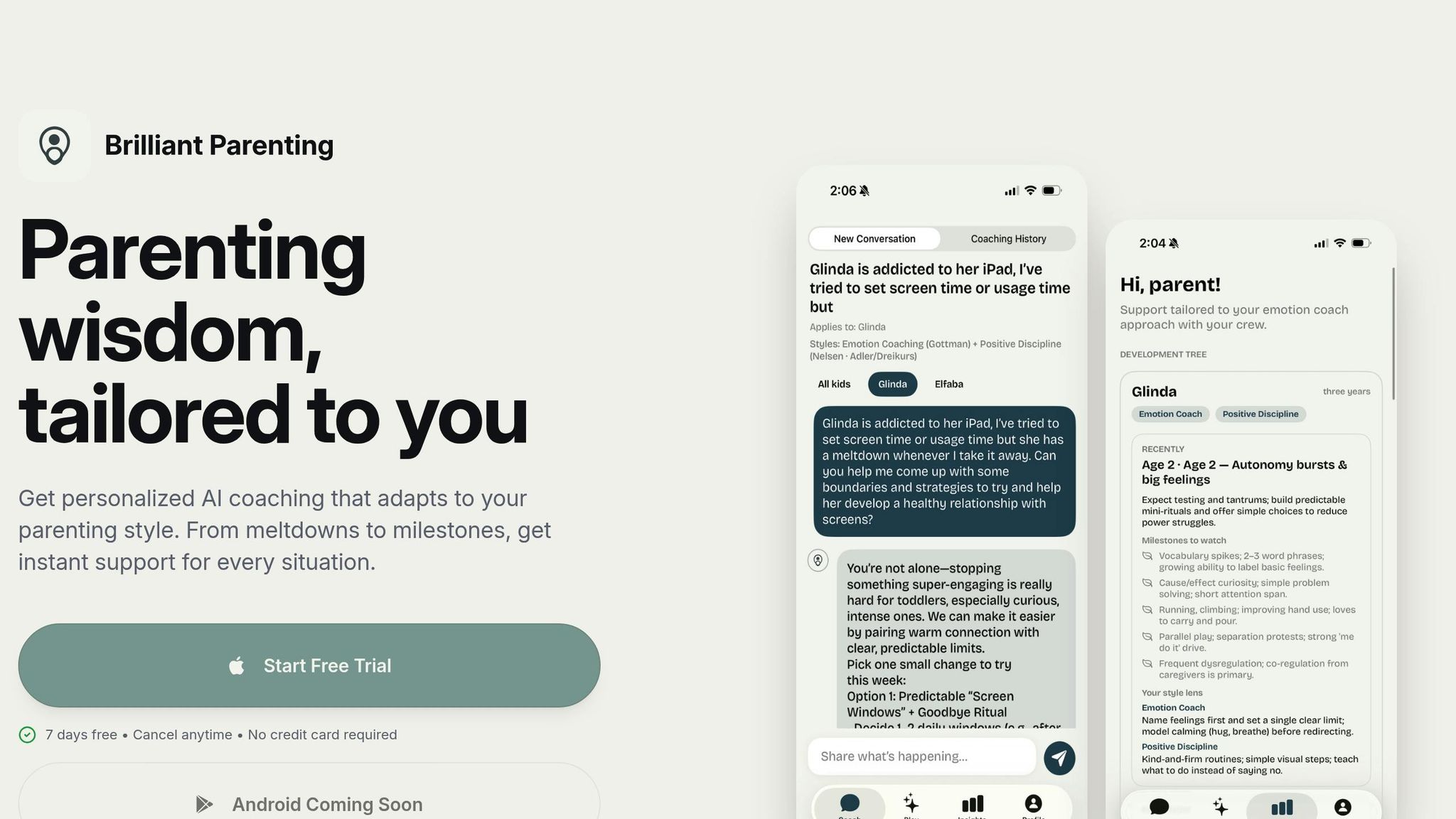
Brilliant Parenting is designed to help parents seamlessly incorporate memory-boosting play into everyday life. With its AI-powered coaching, it tailors strategies to fit both your parenting style and your child’s unique developmental needs.
This approach takes research-backed play strategies and turns them into practical, easy-to-follow guidance for parents.
Personalized Coaching for Play-Based Learning
The program starts with an onboarding quiz that pinpoints your parenting style – whether you’re drawn to gentle parenting, positive discipline, or another evidence-based method. Using your quiz results, the platform crafts play recommendations tailored to your child’s age, developmental stage, and individual interests. It provides 24/7 guidance, along with practical scripts, to help you weave memory-enhancing activities into your daily routines. These scripts and strategies make it easier to create playful, engaging moments that actively support your child’s memory development.
Development Tracking and Practical Tools
Brilliant Parenting also tracks your child’s progress while offering a library of memory-building activities, neatly categorized by age and skill level. If you have more than one child, the platform provides multi-child support, ensuring recommendations and progress tracking are customized for each child. This research-driven approach reassures parents that their playtime efforts are making a meaningful impact on their child’s cognitive development.
Conclusion: Play as a Foundation for Memory Development
Play isn’t just about having fun – it’s a cornerstone for developing strong memory skills. Activities like imaginative storytelling and hands-on games actively strengthen the brain’s learning and retention pathways.
Play-based learning taps into a child’s natural curiosity, creating experiences that are both engaging and memorable. Whether it’s pretend play that fosters narrative memory or physical activities that sharpen spatial awareness, every playful moment contributes to cognitive growth in ways traditional methods often can’t.
Beyond bonding, play builds brains. Simple activities – like storytelling games, memory-matching tasks, or even structured daily routines – can become powerful tools for enhancing memory when approached thoughtfully. The evidence is clear: play is much more than leisure; it’s a key to unlocking learning potential.
FAQs
What are some practical ways for parents to include play-based activities that support memory development in their child’s daily routine?
Parents can help strengthen their child’s memory through playful and engaging activities woven into daily routines. For instance, toys like building blocks, puzzles, and memory card games can turn learning into a fun experience while sharpening cognitive abilities. Storytelling is another wonderful tool – encourage your child to retell stories or craft their own, which helps improve recall and creativity.
Spending time outdoors offers even more opportunities. Scavenger hunts or walks along nature trails can spark curiosity and enhance memory skills, all while keeping kids active. Striking a balance is key – reducing screen time and encouraging unstructured, imaginative play can provide the space children need to explore and grow. These small, intentional efforts can have a lasting impact on their development.
What types of play are most effective for improving memory in children?
Certain kinds of play can be especially helpful in boosting memory development in children. Strategy games like Go, Battleship, or Clue challenge kids to think critically, plan their moves, and recall past actions, all of which help sharpen their memory. For younger children, activities like memory games or songs with motions are particularly effective. These encourage toddlers to remember patterns and mimic actions, laying the groundwork for stronger cognitive skills.
Adding these fun activities to everyday routines not only helps improve memory but also makes learning an enjoyable experience for kids.
How does play-based learning help with memory development compared to traditional teaching methods?
Play-based learning boosts memory development by allowing children to explore, imagine, and solve problems through hands-on activities. This method naturally strengthens cognitive skills while making the learning process enjoyable and engaging.
On the other hand, traditional teaching methods often focus on structured lessons and memorization, which can limit opportunities for creativity and critical thinking. Research indicates that play-based learning is often more effective at enhancing long-term memory, problem-solving skills, and fostering a lasting passion for learning.