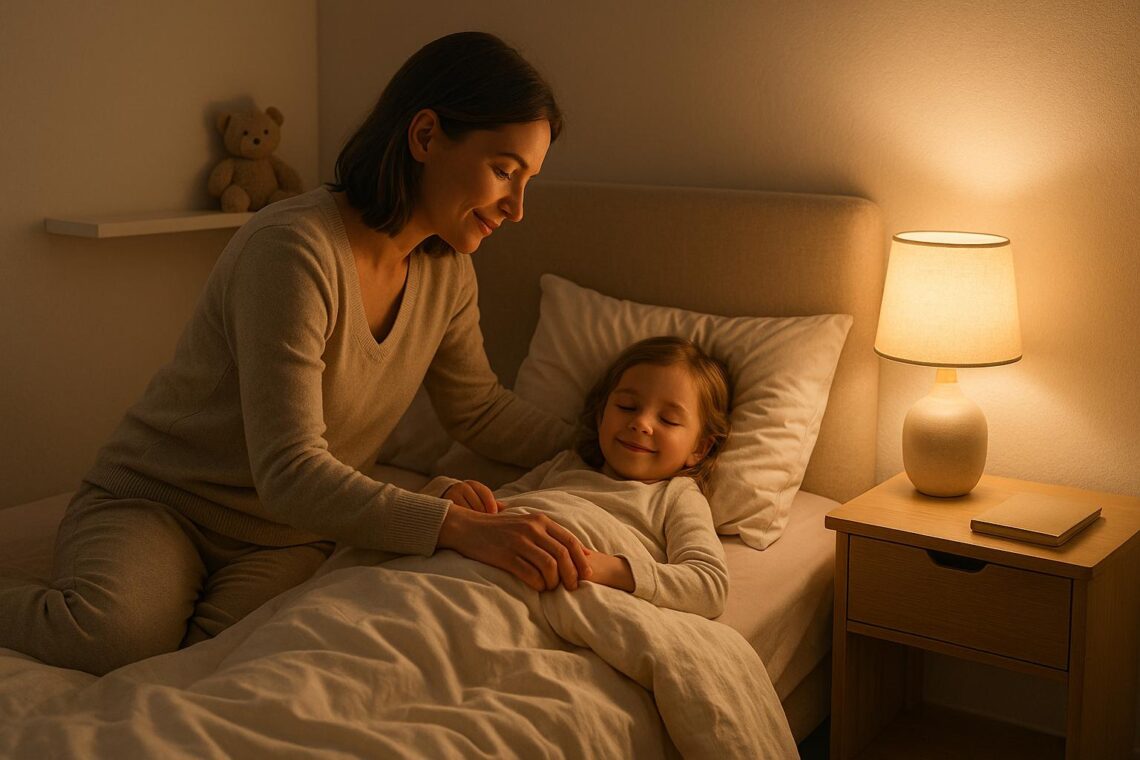
Creating a bedtime routine helps children transition from a busy day to restful sleep. It reduces anxiety, supports better sleep quality, and fosters a sense of security. Here’s a quick summary of the 8 steps to build a calming nighttime routine:
- Set a consistent bedtime: Stick to the same time daily, even on weekends, to regulate sleep patterns.
- Start with calming activities: Quiet games, reading, or soft music help wind down before bed.
- Bath time and personal care: A warm bath, brushing teeth, and choosing pajamas signal it’s time to relax.
- Prepare the sleep environment: Keep the room cool, dark, and quiet with minimal distractions.
- Eliminate screens and stimulants: Turn off devices an hour before bed and avoid caffeine or sugary snacks.
- Use bedtime charts: Visual schedules help kids follow routines independently.
- Spend quality time together: Share a story, light conversation, or gentle cuddles to create a sense of closeness.
- Give positive feedback: Praise their efforts and use small rewards to encourage consistency.
These steps provide structure, reduce bedtime battles, and promote healthy sleep habits. Tools like white noise machines, heavy blankets, and nightlights can enhance the bedtime experience. For personalized support, apps like Smart Parenting offer tailored advice and growth tracking for smoother nights.
DIY Bedtime routine chart for kids | Kids daily responsibility chart | Bedtime flip chart
8 Steps for a Calm Sleep Time
Making a sleep plan that fits all can take some work, but these eight steps will lead to easier nights. Each step works with the ones before, pushing us all to a good night’s sleep.
1. Set a Set Bedtime
Pick a set sleep time and keep to it each night. For the little ones, aim for 7:00–7:30 PM. Kids in school do best with an 8:00–8:30 PM sleep time, while teens should try for 9:00–10:00 PM to get enough sleep before school.
A set bedtime helps make melatonin, which tells us it’s time to sleep. Stay the same, even on weekends. Try to stay within 30 minutes of your weeknight time. Big changes can mess up Mondays and the rest of your week.
2. Start with Calm Things
An hour before bed, focus on calm, soft things. Reading together is great because it keeps you close but is not too exciting. Pick calm books over wild tales that might keep the kids up.
Other soft activities are big puzzles, drawing, or quiet games with toys. Soft songs or calm tunes are good too, telling you bedtime is close.
The point is to pick things that won’t make your kid too lively.
3. Have Bath Time and Personal Care
A warm bath can tell your body it’s time to slow down. Keep the water at about 98–100°F and keep it short, about 10–15 minutes.
After that, go through personal care: brush teeth, put on sleep clothes, and use the bathroom. Make it slow and easy. Let your kid choose things like which pajamas to wear. This gives them some power and helps them go along.
4. Get the Sleep Area Ready
Make the room right for sleeping. Keep it cool, dark, and quiet, with a temp of 65–70°F.
Use heavy curtains or blinds to stop light from coming in, helping melatonin work. If your child doesn’t like full dark, use a small nightlight that’s red or orange, as these colors mess up sleep less than blue or white light.
For sounds, a white noise device can help. It makes a soft, steady noise that hides other sounds, helping kids sleep and stay asleep. Keep it far from the bed.
5. Cut Off Screens and Stimulants
Turn off all screens at least one hour before bed. This means tablets, phones, and TVs. Blue light from these can keep the brain awake, making it hard to calm down.
Also, stay away from night-time caffeine, like chocolate, and other things that keep you up. Make a spot outside the bedroom to charge devices, keeping screens far. This aids in forming good habits for everyone at home.
6. Use Picture Lists or "To-Do" Charts
A bedtime chart can help kids do their routine alone. For little ones, use images or drawings for each part – like bath time, PJs, brushing teeth, and story time. Older kids might like a list they can check off.
Magnet boards are good too, letting kids move parts as they do each thing. This makes them feel proud and cuts down on how much parents must remind them. Put the board where they can see it well in the bedroom or bathroom, and let them help make it. When they feel it’s theirs, they are more likely to keep at it.
7. Give Comfort and Time Together
Spend 10-15 minutes just with your child before bed. This could be reading, talking about their day, or just being close. This time makes them feel safe and loved as they get ready for sleep.
Keep talks light and happy. Don’t dig into worries or tomorrow’s tasks. Focus on good things from the day or what you’re thankful for. A gentle back rub or playing with their hair might also help them relax.
8. Give Praise
Tell your child they did well with their bedtime steps, and think about a reward chart, like stickers, for more drive. Say stuff like, “Great job brushing your teeth tonight!” or “I’m proud you got ready for bed by yourself.”
A sticker chart can lead to small prizes, like picking what to eat for breakfast or a weekend movie. Keep prizes easy and small to avoid too-high hopes.
Don’t use punishments or argue at bedtime. If your child fights it, stay cool and help them get back on track. Remember, making new habits takes time – kids often need about 3-4 weeks to get used to a new bedtime routine.
The big aim is to make your child feel sure and calm at bedtime. When the routine is safe and known, they’ll get better at falling asleep on their own.
Tools and Tips for Good Night Sleep
Having the right tools makes bedtime calm and helps your kid feel safe. If you pick products with care, they can change bedtime from hard to easy. Here are some tips to add to your night plan.
Good Gear for Better Sleep
White noise tools, which make a soft, steady sound, block out loud noise. Put the tool not too close and keep the sound low for comfort.
Heavy blankets make a light push that can calm your kid. A good idea is to pick a blanket that’s about 10% of your kid’s weight. Only older kids who can move it on their own should use it.
Night storybooks with calm tales are a great sign that it’s time to rest. Find books with soft pictures and gentle stories, steer clear of wild plots.
Picture schedule boards guide kids with their bedtime steps. Use boards that you can wipe and write on again for kids to mark what they’ve done. Hang it where they can see and reach it, like their room or hall.
Dark curtains or blinds keep out light that might mess with your kid’s sleep time. If full dark is too much, put in a soft night light that won’t mess up their sleep.
Essential oil kits with smells like lavender can make the room feel calm. Just be sure the oils and tool are safe for your kid’s age and place.
These items set up a calm sleep spot, but tech too can help it be even smoother.
How Smart Parenting Helps

Smart Parenting is a cool app made to shape your bedtime plan with great advice. It gets to know your way of guiding and lines up sleep plans with your family’s needs and aims.
It gives custom bedtime help with the right things to say if your kid doesn’t want to sleep or asks for more stories. This help changes as your kid grows to stay useful.
The app’s growth watching option lets you check if your kid’s sleep issues are normal for their age or if changes are needed. It gives tips on right sleep times and advice as your kid learns new things.
For families with more than one kid, the help for all kids option gives advice for each kid’s needs. Whether you’re handling a small one or an older kid, the app gives help made just for them.
Smart Parenting also has help all the time, so you can get aid whenever you need it – whether it’s when you start the night plan or if your kid wakes up at night.
Also, the app has a play ideas library packed with calm games ideal for quiet time before sleep. These ideas match your kid’s likes and how much energy they have, making bedtime easier.
With tips based on kid growth studies and proven sleep facts, Brilliant Parenting gives solid, useful help to make a steady and good bedtime plan.
sbb-itb-e558fb0
Common Bedtime Problems and Solutions
Bedtime struggles can throw off sleep schedules for both kids and parents. Studies highlight that having a consistent bedtime routine creates a sense of security and comfort for children.
Even during stressful times or major changes, sticking to this routine is key. It helps reduce anxiety, encourages positive habits, and addresses common issues like bedtime resistance or nighttime fears. By maintaining these practices, you can make the nightly transition to sleep much easier for everyone.
Building Healthy Sleep Habits for Life
Creating a bedtime routine is an investment in lifelong healthy sleep habits. These eight steps can adapt as your family’s needs change over time.
Consistency is at the heart of any successful routine, but a little flexibility helps keep things running smoothly as your child grows. Sleep requirements shift significantly with age – newborns typically need 14–17 hours of sleep, while school-age children thrive on about 9–11 hours.
For toddlers, offering simple choices like picking between two pairs of pajamas can make bedtime feel empowering. School-age kids, on the other hand, can take on responsibilities such as brushing their teeth or tidying up their space. As teens begin to seek more independence, open conversations can help them stay consistent with their sleep habits. Visual tools, like bedtime charts, can also encourage kids to manage their routines on their own, boosting their confidence and sense of responsibility.
Using visual schedules and bedtime charts is especially effective. These tools help children follow their routines step by step, promoting independence while giving them a sense of accomplishment.
When life throws transitions your way – like starting school or moving to a new home – introduce changes gradually. Focus on one adjustment at a time to make the process smoother.
The comforting rituals, calming activities, and regular bedtime you establish now create a solid base for tackling future sleep challenges. Whether it’s a beloved stuffed animal for a toddler dealing with separation anxiety or setting screen-time boundaries for a teenager, these practices evolve into long-term habits for healthy sleep.
FAQs
How can I help my child adjust to a new bedtime routine without resistance?
To help your child settle into a new bedtime routine, it’s best to make changes gradually and stick to a predictable schedule. Start winding things down about 30 minutes before bedtime with calming activities, such as reading a story together or playing soft, relaxing music. It’s also a good idea to avoid screens for at least an hour before bed, as the blue light can disrupt their ability to fall asleep.
A visual timer can be a helpful tool to signal the shift from playtime to bedtime, giving your child a clear sense of what’s coming next. Remember to be patient and set a good example by following healthy sleep habits yourself – kids often take cues from their parents. With consistency and a calming bedtime environment, the adjustment process will become easier over time.
What are some calming activities to help children relax before bedtime?
To help children settle down before bedtime, consider adding calming activities to their evening routine. Reading a beloved story, playing soft, soothing music, or giving them a warm bath can work wonders. Gentle yoga stretches or simply spending quiet time in a dimly lit room can also create a peaceful environment. These small rituals signal to your child that it’s time to unwind and get ready for a restful night’s sleep.
How can bedtime charts help my child build independence with their nightly routine?
Bedtime charts can be a fantastic tool to help your child take charge of their nightly routine. By laying out each step visually – like brushing their teeth or slipping into pajamas – kids can follow along with ease, checking off tasks as they go. This not only builds their confidence but also makes the entire process feel more approachable and even enjoyable.
To keep things fun, try using bright, colorful designs or incorporate stickers as rewards for completing tasks. Over time, this simple approach can bring more consistency to bedtime, ease those nightly struggles, and help your child develop a stronger sense of responsibility.