Parenting in 2025 presents unique challenges, from managing screen time to addressing childhood anxiety. This guide highlights 21 highly-rated parenting books designed to help you navigate these issues with practical, science-backed strategies. Here’s a quick breakdown:
- Digital Age Parenting: Books like Brilliant Parenting leverage AI tools for tailored advice.
- Emotional Intelligence: Titles such as All Feelings Welcome and Tiny Humans, Big Emotions focus on understanding and guiding kids’ emotions.
- Mindful Approaches: Raising Good Humans and How to Stop Losing Your Sh*t with Your Kids emphasize mindfulness for parents.
- Discipline Without Punishment: No-Drama Discipline and No Bad Kids offer non-punitive methods to guide behavior.
- Mental Health Focus: The Anxious Generation and Raising a Secure Child address rising childhood anxiety and depression.
- Sibling Dynamics: Siblings Without Rivalry helps manage sibling conflicts effectively.
- Parent Reflection: Parenting from the Inside Out encourages self-awareness to improve parenting.
- Communication Skills: How to Talk So Kids Will Listen and How to Talk So Little Kids Will Listen provide scripts for better parent-child interactions.
Whether you’re parenting toddlers, tweens, or teens, these books offer actionable insights to build stronger connections and address modern parenting challenges.
5 Life-changing books Moms MUST READ in 2025
1. Brilliant Parenting: AI-Assisted Parenting Tools
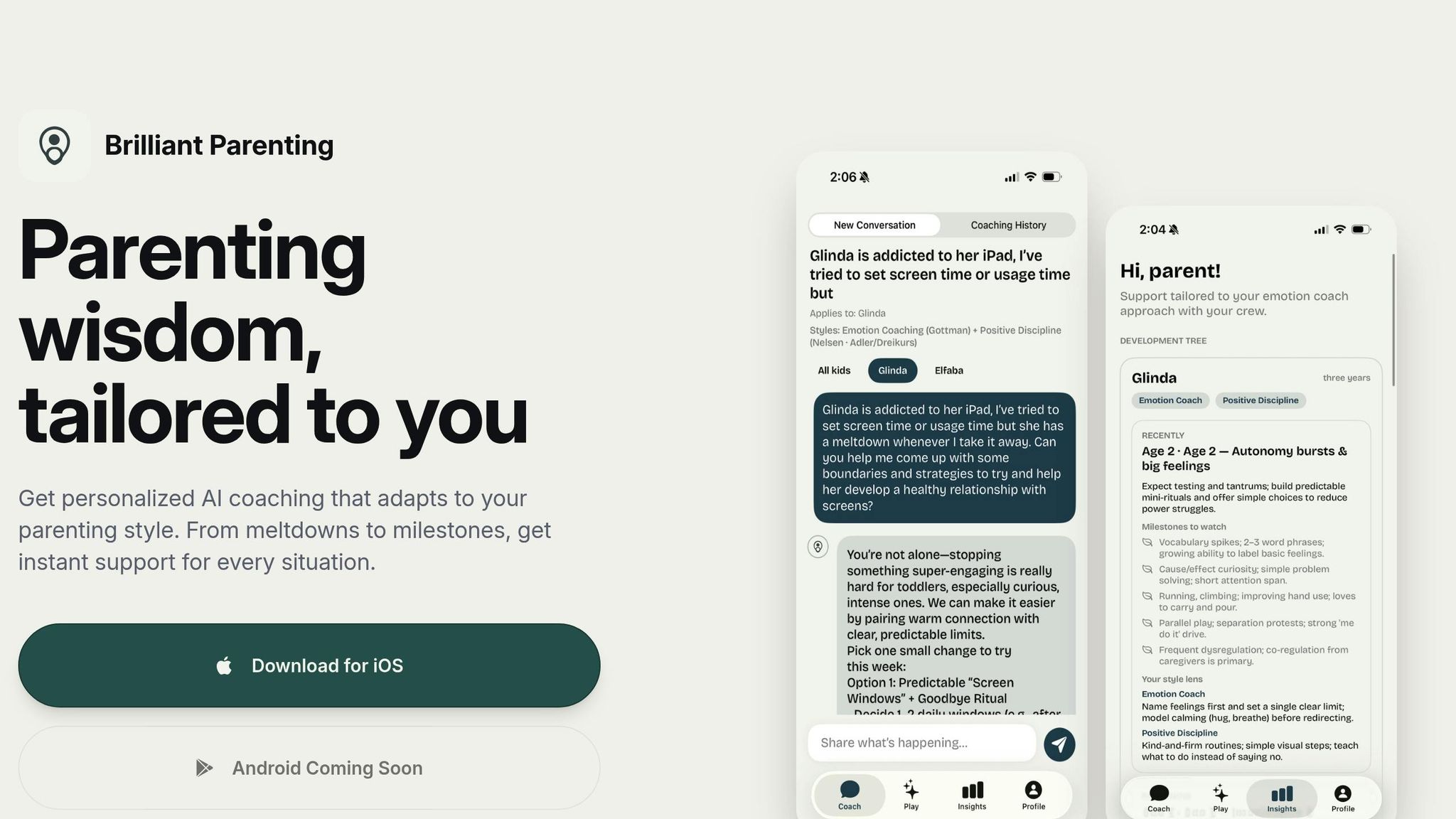
Parenting in the digital age comes with its own set of challenges, and AI-powered tools are stepping in to make things a little easier. One standout option is Brilliant Parenting, a platform designed to provide personalized support tailored to your family’s unique needs.
This platform offers round-the-clock coaching based on seven research-backed parenting styles. Instead of cookie-cutter advice, it delivers practical, actionable solutions for real-life situations. For example, you’ll get ready-to-use scripts for tricky conversations and age-appropriate responses to everyday challenges. Need ideas to keep your kids engaged? The platform’s play ideas library is packed with interactive, educational activities that can help reduce screen time and encourage meaningful bonding moments.
What sets Brilliant Parenting apart is its focus on tracking progress. Rather than comparing your child to standard benchmarks, the platform allows you to monitor personal milestones, giving you a clearer picture of their development. If you’ve got more than one child, the multi-child support feature ensures that each child’s needs are addressed while also helping you navigate sibling dynamics.
Brilliant Parenting is grounded in solid child development research, offering strategies you can trust. The onboarding process even includes a quiz to identify your natural parenting style, so the guidance feels genuine and fits seamlessly into your daily life.
Curious to see how it works? You can try it out with a 7-day free trial and experience personalized AI coaching firsthand.
2. All Feelings Welcome
Picture this: your child has a meltdown in the middle of a store or bursts into tears over a toy that broke. In moments like these, it’s tempting to wish those big emotions would just disappear. But All Feelings Welcome flips that script, showing parents how to embrace every emotion – even the tough ones – as a chance to connect and grow.
This book, created by Slumberkins, introduces the "Connect-to-Grow" framework. It’s a practical approach that helps parents guide their kids through recognizing, naming, and accepting emotions. Instead of brushing off feelings like anger, frustration, or sadness, the framework encourages parents to see these situations as opportunities to teach and bond. It’s grounded in evidence-based parenting and offers tools to turn emotional challenges into meaningful moments. Plus, it seamlessly ties together acknowledging emotions and managing conflicts in real time.
The book doesn’t just stop at theory. It provides actionable strategies for handling tantrums, helping parents co-regulate with their children, and communicating effectively during emotional outbursts. One standout technique is "Reflect", where you mirror your child’s feelings. For example, saying something like, "I see you’re frustrated that the tower fell", can help your child feel understood while turning a meltdown into a learning experience. It’s all about shifting your role into that of an emotional coach.
Parents of highly sensitive or anxious children will also find tailored advice for helping kids who feel emotions more intensely. These strategies are designed to offer extra support for children who may need a bit more guidance in navigating their feelings.
"All Feelings Welcome helps you support children in noticing, naming, and welcoming all feelings through the everyday parenting moments and in the more challenging times when you and your child need support."
E-book: $17.00; Paperback (pre-order, January 2026): $20.00; Hardcover: $28.00.
3. Raising Good Humans
Picture this: your child pushes your buttons, and instead of reacting impulsively, you take a moment to respond with calm intention. That’s the kind of transformation Dr. Hunter Clarke-Fields aims to inspire in her book, Raising Good Humans. This mindfulness-based guide helps parents navigate tough moments while fostering emotionally aware, compassionate kids.
Dr. Clarke-Fields brings over two decades of experience as a mindfulness coach and hosts the Mindful Mama podcast. Her approach is rooted in one key idea: self-awareness is the cornerstone of effective parenting. Instead of focusing solely on managing a child’s behavior, she emphasizes the importance of parents understanding and regulating their own emotions first. This shift in perspective lays the groundwork for the practical strategies she shares.
The book moves beyond conventional discipline methods, advocating for empathy and reflective listening. For instance, when setting screen time boundaries, Dr. Clarke-Fields suggests acknowledging your child’s frustration while calmly reinforcing the rule. It’s about connection, not just control.
In today’s world, where screen time, social media, and childhood anxiety are common concerns, Raising Good Humans offers timely advice. Mindfulness routines, like breathing exercises and reflection practices, help both parents and kids manage stress. Research even backs this up: mindful parenting has been shown to reduce parental stress by 30% and improve children’s emotional regulation by 25% within six months. Many families report fewer arguments and more patience as a result.
To make mindfulness accessible, the book includes short, actionable exercises like morning check-ins and bedtime reflections – perfect for busy schedules. It also provides scripts for handling conflicts thoughtfully, even when time is tight.
Another standout feature is the focus on breaking personal childhood patterns. By encouraging parents to reflect on their own upbringing, Dr. Clarke-Fields helps them create healthier, more balanced relationships with their children. This holistic approach addresses the parent-child dynamic at its core.
Whether you prefer paperback, eBook, or audiobook, Raising Good Humans is available for $12.99–$18.99. It’s a practical and inspiring resource for any parent looking to nurture emotional intelligence and connection in their family.
4. How to Stop Losing Your Sh*t with Your Kids
Every parent has been there – your toddler is in the middle of a full-blown meltdown, your teenager throws you an eye-roll that could rival any Oscar-winning performance, or your child flat-out refuses to listen. In those moments, it’s easy to lose control and later wonder what exactly pushed you over the edge. Carla Naumburg’s book, How to Stop Losing Your Sh*t with Your Kids, dives into these parenting struggles with a mix of humor, empathy, and practical advice. It’s a guide that doesn’t just tell you what to do – it shows you how, with science-backed strategies and real-life examples.
Naumburg, a clinical social worker and parenting expert, offers tools rooted in psychology, mindfulness, and her own experiences. Unlike many parenting books that can feel overly idealistic or preachy, this one strikes a balance – it’s relatable and grounded in evidence. It’s no wonder the book has resonated with so many parents, especially considering the challenges they face. According to a 2023 survey by the American Psychological Association, over 60% of U.S. parents admit to losing their temper with their kids at least once a week. Naumburg’s approach directly addresses this, offering parents a way to break out of reactive patterns.
What makes this book stand out is its emphasis on you, the parent. Instead of focusing solely on managing your child’s behavior, Naumburg zeroes in on parental self-regulation. She introduces the "STOP" method – Stop, Take a breath, Observe, Proceed – as a simple yet powerful tool to help parents pause before reacting impulsively. It’s a shift in perspective that can make a big difference.
The book’s strategies are backed by research, too. Studies show that mindfulness-based interventions can reduce parental stress and improve parent-child relationships by up to 30%. Naumburg takes these insights and turns them into practical steps that even the busiest parents can use. She encourages readers to identify their personal triggers through journaling, practice quick breathing exercises to manage anger, and create routines that help them pause during heated moments.
Another key takeaway is the importance of repair and accountability. Naumburg highlights how apologizing after losing your temper not only mends relationships but also teaches kids that it’s okay to make mistakes as long as you take responsibility for them. This approach helps break the cycle of guilt and shame that often comes with reactive parenting.
To make these strategies even more actionable, the book includes worksheets and reflection prompts. Whether it’s setting up a calm-down corner at home or finding ways to weave mindfulness into a hectic schedule, Naumburg provides tools to help parents integrate these practices into their daily lives.
With a 4.6/5 rating on Amazon from over 3,500 reviews, the book has earned widespread praise for its humor, relatability, and actionable advice. It’s even been featured in The New York Times Parenting section and is frequently recommended by therapists for its practical, down-to-earth approach. If you’re looking for a guide to help you navigate the chaos of parenting while keeping your cool, this one’s worth checking out.
5. Tiny Humans, Big Emotions
When your toddler melts down over a snack or your preschooler wrestles with jealousy, it’s easy to question your parenting approach. Are these intense reactions normal? Tiny Humans, Big Emotions serves as a guide to help you understand and support young children as they navigate these overwhelming feelings. The book focuses on early emotional learning, laying the groundwork for empathy-based strategies that you can use right away.
The authors zero in on the toddler and preschool years – a time when emotional development is happening at lightning speed, but kids are still learning how to express and manage their feelings. They break down the complexities of emotional growth, helping you see the world through your child’s eyes.
What sets this book apart is its focus on empathy rather than enforcement. Instead of just handing out rules, it dives into the "why" behind your child’s behavior. For example, a toddler’s meltdown over a snack or a preschooler’s jealousy stems from underlying developmental triggers. By recognizing these triggers, you can respond with understanding and intention.
The book also equips parents with practical tools to validate emotions while maintaining boundaries. The goal isn’t to squash strong feelings – those are a normal part of growing up – but to help kids learn how to manage them in a healthy way.
"This book is a new favorite and a must-read for parents of little ones navigating big feelings. Perfect for toddler and preschool years, the authors break down emotional development in a relatable way and offer practical strategies you can use immediately – whether it’s a meltdown over a snack or a preschooler struggling with jealousy. It helps you respond with empathy, not just rules, so your child learns to manage emotions while you maintain connection. Perfect for parents of toddlers and early elementary kids who want to understand the why and also leave with tools for supporting emotional growth." – Kirsti Reese, Therapist & Parenting Coach, Thrive Therapy Houston
The book’s impact speaks for itself, with a 4.6-star rating from 442 Amazon reviews and a #5 spot on the Parenting bestseller list. Parents consistently praise its mix of developmental insights and actionable strategies for handling real-life situations.
Tiny Humans, Big Emotions is especially helpful for parents looking to move beyond traditional discipline methods that focus solely on compliance. Instead, it provides a framework for fostering emotional intelligence while strengthening the parent-child bond – even in the most challenging moments. Emotional outbursts are a normal part of childhood, and this book gives you the confidence and tools to navigate them with empathy and purpose.
6. No-Drama Discipline
When your child throws a tantrum or ignores directions, it’s tempting to react with frustration or punishment. But No-Drama Discipline, written by neuropsychiatrist Daniel J. Siegel and psychotherapist Tina Payne Bryson, offers a fresh perspective. Instead of viewing discipline as control or punishment, this book reframes it as a chance to teach kids how to manage emotions and navigate tough situations.
Building on their earlier work, The Whole-Brain Child, the authors connect brain development with effective discipline strategies. Their key message? Your child’s behavior is a form of communication. When conflicts arise, they suggest starting with empathy – acknowledging your child’s feelings – before guiding them toward better behavior. This approach not only diffuses tension but also helps children develop crucial emotional and social skills.
"Discipline isn’t about control but about teaching children skills to handle challenging emotions and situations, both now and in the future." – Daniel J. Siegel and Tina Payne Bryson
What sets No-Drama Discipline apart is its focus on practical, science-backed techniques that adapt to different stages of a child’s development. The book walks you through how to stay calm and connected with your child, even in the face of extreme behavior, while still maintaining firm and consistent boundaries. It also provides actionable advice for guiding your child through emotional meltdowns, helping them build empathy, self-awareness, and the ability to repair relationships. The authors simplify complex brain science into easy-to-understand tips, making it accessible for any parent.
With an impressive 4.60/5 rating and recognition from Publishers Weekly for its effectiveness in improving parent-child communication, this New York Times bestseller has become a go-to resource for parents looking for compassionate alternatives to punitive discipline.
"No-Drama Discipline should, in my opinion, be required reading when one becomes a parent." – Rachel Simmons
7. Positive Parenting
Rebecca Eanes’ Positive Parenting takes what can feel like a daunting parenting philosophy and simplifies it into practical, everyday steps. Instead of chasing perfection, the book emphasizes creating meaningful connections with your children through thoughtful actions and open communication.
What stands out most is how the book focuses on the parent’s role in overcoming challenges. Eanes invites parents to reflect on their own childhood experiences to better understand how these influence their current parenting choices. This process isn’t about assigning blame or feeling guilty; it’s about recognizing patterns and making more thoughtful decisions. A key strategy she shares is learning to reframe negative thoughts. For instance, if you catch yourself thinking, "My child never listens", she advises pausing and replacing that thought with a more constructive one.
"Stop your negative thought mid-way and replace it with a corrective one. Over time, this becomes your automatic response." – Rebecca Eanes
This shift in mindset helps parents approach difficult behaviors with greater patience and insight, focusing on the underlying needs rather than surface-level frustrations. Eanes emphasizes that parents must lead the change for it to be effective.
Another powerful concept in the book is rethinking how we interpret misbehavior. Instead of seeing it as defiance, Eanes encourages parents to view it as a signal of unmet needs. Is your child acting out because they’re tired, hungry, or overwhelmed? Or perhaps they’re craving connection? By addressing these root causes instead of reacting with punishment, parents can create more lasting and meaningful behavioral changes.
The book also offers practical tools to build a connected family dynamic. This doesn’t mean avoiding conflict or trying to be your child’s best friend. Instead, it’s about fostering an environment where every family member feels valued, heard, and emotionally secure – all while maintaining clear boundaries and expectations.
What makes this approach so impactful is its emphasis on building long-term relationships. Eanes shows how challenging moments can become opportunities to teach children essential life skills like emotional regulation, problem-solving, and empathy. These lessons not only help in the moment but also set children up for success well into the future.
8. No Bad Kids: Toddler Discipline without Shame
No Bad Kids reshapes how we think about toddler discipline, focusing on respect and clear boundaries instead of traditional punishment. Janet Lansbury builds on the teachings of Magda Gerber, founder of the Resources for Infant Educarers (RIE) approach, to create a parenting framework that treats toddlers as intuitive learners who deserve to be respected.
At the heart of the book is the idea that toddlers testing boundaries is not defiance – it’s a normal and healthy part of their development. So, when your 2-year-old throws food from their high chair or refuses to put on their shoes, they’re not just "acting out." They’re figuring out how the world works and learning where the limits are.
Lansbury encourages parents to shift their mindset. Instead of being strict enforcers handing out punishments, parents are seen as guides who set consistent, clear boundaries while respecting their child’s developmental stage. She offers practical, non-punitive strategies for discipline. For instance, if a toddler keeps throwing toys, a parent might calmly acknowledge the behavior and redirect them to a safe and appropriate activity for throwing. This method balances structure with a child’s natural curiosity.
What makes No Bad Kids particularly helpful is its relatable, real-world advice. Lansbury uses common parenting challenges – like mealtime battles, bedtime struggles, and public tantrums – to illustrate how to balance a toddler’s need for exploration with the need for structure. The book helps parents understand their child’s behavior without excusing actions that cross boundaries, offering a thoughtful blend of firmness and empathy.
For parents looking for discipline strategies that nurture their toddler’s growth while maintaining respect and understanding, No Bad Kids provides a practical and approachable guide. It’s a valuable resource for fostering natural learning during those formative years.
9. Raising a Child Who Can
Raising a Child Who Can by Dr. Betty Lou Bettner and Dr. Amy Lew introduces "The Crucial C’s" – a practical framework aimed at helping parents raise resilient, confident children who can navigate life independently.
The book focuses on four key principles: Connect, Capable, Count, and Courage. These principles are designed to nurture a child’s emotional and social development:
- Connect: Ensures children feel secure and valued in their relationships.
- Capable: Builds their belief in their ability to handle challenges and learn from mistakes.
- Count: Reinforces their sense of importance and contribution within the family and community.
- Courage: Encourages them to take risks and recover from setbacks.
This framework aligns with evidence-based parenting strategies, emphasizing self-reliance and emotional growth while maintaining a strong parent-child bond.
What makes this book stand out is its focus on small, actionable changes that parents can incorporate into daily routines. Instead of suggesting a complete overhaul, it encourages subtle shifts in interactions to promote independence and problem-solving. For example, a simple question like, "What do you think we should do?" can empower children to find their own solutions.
"Instead of stepping in to solve every problem, I’ve learned to ask, ‘What do you think we should do?’ It’s amazing to see how proud they are when they come up with their own solutions." – Reviewer, Our Little Playnest
The authors emphasize that Capable nurtures problem-solving abilities, while Courage strengthens resilience. These principles are presented in a way that parents can start applying immediately, making the book a practical and accessible resource.
"This book reminded me that small, intentional shifts in how I parent can have a huge impact on my kids’ confidence and ability to thrive." – OurLittlePlaynest.com
For parents looking for a balanced approach that fosters independence without sacrificing connection, Raising a Child Who Can offers a thoughtful guide to raising confident, capable kids ready to face life’s challenges.
10. The Anxious Generation
The Anxious Generation by Jonathan Haidt has captured the attention of many, earning the title of Amazon’s #1 Best Seller in Parenting and receiving an impressive 4.6 out of 5 stars from 10,529 reviews. This book dives into one of the most pressing concerns for parents today: the rise of anxiety among children. It offers an in-depth exploration of the modern factors contributing to this trend and provides thoughtful solutions.
Haidt doesn’t just stop at pointing to the usual suspects like social media or helicopter parenting. Instead, he takes a deeper look at how broader cultural changes have subtly chipped away at children’s emotional resilience. He examines how constant exposure to the digital world, overprotective parenting styles, and the endless cycle of comparison can weaken a child’s confidence and mental well-being.
"This book doesn’t just point fingers at social media or helicopter parenting – it goes deeper, exploring how shifts in culture, education, and technology have reshaped childhood and impacted kids’ mental health." – Our Little Playnest reviewer
One of the key insights in the book is a surprising paradox: while parents aim to protect their children by overscheduling and shielding them from adversity, these actions may actually hinder their ability to develop emotional strength. Haidt emphasizes the importance of unstructured play and calm problem-solving as tools for fostering resilience. He also highlights how digital platforms fuel perfectionism, comparison, and FOMO (Fear Of Missing Out), shedding light on why today’s teens often feel more anxious.
To address these challenges, Haidt offers practical strategies that parents can apply in their daily lives. With six formats available, including an Audible version priced at $17.72, this book is a valuable guide for parents seeking to help their children navigate the complexities of modern life.
A reviewer noted, "a must-read for parents navigating today’s challenges." – Our Little Playnest reviewer
11. Raising a Secure Child
Building on earlier suggestions, Raising a Secure Child offers a research-driven guide for parents, introducing them to the Circle of Security framework. This attachment-centered approach helps parents recognize when their child needs comfort, encouragement, or the freedom to explore on their own. It’s rooted in decades of research on brain development and attachment theory, making it both insightful and practical for everyday parenting.
The book emphasizes the role of parents as a "secure base" for their children – a safe foundation from which kids can venture out confidently. For instance, it illustrates scenarios like a four-year-old navigating a playground but glancing back occasionally for reassurance, or a child starting school who draws strength from a parent’s calm, supportive presence until they feel ready to face the new environment independently.
One of the book’s standout features is its commitment to evidence-based guidance without pushing any particular parenting agenda. As Kirsti Reese, a therapist and parenting coach, highlights:
"One of the few secure attachment-focused parenting books I’ve read that really accurately represents the brain science and attachment research without twisting information about attachment patterns to push an agenda or opinion about parenting."
The Circle of Security framework encourages parents to remain attentive and responsive to their child’s needs, fostering a deep sense of safety and resilience. At the same time, it helps parents reflect on and address their own attachment challenges, enhancing their ability to nurture securely attached children.
With clear, actionable strategies, the book equips parents to build confidence and emotional security in their child’s daily life. By applying the principles of the Circle of Security, parents can create a strong foundation for their children to explore the world with assurance and curiosity.
sbb-itb-e558fb0
12. Thrivers
In today’s world, even high-achieving kids often grapple with anxiety and depression. Michele Borba’s Thrivers shifts the focus from academic performance to building character, arguing that true resilience comes from developing seven essential traits. This book stands out by prioritizing long-term well-being over the fleeting rewards of short-term success.
"Michele Borba highlights the key difference between those who struggle and those who thrive: it’s not grades but seven character traits – self-confidence, empathy, self-control, integrity, curiosity, perseverance, and optimism."
Borba addresses the growing mental health challenges faced by children, offering a fresh perspective on what it means to succeed. Instead of focusing solely on achievements like grades or trophies, Thrivers provides parents with practical tools to help their children develop resilience and thrive in the long run.
The book revolves around seven key traits that form the backbone of resilience:
- Self-confidence: Encourages kids to trust in their abilities.
- Empathy: Helps them connect with others on a deeper level.
- Self-control: Teaches them to manage impulses and make thoughtful decisions.
- Integrity: Acts as their moral compass.
- Curiosity: Fuels a love for learning and exploration.
- Perseverance: Builds the grit to overcome challenges.
- Optimism: Keeps hope alive even in tough situations.
Borba doesn’t just outline these traits – she provides actionable strategies to nurture them. For example, to boost self-control, she suggests simple activities like playing "Freeze" or using timers to help kids transition smoothly between tasks. To cultivate empathy, parents can use conversation prompts like, "How would you feel if the roles were reversed?"
Thrivers is a reminder that character-building is a long-term process, one that equips children with the tools they need to grow into resilient, compassionate, and capable individuals. It’s a guide for parents who want to invest in their child’s well-being – not just for today, but for a lifetime.
13. Siblings Without Rivalry
Sibling conflicts can turn even the calmest households into battlegrounds. In Siblings Without Rivalry, Adele Faber and Elaine Mazlish tackle this universal parenting challenge with a focus on empathy and skill-building. They argue that sibling disputes are more than just squabbles – they’re opportunities for children to practice essential relationship skills, much like learning to read or mastering a sport. The book shifts the focus from simply breaking up fights to teaching kids how to navigate their relationships, while also guiding parents on when and how to intervene effectively.
One of the standout ideas in the book is its fresh take on fairness. It acknowledges the individuality of each child, emphasizing that fairness doesn’t always mean treating everyone exactly the same. Instead, it’s about recognizing and addressing each child’s unique needs, temperament, and stage of development.
Faber and Mazlish also share practical tools that families can start using right away. For instance, they suggest using visual aids, like signs or drawings, as gentle reminders of family rules. Another tip is a mood "color" system, where a child can signal they’re having a "red" day, letting everyone know they might need extra patience and understanding.
The authors also encourage channeling sibling rivalry into more constructive outlets. They explain that much of the tension stems from a natural desire for attention and individuality. To address this, they recommend spending one-on-one time with each child, creating safe spaces for them to express their feelings and work through underlying issues. This approach not only diffuses conflict but also helps build emotional skills across the family.
Parenting Coach Kirsti Reese from Thrive Therapy Houston highlights the book’s impact perfectly:
"A practical, empathy-driven guide to helping siblings coexist (and even connect!) without constant competition or conflict. If you’re navigating sibling dynamics, this book is a game-changer."
With a 4.41/5 rating, Siblings Without Rivalry has become a trusted resource for parents. By blending relatable personal insights with research-backed strategies, the book offers a balance of practical advice and emotional depth that resonates with families everywhere.
14. Parenting from the Inside Out
Most parenting books tend to focus on strategies for managing a child’s behavior. Parenting from the Inside Out, however, takes a refreshingly different route. Written by Daniel Siegel and Mary Hartzell, this book encourages parents to turn inward, examining how their own childhood experiences shape the way they parent today.
At its core, the book delivers a powerful message: to nurture emotionally healthy and resilient children, parents must first understand and address their own emotional patterns. Instead of offering quick-fix solutions for bad behavior, Siegel and Hartzell guide readers on a journey of self-reflection, helping them explore their emotional triggers and histories.
What sets this book apart is its blend of neuroscience and practical parenting. Siegel and Hartzell break down complex brain science into digestible insights, showing how relationships influence brain development. They also help parents recognize why they respond the way they do during tough situations. From there, the authors provide practical steps for self-growth, making the science actionable and relevant to everyday parenting.
The book includes a structured approach to examining personal life stories, emphasizing self-awareness over blame. For example, if you find yourself losing patience over small mishaps like spilled milk or feeling overwhelmed during bedtime struggles, this book helps you uncover the deeper emotional roots of those reactions. By identifying these triggers, parents can shift from reacting impulsively to responding thoughtfully.
Therapist and Parenting Coach Kirsti Reese highlights the book’s unique perspective:
"This book is less about what to say or do with your child in a given moment and more about why you react the way you do. Because we bring our own stuff into parenting. This book gently guides you to understand your triggers, patterns, and history so you can parent with more awareness. It’s deep – but so healing. It’s also non-judgmental, non-shaming, and rooted in compassion and deep understanding."
The book’s influence extends beyond individual families. Educator Rachel Simmons, for instance, considers it so impactful that she built her online parenting course, Enough As We Are, around its principles. She describes it as "essential" reading for both parents and educators.
This book is particularly valuable for parents aiming to break intergenerational cycles. Whether working through past trauma or striving for greater self-awareness, it offers a compassionate and practical path forward.
Reading Parenting from the Inside Out demands patience and introspection, but the rewards are immense. Parents who engage in this inner work often find themselves better equipped to approach parenting with patience, understanding, and emotional availability – qualities that create a stronger, healthier connection with their children.
15. Parenting by Heart
When parenting advice feels too abstract or disconnected from the realities of everyday life, Parenting by Heart steps in as a relatable and practical resource. This book focuses on what truly works for families, steering clear of idealized scenarios that rarely align with the messy, unpredictable nature of parenting.
What sets this book apart is its focus on solutions that have been tested by countless families. Instead of prescribing what parents "should" do in theory, Ron Taffel shares strategies that have proven effective in real-world situations. The book delves into meaningful topics like carving out quality time and tailoring discipline methods to fit each child’s unique needs and personality.
One standout feature is the way Taffel addresses common parenting dilemmas. For instance, he offers specific advice on encouraging children to open up when they seem withdrawn or reluctant to share. Rather than relying on vague suggestions like "be available", Taffel provides clear, actionable steps to foster genuine communication.
The book also confronts the challenge of finding quality time in today’s fast-paced world. Taffel identifies small but meaningful opportunities throughout the day to build stronger connections. His discipline strategies are equally thoughtful, recognizing that every child responds differently and that a one-size-fits-all approach rarely works.
Educator Rachel Simmons captures the essence of the book in her praise:
"An empowering book that emphasizes real-life parenting situations and practical, compassionate solutions, Parenting by Heart is filled with specific advice tried by thousands of families. Taffel shows what actually will work (instead of what ‘should’ work) and does so in a way that makes sense." – Rachel Simmons
For parents feeling overwhelmed by conflicting advice, Parenting by Heart bridges the gap between theory and practice. Its compassionate and actionable strategies provide guidance that feels achievable and deeply connected to the realities of parenting.
16. How to Talk So Kids Will Listen and Listen So Kids Will Talk
When communicating with your kids feels like an uphill climb, this classic parenting guide by Adele Faber and Elaine Mazlish offers practical strategies to bridge the gap. Often referred to as a "parenting Bible", this book has earned its reputation by reshaping how families interact, using actionable advice and straightforward language. Here’s a closer look at how it helps parents connect with their children.
The book shines by providing specific scripts and phrases that help validate a child’s emotions while setting clear boundaries. Instead of fueling power struggles, these tools guide kids toward better choices by helping them understand natural consequences. This approach encourages self-discipline without resorting to threats or punishments.
Kirsti Reese, a therapist and parenting coach at Thrive Therapy Houston, highlights why this guide remains relevant today:
"This classic is still one of the best communication guides out there. It gives you the language to validate feelings, set boundaries with respect, and actually connect – even during conflict. Short, readable chapters packed with scripts and mindset shifts for common challenges. Practical strategies, with examples, for validating feelings, setting boundaries, and problem-solving with empathy instead of threats and punishments. Did I mention the SCRIPTS!? I love a good script."
Another key feature of the book is its advice on managing a parent’s own intense emotions. It teaches how to express frustration or anger in a way that doesn’t escalate tension, helping to create a calmer and more constructive family environment.
The book also delves into the nuances of praise. Instead of relying on generic compliments, it encourages parents to recognize effort and progress in a meaningful way. This approach helps build genuine self-esteem rather than fostering dependence on external validation.
Highly rated on Shortform, this guide has been embraced by therapists, educators, and parents alike. Its accessible style and practical solutions make even the toughest parenting challenges feel more manageable, offering hope for building stronger, more empathetic relationships with your kids.
17. The Whole-Brain Child
When your child faces minor setbacks, understanding the inner workings of their developing brain can turn these challenging moments into opportunities for growth. The Whole-Brain Child, written by neuropsychiatrist Daniel J. Siegel and parenting expert Tina Payne Bryson, provides parents with a science-backed guide to navigating these daily struggles while encouraging healthy brain development.
At the heart of the book is a simple but powerful concept: understanding how children’s brains function. The "upstairs brain", responsible for decision-making and emotional regulation, doesn’t fully develop until the mid-20s. Meanwhile, in younger children, the emotional "right brain" often overshadows the logical "left brain". This explains why a four-year-old might have a complete meltdown over something that seems trivial. It’s not a flaw in their character – it’s just how their brain is wired at this stage. By grasping this concept, parents can better respond to their child’s behavior.
The book translates complex neuroscience into 12 actionable strategies. Rather than seeing tantrums, arguments, or fears as problems to fix, it reframes these moments as chances to integrate brain functions and encourage growth. Each interaction becomes an opportunity to help children build emotional intelligence and self-regulation skills.
Kirsti Reese, a therapist and parenting coach, highlights the book’s practical value:
"This book is a game-changer for understanding the ‘why‘ underneath your child’s behavior and how to respond in ways that build connection and healthy emotional responses. It blends neuroscience with practical strategies. If you’ve ever thought, ‘Why is my kid doing this?’ – this one’s for you!"
The book shifts the focus from achieving immediate compliance to fostering long-term emotional growth. Instead of just stopping unwanted behavior, parents learn to respond in ways that strengthen their child’s developing brain. This not only helps create lasting change but also deepens the parent-child bond.
Parents of toddlers through tweens find this resource especially helpful, as it addresses the unique developmental challenges of these age groups. The Maryland Psychological Association even includes it in their professional recommendations, underlining its credibility within the mental health field. Whether it’s managing a preschooler’s big emotions or guiding a school-age child through social difficulties, the strategies are practical and effective.
What’s more, the advice is easy to apply. It teaches parents how to align their child’s logical left brain with their emotional right brain, promoting balanced responses. This integration doesn’t just solve today’s challenges – it lays the groundwork for better emotional regulation throughout their life.
18. Good Inside
Parenting can feel like an uphill battle, but Good Inside by Dr. Becky offers a fresh outlook that can change how you approach your child’s struggles – and your own.
The book’s core idea is simple yet powerful: "Kids are good inside – and so are you." Instead of seeing challenging behaviors as failures, Dr. Becky encourages parents to view them as natural developmental moments that need guidance and support.
This perspective shifts the emphasis from trying to “fix” behaviors to fostering growth that aligns with how the brain develops. Whether you’re dealing with a toddler’s meltdown or an older child’s resistance, the book provides tools to respond with empathy and understanding.
Grounded in brain science and attachment research, Dr. Becky’s advice breaks down complex ideas into practical strategies. From bedtime struggles to sibling rivalries and emotional outbursts, her tools are designed for busy parents looking for real-world solutions.
With an impressive 4.8/5 rating from over 3,900 Amazon reviews, Good Inside has earned praise from experts and parents alike. Kirsti Reese captures the book’s essence perfectly:
"Dr. Becky is like a compassionate therapist in your pocket. Her core message is that kids are good inside – and so are you."
She elaborates further:
"Dr. Becky’s motto that ‘kids are good inside…AND PARENTS ARE TOO’ helps shift the focus from fixing behaviors and impossible expectations to supporting growth in a way that is realistic to how brains develop and full of hope for long-term change."
What sets this book apart is its ability to meet parents where they are. It reassures you that facing challenges doesn’t make you a bad parent and offers practical, balanced guidance without setting unattainable goals. This compassionate, research-based approach fits seamlessly with earlier strategies for nurturing emotional resilience.
19. How to Be a Happier Parent
Parenting doesn’t have to feel like an uphill battle every single day. Christine Carter, Ph.D., in her book Raising Happiness: 10 Simple Steps for More Joyful Kids and Happier Parents, brings a refreshing perspective to making family life more joyful.
The central idea of the book is simple yet profound: happiness isn’t something we’re born with – it’s a skill that can be learned and taught. Carter explains:
"Much like failure, happiness is a learned trait – one we can model and help build in our children from their earliest years."
Drawing from psychology, sociology, and neuroscience, Carter lays out practical, research-backed strategies to nurture traits like confidence, gratitude, and optimism in both parents and kids. The book is structured around 10 approachable steps, each designed to seamlessly fit into the chaos of family life. Best of all, it’s packed with actionable tips you can start using right away to bring more joy into your home.
20. The Happy Kid Handbook
In a society that often measures success by grades, trophies, and accolades, Katie Hurley’s The Happy Kid Handbook stands out as a refreshing guide for modern parenting. Drawing from her extensive experience as a licensed child and adolescent psychotherapist, Hurley shifts the focus to what truly matters: children’s emotional well-being.
At the heart of the book is a simple yet profound message: happy parents raise happy children. Hurley encourages parents to look beyond discipline and academic milestones, offering practical ways to nurture joy, resilience, and emotional growth in their kids. This mindset reflects a broader movement in parenting, where emotional resilience is valued just as much as traditional measures of success.
The book feels particularly timely for 2025, as American families face mounting pressures. The American Psychological Association reports that around 20% of children experience a mental health disorder annually, with anxiety and depression becoming increasingly common. A 2024 survey by Common Sense Media revealed that over 60% of U.S. parents worry about their child’s emotional well-being, especially in the face of social media and academic demands.
Hurley doesn’t shy away from addressing these challenges. She provides scripts and actionable examples to help parents navigate tricky topics like screen time and peer relationships. For instance, one family struggling with after-school meltdowns found success by introducing a calming transition routine, validating their child’s emotions, and offering choices for unwinding. Hurley’s strategies – promoting unstructured play, modeling emotional regulation, and teaching coping skills – are rooted in research. Kids with emotionally responsive parents, she explains, tend to have higher self-esteem, perform better academically, and experience less anxiety.
For busy households, Hurley offers practical, easy-to-implement rituals like family meals, gratitude exercises, and bedtime check-ins. The book also includes helpful tools such as conversation starters, emotion charts, and quick mindfulness activities, making it easier for parents to incorporate positive practices into their daily lives.
What sets this book apart is its inclusivity. Hurley recognizes the diversity of American families and provides strategies that honor different values and traditions. Her approach encourages empathy and inclusivity while respecting each family’s unique background and experiences.
The Happy Kid Handbook captures a growing shift in parenting: moving away from an achievement-centered approach and toward prioritizing emotional health and resilience. For parents ready to trade correction for connection and lead by example, this guide offers a clear, research-supported path to raising well-rounded, emotionally healthy kids.
21. How to Talk So Little Kids Will Listen
When your toddler is having a meltdown in the grocery store or your preschooler flat-out refuses to brush their teeth, it can feel like you’re trying to communicate across a massive language barrier. In How to Talk So Little Kids Will Listen, Joanna Faber and Julie King provide strategies designed specifically for kids aged two to seven. These strategies aim to transform everyday struggles into moments of connection.
This book is a spin-off of the well-loved How to Talk So Kids Will Listen & Listen So Kids Will Talk, but it hones in on the unique challenges of early childhood communication. With over 200,000 copies sold and a 4.51 rating, it’s become a go-to guide for parents trying to navigate the emotional rollercoaster of raising toddlers and preschoolers.
What sets this book apart is its hands-on, scenario-driven approach. Faber and King tackle common parenting hurdles like a child refusing to eat vegetables, throwing books in the library, or having a full-blown tantrum in the supermarket. Instead of vague advice, they provide specific tools and ready-to-use scripts, helping parents respond with patience and understanding rather than frustration.
"Short, readable chapters packed with scripts and mindset shifts for common challenges. Practical strategies, with examples, for validating feelings, setting boundaries, and problem-solving with empathy instead of threats and punishments."
- Kirsti Reese, Therapist & Parenting Coach, Thrive Therapy Houston
The book emphasizes three key pillars: acknowledging children’s emotions, setting respectful boundaries, and fostering connection even during moments of conflict. It steers parents away from punishment and threats, offering instead a more collaborative and empathetic approach to problem-solving.
One of the standout chapters addresses strategies for kids with sensory processing differences or autism spectrum disorders. By including these insights, the book recognizes that effective communication isn’t one-size-fits-all and must consider different neurological needs.
Faber and King bring their advice to life through engaging storytelling, relatable cartoons, and insights from their workshops. Whether it’s a bedtime standoff or a mealtime meltdown, the book equips parents with practical language and techniques to turn conflicts into opportunities for deeper connection.
Conclusion
Parenting in 2025 brings a mix of timeless principles and modern challenges – navigating digital influences, embracing neurodiversity, and managing emotions. It requires a thoughtful balance of adapting to new realities while staying grounded in what truly matters: connection, understanding, and growth.
This curated list of resources covers every stage of parenting, offering practical, evidence-based guidance. Whether you’re navigating toddler tantrums, teenage anxiety, or sibling rivalries, there’s something here to help you approach these moments with confidence and empathy.
Books like The Whole-Brain Child, Good Inside, and All Feelings Welcome emphasize the importance of understanding emotions to foster stronger connections with your child. They provide insights into interpreting behaviors in ways that build trust and communication.
For discipline struggles, titles such as No-Drama Discipline, No Bad Kids, and How to Stop Losing Your Sh*t with Your Kids focus on teaching self-regulation rather than relying on traditional punishment. These approaches encourage a more compassionate and effective way to guide your child’s behavior.
The growing focus on mental health in parenting is reflected in books like The Anxious Generation and Raising a Secure Child. These works address rising concerns about anxiety and depression in children, offering tools to create a sense of emotional safety and resilience.
Modern parenting also benefits from evolving tools, including AI-assisted platforms that provide tailored advice based on your family’s unique needs. These innovations complement traditional resources, giving parents even more ways to approach challenges thoughtfully.
When selecting a resource, consider your family’s current stage and priorities. Parents of toddlers might find How to Talk So Little Kids Will Listen or Tiny Humans, Big Emotions particularly helpful, while those raising school-age children may connect with Raising Good Humans or The Happy Kid Handbook.
Ultimately, effective parenting isn’t about striving for perfection. It’s about fostering meaningful connections through daily interactions, shared experiences, and moments of patience – even when things don’t go as planned. These books equip you with knowledge and strategies, but the heart of parenting lies in the love and effort you bring to each moment.
FAQs
How does ‘Brilliant Parenting’ use AI to support modern parenting?
‘Brilliant Parenting’ uses AI-powered insights to deliver parenting advice that’s tailored to the specific needs of your family. By examining common parenting challenges, it provides practical, research-based strategies that align with positive parenting principles.
This tool also keeps parents up to date on current parenting trends and offers clear, actionable tips to handle daily situations with confidence. Whether you’re managing behavioral issues or encouraging emotional development, ‘Brilliant Parenting’ makes it easier by offering expert guidance you can rely on.
What do the recommended books suggest for helping children manage anxiety and support their mental health?
The recommended books offer hands-on strategies to help children manage anxiety and build a strong foundation for mental well-being. They focus on teaching kids how to regulate their emotions and handle tough situations while encouraging parents to examine how their own experiences shape their parenting style.
These books also delve into how modern influences – like technology, education systems, and societal norms – affect children’s mental health. They emphasize the importance of unstructured play, giving kids the chance to solve problems on their own, and leading by example when it comes to resilience. On top of that, they provide comforting advice on boosting self-esteem, easing anxiety, and nurturing meaningful relationships.
How can emotional intelligence and mindful parenting help parents support their children’s emotional well-being?
Emotional intelligence and mindful parenting work hand-in-hand to help parents connect with their children’s emotions on a deeper level. By cultivating self-awareness and empathy, parents can support their kids through tough emotional moments, teaching them how to bounce back and handle challenges with healthier coping mechanisms.
These strategies also encourage parents to take a closer look at their own emotional habits and responses. The result? A calmer, more nurturing home where kids feel secure expressing their feelings. This not only strengthens the bond between parent and child but also gives children the tools they need to navigate emotions and relationships throughout their lives.