Play is one of the easiest and most effective ways to help children understand and manage their emotions. Through activities like role-playing, storytelling, and games, kids naturally learn to identify feelings, build empathy, and develop coping strategies. Emotional awareness – the ability to recognize, name, and respond to emotions – starts forming in infancy and grows through experiences. Here’s why play is so impactful:
- Safe Exploration: Play creates a low-pressure environment for kids to practice handling emotions like frustration, joy, or disappointment.
- Skill Development: Activities like pretend play or group games help children build emotional vocabulary, self-regulation, and empathy.
- Brain Growth: Play strengthens brain areas linked to emotional control, like the prefrontal cortex, and activates mirror neurons for understanding others.
- Parental Role: Parents can guide emotional learning by modeling healthy responses, validating feelings, and creating supportive play spaces.
Everyday play is a simple yet powerful tool to nurture emotional growth. By engaging in these activities, you’re helping your child develop life skills that improve relationships, problem-solving, and resilience.
What Is Emotional Awareness in Children
Defining Emotional Awareness
Emotional awareness is the ability to recognize, understand, and express feelings – both your own and those of others. Think of it as an internal guide that helps shape how children respond emotionally to the world around them.
This skill allows children to identify and articulate their own emotions while also recognizing the feelings of others. For instance, when kids learn to name their emotions – like saying, "I feel frustrated" instead of just acting out – they gain a sense of control over those emotions.
But emotional awareness isn’t just about self-recognition. It also involves understanding others. Children start to notice emotional cues in people around them, like realizing a friend looks upset, sensing a parent’s stress, or picking up on a sibling’s excitement. This ability to "read the room" is essential for building relationships and developing empathy.
The best part? Emotional awareness is a skill that can be nurtured. Unlike some developmental milestones that occur naturally, this ability improves with consistent practice and guidance. Every time a child identifies a feeling or responds thoughtfully to someone else’s emotions, they’re strengthening this vital life skill.
When Children Develop Emotional Awareness
Emotional awareness doesn’t emerge all at once – it’s a gradual process that unfolds as children grow and experience more of the world. Let’s take a closer look at how it develops during different stages of childhood:
- Infants and toddlers (0-2 years): Emotional awareness begins with basic expressions like crying or smiling. By around 18 months, toddlers start to recognize emotions in others, such as understanding when someone is happy or upset.
- Preschoolers (3-5 years): This is a big leap forward. Preschoolers begin using emotion words like "happy", "sad", or "angry" and start linking their feelings to specific events – like saying, "I’m mad because I dropped my toy."
- School-age children (6-12 years): Emotional understanding becomes more nuanced. Kids at this stage can recognize mixed emotions (like feeling both excited and nervous) and start to grasp that emotions can vary in intensity.
It’s important to note that every child develops emotional awareness at their own pace. Factors like their personality, family dynamics, and even how emotions are discussed at home can influence this timeline. For instance, families that openly talk about feelings may help children build these skills faster.
Parents should also remember that emotional awareness doesn’t stop developing in childhood. Even teenagers and adults continue refining their ability to understand and manage emotions. These early milestones, however, lay the foundation for a lifetime of emotional growth.
EQ Classroom Ep. 8: How Play Builds Emotional Intelligence
How Play Affects Emotional Development
Play takes emotional awareness to the next level by turning understanding into action. It’s more than just fun – it’s a way for kids to practice handling emotions and build lasting brain connections. Think of play as a "safe zone" where children can experiment with feelings and responses. For example, during pretend play, a shy child might try acting brave, or a child who loses a game might learn to manage disappointment. These small moments create big shifts in how their brains process emotions, laying the groundwork for emotional control.
Play Helps Children Control Their Emotions
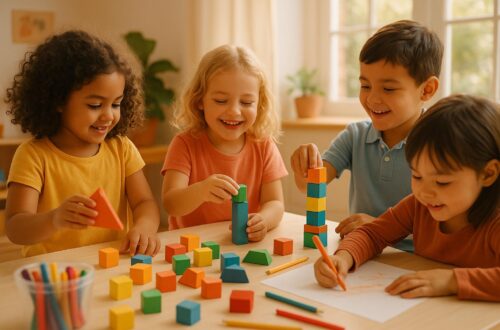
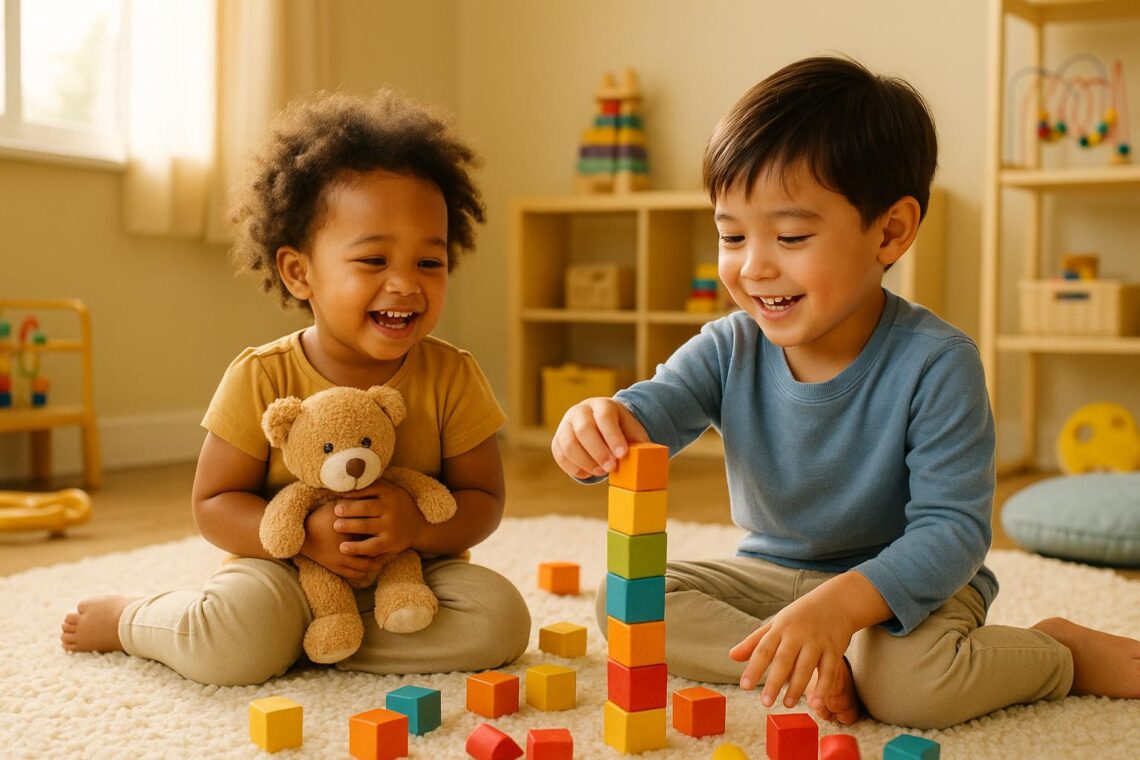
Play offers kids a unique space to work on emotional regulation. Imagine a child building a block tower that suddenly collapses. In that moment of frustration, they’re learning how to manage their feelings in a low-stakes environment.
Through play, kids naturally encounter a full spectrum of emotions. Games like hide-and-seek or role-playing with toys bring out excitement, anger, sadness, and joy. Board games, for instance, can teach kids how to win and lose with grace. What makes play so powerful is its flexibility – it lets kids experience emotions, pause when things get overwhelming, and try again when they’re ready.
These experiences also help kids develop real-life coping strategies. A child who learns to take deep breaths after their Lego tower crumbles is more likely to use that same technique when dealing with a tough day at school. Over time, these moments add up, creating a mental toolbox for handling life’s challenges.
Studies back this up. Kids who regularly engage in unstructured play tend to have better emotional control and resilience. They’re quicker to recover from setbacks and less prone to emotional outbursts when things don’t go as planned.
How Play Builds Brain Connections for Emotions
Every play session strengthens the brain’s emotional circuitry. By repeatedly practicing recognizing, expressing, and managing emotions during play, kids reinforce the neural pathways responsible for handling feelings.
The prefrontal cortex – crucial for emotional regulation – develops rapidly during childhood, and play is a key driver of that growth. Activities like problem-solving, planning, and social play help strengthen this area. When kids engage in imaginative play, they’re preparing the same brain regions they’ll rely on to manage emotions as adults.
Group play also activates mirror neurons, the brain cells that help kids understand and empathize with others. Whether playing with parents or peers, these neurons help children "mirror" emotions, enhancing their ability to connect with others.
On top of that, play taps into the brain’s reward system. Positive play experiences release dopamine, a chemical that reinforces learning. When kids feel good while practicing emotional skills, their brains are more likely to retain and repeat those behaviors.
Repetition is key here. Just like learning to ride a bike takes practice, developing emotional awareness requires repeated exposure to emotional situations. Play naturally provides these opportunities in an engaging way.
Social play, in particular, is a goldmine for emotional growth. When kids play together, they’re constantly reading social cues, adjusting their behavior, and resolving conflicts. These interactions build intricate neural networks that support emotional intelligence well into adulthood.
Different types of play also target different brain areas. Imaginative play encourages empathy and perspective-taking, physical play boosts impulse control, and structured games with rules enhance self-regulation. Each type of play contributes to a well-rounded emotional skill set, making play an essential part of childhood development.
Setting Up Play Spaces That Build Emotional Awareness
A thoughtfully arranged play area does more than spark creativity – it becomes a foundation for emotional growth. The environment where your child plays can deeply influence their ability to explore and express emotions. But here’s the thing: you don’t need pricey toys or elaborate designs. What matters most is creating a space that encourages emotional discovery in a natural and engaging way.
Your play area should feel distinct from other parts of the house. It’s a dedicated zone where emotions can flow freely without fear of judgment. This means focusing on both physical comfort and emotional safety. By setting up a space where your child feels secure, you’re laying the groundwork for meaningful emotional experiences during play.
Creating a Safe Space for Emotional Expression
Both physical and emotional safety are key to fostering emotional play. Start by minimizing distractions – turn off the TV, silence your phone, and establish clear boundaries for this special time.
Comfort items can make a big difference. Keep soft blankets, pillows, or a favorite stuffed animal within reach. These small touches provide immediate reassurance when emotions run high. A cozy reading nook with cushions can also offer a retreat for moments when your child needs to process their feelings quietly.
Lighting plays a surprisingly important role. Soft, warm lighting – whether from a lamp or natural sunlight – creates a calming atmosphere, making it easier for children to open up emotionally. Harsh overhead lighting, on the other hand, can feel overwhelming and stifling.
Organize the space with clear zones for different types of play – quiet, active, and creative. Low shelves or bins make materials easily accessible, and labeling containers with pictures helps younger kids find what they need. When everything has a place, children feel a sense of control, which supports emotional exploration.
Don’t overlook physical comfort. Keep the room temperature between 68–72°F and ensure proper ventilation. When kids are physically comfortable, they’re more likely to engage in meaningful play that involves emotional expression.
How Parents Can Support Emotional Play
Your presence as a parent can amplify the emotional benefits of play. Start by following your child’s lead instead of steering the activity. If their doll is “sad” or they’re upset about a puzzle not working, avoid jumping in to fix the situation immediately. Let them guide the narrative and work through their emotions.
When emotions arise, validate them. For instance, if your child gets frustrated and throws blocks, you might say, “It looks like you’re really frustrated that the tower keeps falling. That’s tough.” This simple acknowledgment teaches them that feeling emotions is okay, even if the behavior needs some redirection.
Get down to their level – literally. Sitting on the floor or at eye level during play creates a sense of security. Your calm presence can help regulate their emotions, especially during intense moments.
Use playtime to naturally expand their emotional vocabulary. Instead of generic praise like “good job,” try saying, “You seem really proud of yourself,” or “I can see how determined you are to figure this out.” These specific phrases help children connect words to feelings, building their emotional language.
Give them space to process emotions. Sometimes, kids need time to sit with their feelings before they can fully work through them. Resist the urge to rush in; instead, allow them to take the lead in resolving their emotions.
Regular, one-on-one play sessions can be incredibly impactful. Even just 15–20 minutes of undivided attention – without siblings or other distractions – can deepen emotional connections. During these moments, set aside your own agenda and let your child steer the play.
Keep art supplies like crayons, markers, paper, and playdough readily available. These tools give kids a non-verbal outlet for expressing complex emotions. Many children find it easier to “draw out” their feelings than to talk about them.
Model emotional regulation during play. If you’re frustrated with a game, say something like, “I’m feeling a little frustrated, so I’m going to take a deep breath and try again.” This shows your child how to manage their own emotions in a healthy way.
And remember, emotional play can get messy – both literally and figuratively. Let them build, make noise, and even create a bit of chaos if it helps them explore their feelings. Cleaning up afterward can also become a valuable part of the learning process.
sbb-itb-e558fb0
Play Activities That Teach Emotional Awareness
Playtime isn’t just about fun – it’s a chance for kids to learn how to navigate their emotions. Through playful activities, children can explore feelings, build emotional vocabulary, and practice managing their reactions. The key is to keep these activities enjoyable and natural, so they don’t feel like a chore.
Acting Out Different Emotional Situations
Role-playing is a fantastic way for kids to practice handling emotions before they face similar situations in real life. Start with familiar scenarios: feeling left out on the playground, disappointment over a canceled playdate, or nervousness about the first day of school.
Dolls and stuffed animals can help bring these situations to life. For example, one teddy bear might feel scared about a doctor’s visit, while another offers comforting words. Let your child take the lead in the story and brainstorm solutions.
For shy kids, puppet shows can be a great alternative. Puppets act as neutral characters, making it easier for children to express emotions indirectly. Another fun option is "emotion charades", where family members act out feelings without speaking. Guessing the emotions helps kids learn to interpret body language and facial expressions.
You can also introduce “do-overs” during role-play. If a character reacts poorly – like hitting out of anger – pause and replay the scene with a better response. This teaches kids they have the power to choose how they react to their emotions.
These role-playing activities are not just fun but also set the stage for games that help children understand and name their emotions.
Games That Help Children Name Emotions
Helping kids build emotional vocabulary can be as simple as weaving it into playtime. For younger children, emotion-matching games work well. Create cards with facial expressions or use photos showing different emotions, and ask your child to match each one with a feeling word.
Try the “feelings thermometer” game to teach emotional intensity. Draw a thermometer and ask your child to rate emotions on a scale. For instance, mild disappointment might be a "2", while major frustration could be an "8." This helps kids describe not just what they feel but how strongly they feel it.
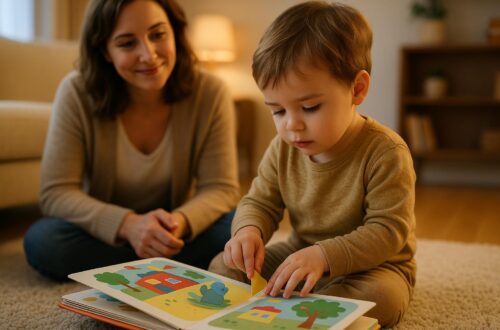
"Emotion detective" turns identifying feelings into an adventure. Look through picture books together and talk about the characters’ emotions. Ask questions like, “How do you think the little mouse is feeling?” or “What makes you think the princess looks worried?” This builds empathy while expanding their emotional vocabulary.
Another idea is the "emotion weather report." Ask your child to describe their internal “weather.” Are they feeling sunny and cheerful, stormy and frustrated, or maybe a little cloudy with worry? This metaphor makes emotions easier to understand.
For visual learners, color-coding emotions can be especially helpful. Assign colors to feelings – red for anger, blue for sadness, yellow for happiness – and use colored blocks or crayons to help your child express what they’re feeling.
These activities naturally lead into storytelling and pretend play, where kids can explore emotions even further.
Using Stories and Pretend Play
Stories and pretend play offer endless opportunities for kids to understand and work through emotions. Stories, in particular, provide a safe way to explore complex feelings. Create recurring characters – like a brave dragon who sometimes feels scared or a friendly robot learning about friendship. These characters can help your child process their own emotional challenges.
Encourage your child to rewrite story endings based on different emotional choices. For example, after reading about a character who acts out in anger, ask, “What if they handled their feelings differently?” This exercise helps kids think through alternative ways to respond.
Pretend play also sparks emotional exploration. Everyday objects can become props – a cardboard box turns into a house where characters experience different emotions, or kitchen utensils transform into characters with unique personalities. The more child-led the play, the more meaningful the emotional lessons.
You can even create an emotional story library together. Draw pictures of your child experiencing different emotions and write short stories to go with them. These personalized books can be revisited whenever similar situations arise.
Pretend play is especially helpful when your child is facing new challenges. For instance, if they’re nervous about starting preschool, set up a pretend classroom with stuffed animals as classmates. Role-play scenarios like making friends, feeling homesick, or resolving conflicts to help them feel more prepared.
For more ideas and expert guidance on supporting your child’s emotional growth, check out the resources at Brilliant Parenting (https://brilliantparenting.app). Their evidence-based strategies can help you tailor these activities to your child’s unique needs.
Teaching Emotions by Example During Play
Children absorb lessons by observing. Your emotional reactions during play become a live demonstration of how to navigate feelings. By modeling healthy emotional behavior, you provide your child with a real-world guide for managing life’s ups and downs.
Here’s how you can use playtime as an opportunity to teach emotions and coping skills.
Showing Children How to Express Emotions
The way you express your emotions during play sets the tone for how your child learns to handle their own. Instead of hiding your feelings, use them as teaching moments by naming what you’re experiencing and showing appropriate ways to respond.
If you’re feeling excited, say something like, “I’m so excited about finishing this puzzle!” This not only connects the feeling to a word but also shows that excitement is a positive emotion worth sharing.
Moments of disappointment during play are especially valuable for teaching. For instance, if a block tower collapses, you might say, “Oh no, I feel disappointed that our tower fell. Let’s take a deep breath and remember – we can always build it again.” This shows your child that disappointment is normal and manageable.
Your tone of voice plays a big role, too. Keeping a calm, steady tone while expressing emotions teaches your child that feelings don’t have to dictate how we treat others.
You can also demonstrate coping techniques in small, visible ways. For example, take a deep breath, relax your shoulders, or clap your hands when you’re happy. These physical cues help your child see how emotions can affect the body and how we can use simple techniques to manage them.
Equally important is showing how to handle setbacks during play.
Managing Frustration and Mistakes During Play
Playtime often includes moments of frustration – pieces that won’t fit, games that don’t go as planned, or activities that feel too tricky. These moments are perfect opportunities to teach problem-solving and emotional regulation.
When you encounter a challenge, verbalize your feelings and walk through the process of managing frustration. For example, if a puzzle piece doesn’t fit, you might say, “This is frustrating because the piece isn’t going where I want it to. I’ll take a moment and try a different way.”
If a craft project isn’t turning out as expected, demonstrate how to adapt: “This isn’t working the way I imagined, and that’s a bit annoying. But let’s see if we can come up with a new idea that’s just as fun.” By modeling this approach, you show your child that setbacks are part of the process and can lead to creative solutions.
When your child makes a mistake, your reaction becomes the voice they internalize. Give them space to work through their emotions before stepping in. For example, if they’re upset about a broken crayon, you might say, “I see you’re feeling upset because the crayon broke. That’s frustrating, especially when you’re making something special.”
Patience is another critical lesson. If a board game drags on and you start feeling restless, express it calmly: “This game is taking longer than I thought, and I’m feeling a little impatient. But I’m reminding myself that spending time with you is what matters most.”
Mistakes are also opportunities to teach resilience. If you accidentally knock over their block tower, acknowledge the mistake and show how to move forward: “Oh no, I bumped into your blocks! I feel bad about that. Do you want me to help rebuild, or should we try a new design together?”
The key is to be genuine. Children can sense when emotions aren’t real. Share your feelings in age-appropriate ways and demonstrate honest strategies for managing them. This builds trust and equips your child with practical tools for handling their own emotions.
Tracking Your Child’s Emotional Growth
Watching your child develop emotional awareness through play is like seeing milestones unfold right before your eyes. These moments not only highlight their progress but also offer opportunities to tweak activities and celebrate their growth.
Signs Your Child Is Learning About Emotions
Your child’s emotional awareness often reveals itself during play in ways that might surprise you. These moments can feel like small victories as they begin to connect emotions with actions and words.
Language shifts are often the first clue. Instead of just crying when something goes wrong, your child might say, "I’m sad the car is broken", or "I’m mad about this." Even cheerful declarations like "I’m happy!" show they’re learning to express feelings verbally.
Improved self-regulation is another sign. You might notice them taking a deep breath when frustrated, stepping away from a tricky puzzle to calm down, or finding simple ways to self-soothe. These actions show they’re building tools to manage their emotions.
Empathy for others starts to emerge, too. Your child may comfort a crying doll, ask "Are you okay?" when someone is hurt, or share a toy with a friend who seems upset. This shift from focusing solely on themselves to recognizing others’ feelings is a big emotional leap.
Conflict resolution skills also begin to take shape. Instead of hitting or yelling when upset, they might say, "That’s mine", or come to you for help. This shows they’re learning to manage emotions rather than letting emotions control their actions.
Emotional storytelling often appears in imaginative play. Characters in their stories might talk about being scared, or they might create scenarios where someone helps another through a tough moment. This shows they’re processing emotions in creative ways.
Physical awareness of emotions can develop, too. Your child might begin to notice physical signs tied to feelings, like saying their tummy hurts when they’re nervous or mentioning a racing heart when they’re excited.
Quicker recovery from emotional outbursts is another indicator of growth. As they build coping skills, they’ll likely bounce back from distress more quickly than before.
It’s important to remember that every child develops these skills at their own pace. Some 3-year-olds might already name emotions like "frustrated", while others take more time. Both are completely normal. As these milestones appear, the way you approach play can evolve to support their growth.
Changing Play Activities as Children Grow
As your child’s emotional understanding deepens, you can adjust play activities to keep up with their growing ability to recognize and express emotions.
- For toddlers (ages 2–3): Stick to simple activities like reading picture books with clear emotional expressions or playing games that exaggerate feelings. Keep sessions short – 10 to 15 minutes is ideal for their attention span.
- For preschoolers (ages 3–4): Pretend play becomes a great way to explore emotions. Puppet shows or dress-up games with different characters can help them understand that people can feel multiple emotions at once.
- For school-age children (ages 5–7): Introduce activities that encourage problem-solving and empathy. Board games that require patience and turn-taking are great for managing frustration, while stories with complex characters can spark conversations about why someone might feel a certain way.
- For older children (ages 7+): Engage them in activities that explore the complexity of emotions. Role-playing moral dilemmas, creating stories about characters facing challenges, or playing strategy-based games can help refine their emotional skills.
Pay attention to how your child responds to these activities. If they seem bored, it might be time to introduce something more challenging. On the other hand, if they’re frustrated, scaling back to simpler tasks can help rebuild their confidence.
Life events can also influence emotional responses. During challenging times, revisiting familiar activities can provide comfort and reinforce emotional security.
Lastly, tailoring activities to your child’s interests – whether it’s dinosaurs, drawing, or something else – can make learning about emotions more engaging and enjoyable. Emotional growth doesn’t follow a straight path. Skills may come and go before they’re mastered, but with patience and the right activities, your child will continue to thrive.
For more tips and resources on nurturing your child’s emotional growth, check out Brilliant Parenting.
Conclusion: Using Play to Build Emotional Skills for Life
Play is a natural, yet powerful way for children to develop emotional awareness. It lays the groundwork for understanding feelings, handling challenges, and forming meaningful connections with others. Everyday activities like imaginative play, storytelling, and games allow kids to absorb these vital skills without needing formal lessons. Whether it’s comforting a stuffed animal, acting out scenarios with dolls, or discussing feelings during a puzzle, these moments help create lasting neural pathways that nurture emotional growth. These simple interactions seamlessly tie into the practical strategies we’ve explored earlier.
It’s important to remember that every child grows at their own pace. The key is to consistently provide opportunities for emotional exploration through play while allowing these skills to develop naturally over time.
By using the safe spaces and role-playing techniques mentioned earlier, you’re doing more than teaching emotional awareness. You’re modeling healthy responses, celebrating small victories, and staying in tune with your child’s needs. These efforts help build resilience, empathy, and self-regulation – skills that will guide them through relationships and challenges for years to come.
If you ever feel like you need extra support, tools like Brilliant Parenting are available. They offer personalized AI coaching based on evidence-based parenting approaches, giving you instant advice to help nurture your child’s emotional development.
Every playful moment – every game, every named emotion, every shared connection – is an investment in your child’s future. These small, meaningful actions contribute to raising an emotionally intelligent individual who can thrive in an ever-changing, complex world.
FAQs
How can parents use play to help their child understand and manage emotions?
Parents can turn play into an effective way to help their child navigate and express emotions. Play gives kids a safe space to explore feelings like happiness, fear, or frustration, even when they might not have the words to describe what they’re experiencing.
Joining in your child’s playtime sends a powerful message: their emotions and interests are important to you. Activities like role-playing, storytelling, or drawing together can naturally teach valuable skills like empathy, self-awareness, and problem-solving. These shared moments not only nurture emotional development but also build a strong sense of resilience and confidence in your child.
What play activities can help children understand and express their emotions?
Play offers children a wonderful way to explore and express their emotions in a safe and engaging environment. Activities like Emotions Charades or Emotions Pictionary make it easier for kids to identify and act out different feelings while having fun. Through pretend play and role-playing, children can step into various scenarios, helping them practice empathy and imagine how others might feel in different situations. Similarly, storytelling with emotions gives kids the chance to articulate their feelings by weaving them into characters and narratives.
Creative outlets also play a big role in emotional expression. Activities such as drawing emotions or using playdough to model feelings allow kids to visually represent what they’re experiencing inside. Collaborative efforts like making music together not only encourage emotional connection but also nurture teamwork. These playful methods not only help children develop emotional awareness but also create meaningful moments that strengthen your connection with them.
When should parents start using play to help children develop emotional awareness?
Parents can begin nurturing emotional awareness in their little ones right from infancy. Even basic interactions like playing peek-a-boo or engaging in gentle, affectionate exchanges can help babies start to recognize emotions and form meaningful connections.
As kids grow older, play becomes an even more effective way to teach emotional skills. For toddlers and preschoolers, activities like role-playing, storytelling, or imaginative games provide a safe and enjoyable way to explore and express their feelings. The secret lies in tailoring these activities to your child’s age and developmental stage while staying actively involved to support their emotional development.