
Parenting is stressful – balancing work, family, and personal time can feel overwhelming. Mindfulness offers a practical way to manage this stress. By focusing on the present, parents can improve emotional control, strengthen relationships with their children, and create a calmer home environment. Techniques like deep breathing, self-compassion, and structured programs like MBSR (Mindfulness-Based Stress Reduction) are simple to integrate into daily routines and show lasting benefits.
Key takeaways:
- Stress Reduction: Mindfulness helps parents respond calmly during tough moments.
- Stronger Relationships: Mindful parenting improves communication and reduces conflicts.
- Flexible Techniques: Short practices like breathing exercises or self-compassion fit into busy schedules.
- Digital Tools: Apps like Brilliant Parenting offer on-demand mindfulness guidance.
Mindfulness isn’t about perfection – it’s about small, consistent steps to make parenting less stressful and more fulfilling.
Stress Management and Mindfulness for Parents
Research Findings: Mindfulness and Parental Stress
Recent research highlights how mindfulness can ease parental stress and enhance family relationships. Studies exploring mindfulness-based approaches suggest that parents who practice mindfulness are better prepared to handle daily challenges. Below is a closer look at the findings that support these benefits.
Stress Reduction and Emotional Control
Research on mindfulness programs shows they can help parents manage stress more effectively. Participants often report improved sleep and fewer physical complaints, such as headaches and muscle tension. Mindfulness techniques, like taking brief pauses during stressful moments, allow parents to respond thoughtfully rather than react impulsively, making it easier to navigate challenging situations.
Strengthening Parent-Child Relationships
Studies focusing on family interactions reveal that incorporating mindfulness into daily life can lead to stronger parent-child bonds. Mindful parenting encourages open communication, reduces behavioral conflicts, and fosters deeper emotional connections. These changes often create a more peaceful and cooperative home environment.
Benefits Across Diverse Parenting Groups
Mindfulness appears to be helpful for parents in a variety of situations, including working parents, single caregivers, and those raising children with special needs. While their challenges differ, parents across these groups report better stress management, increased parenting confidence, and an improved ability to balance responsibilities. Even short, consistent mindfulness practices can help parents feel more present and resilient in their daily roles.
Long-Term Advantages
Over time, consistent mindfulness practice provides lasting relief from stress and strengthens emotional resilience. These benefits extend beyond immediate stress reduction, contributing to healthier communication and more constructive problem-solving within families. Ultimately, this ongoing practice supports stronger relationships and a more positive family dynamic in the long run.
Main Mindfulness Techniques for Parents
Managing stress as a parent can feel overwhelming, but mindfulness offers practical tools to help. Four key techniques stand out: breathing-based mindfulness, self-compassion training, Mindfulness-Based Stress Reduction (MBSR), and mindful parenting programs. These approaches provide parents with actionable strategies to navigate stress and improve their well-being.
Breathing-Based Mindfulness
Breathing-based mindfulness is all about focusing on your breath as it flows naturally in and out. This simple practice helps parents stay grounded during tense moments. The beauty of this technique is its flexibility – you can do it anywhere: in the carpool line, during a rare quiet moment, or even while your child naps. Research suggests that just 2–5 minutes of focused breathing can activate the body’s relaxation response, offering quick relief when stress peaks.
Self-Compassion Training
Parenting is tough, and self-compassion training reminds you to treat yourself with the same kindness you’d offer a close friend. This practice involves acknowledging difficult emotions without judgment, recognizing that parenting challenges are a shared human experience, and replacing self-criticism with gentler, more understanding thoughts. By embracing self-compassion, parents often find themselves less reactive and more emotionally present for their children.
Mindfulness-Based Stress Reduction (MBSR)
MBSR is an eight-week program designed to teach a variety of mindfulness practices, such as body scans, gentle yoga, and sitting meditations. Developed by Jon Kabat-Zinn at the University of Massachusetts Medical Center, this structured approach helps parents observe their thoughts and emotions without reacting impulsively. The program equips participants with a well-rounded set of skills, leaving them better prepared to handle high-stress situations.
Mindful Parenting Programs
Mindful parenting programs take traditional mindfulness techniques and adapt them for family life. These programs focus on being present during interactions with children, listening attentively, and responding thoughtfully to challenging behaviors. Instead of trying to control a child’s actions, parents learn to adjust their own responses – an approach that has been linked to healthier family dynamics and more positive parent-child relationships.
Technique Comparison Table
Here’s a quick overview of these mindfulness techniques:
| Technique | Time Commitment | Best For | Accessibility | Key Benefits |
|---|---|---|---|---|
| Breathing-Based Mindfulness | 2–5 minutes | Quick stress relief | Can be done anywhere | Immediate relaxation; simple to practice |
| Self-Compassion Training | 10–15 minutes daily | Reducing guilt and self-criticism | Mental exercises | Less self-judgment; better emotional balance |
| MBSR Programs | 8 weeks, daily practice | Comprehensive stress management | Requires structured program | Full skill set; evidence-backed results |
| Mindful Parenting Programs | 6–8 weeks (varies) | Improving family relationships | Works best with guidance | Better communication; practical strategies |
Each of these techniques offers unique benefits, depending on your situation and available time. Many parents find that blending elements from multiple approaches works best, creating a personalized mindfulness practice that fits their lives.
sbb-itb-e558fb0
Practical Applications for US Families
Mindfulness has proven benefits, but fitting it into the hectic lives of US families can feel daunting. Research shows that mindfulness helps reduce parental stress, yet many families struggle to integrate these practices into their routines without adding more to their already packed schedules.
Adding Mindfulness to Daily Routines
Mindfulness doesn’t have to be a big production – it can slip into the small moments of your day. For instance, take three deep breaths while enjoying your morning coffee before reaching for your phone. Waiting in the carpool line? Try a few deep breaths instead of scrolling on your device. During bedtime, focus on the sound of your child’s voice or the texture of their blanket as you tuck them in. Even everyday chores like washing dishes can become mindful moments – pay attention to the water’s temperature, the feel of the soap, or the rhythm of your movements. These small adjustments can ease stress and make mindfulness feel like a natural part of your day.
Overcoming Common Barriers
Even with these simple practices, challenges can arise. One common hurdle is the misconception that mindfulness requires extra time. Instead, use moments that already exist – like a quick 30-second pause while your child gets dressed – to practice mindfulness and reduce stress.
Perfectionism can also get in the way. It’s important to remember that mindfulness is about practice, not perfection. It’s completely normal for your mind to wander – that’s part of the process.
For families living in smaller spaces, the lack of quiet can feel like a barrier. But mindfulness doesn’t demand total silence. It’s about being present, even if there’s background noise. The goal isn’t to eliminate distractions but to notice and accept them.
Another challenge can come from skepticism within the family. Instead of trying to convince everyone else, focus on your own practice. Over time, your example may naturally encourage others to join in. These strategies are especially helpful for parents facing high-stress situations.
Help for High-Stress Parent Groups
Mindfulness can be particularly beneficial for parents dealing with unique challenges. Single parents often face overwhelming responsibilities with limited support. Practices like self-compassion training can help reduce feelings of guilt and self-criticism.
Working parents, who juggle demanding careers alongside family life, can benefit from mindfulness techniques that require no extra time. These quick, integrated practices can fit seamlessly into a busy day.
Parents of children with special needs, including those with ADHD or developmental disabilities, face additional stressors. Research shows mindfulness can help these parents respond with less reactivity, build patience, and develop greater self-compassion. These techniques are especially helpful during moments of challenging behavior or stressful medical appointments. By weaving mindfulness into their routines, these parents can find moments of calm amid the chaos.
Digital Tools for Mindful Parenting
In today’s fast-paced world, technology has made it easier than ever for parents to access mindfulness resources. Digital platforms provide flexible options that fit seamlessly into busy family schedules, reducing the need for in-person classes. These tools bring the quick and effective mindfulness practices we’ve already touched on into the digital space.
Digital Support for Mindful Parenting
From guided meditations to stress-reducing reminders, digital tools make it simple to weave mindfulness into everyday life. Many platforms offer short, easy-to-follow exercises that fit naturally into even the busiest routines, enhancing traditional mindfulness techniques with the convenience of on-demand access.
How Brilliant Parenting Supports Mindfulness
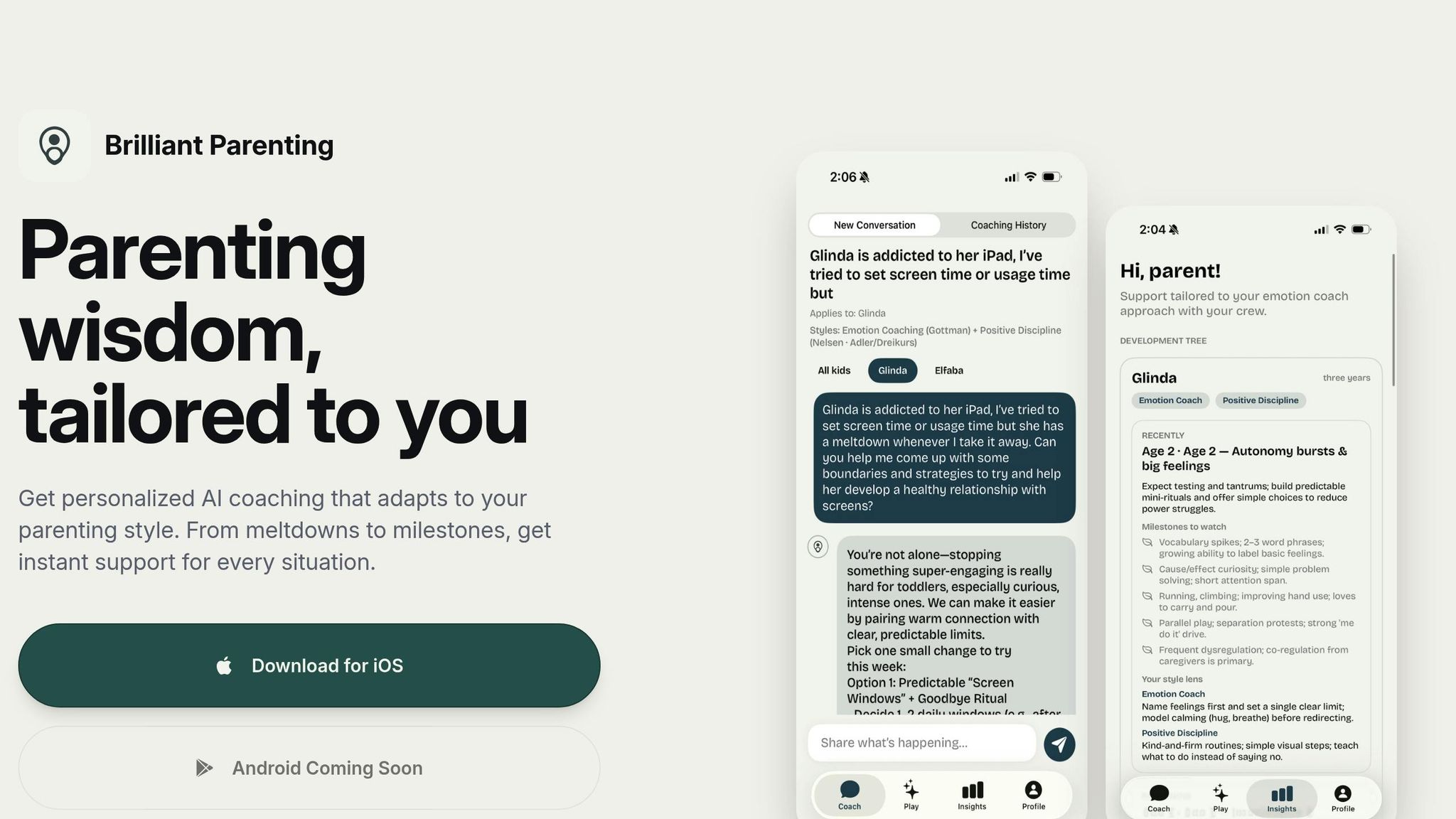
One standout option in this space is Brilliant Parenting, which takes a personalized approach to mindful parenting. Using evidence-based methods, it provides AI-driven coaching tailored to individual parenting styles. A quick onboarding quiz helps match parents with advice that aligns with their needs, while practical scripts and strategies address common challenges. Features like 24/7 availability, development tracking, and support for multiple children make it easier to incorporate mindfulness into daily parenting routines.
Conclusion: Why Mindfulness Matters for Parents
Research highlights that mindfulness not only helps parents manage stress but also improves how they respond to their children. Its effects go beyond short-term relief, offering long-term benefits like better emotional regulation and stronger family relationships. Parents who regularly practice mindfulness often report feeling less overwhelmed and more connected to their kids.
By encouraging thoughtful rather than reactive responses, mindfulness has the potential to create meaningful changes in family dynamics. Whether it’s a quick breathing exercise or a more structured stress management program, these practices can fit into even the busiest of schedules.
One of the standout features of mindfulness is how adaptable it is for American families. Whether you’re balancing a full-time job, managing household chaos, or navigating particularly stressful moments, mindfulness can be tailored to meet your needs. Its accessibility ensures that parents from all walks of life can incorporate it into their routines.
Thanks to modern technology, embracing mindfulness has never been easier. Platforms like Brilliant Parenting offer round-the-clock, evidence-based tools and resources designed to fit seamlessly into hectic parenting lifestyles. These digital solutions make it simple to start and maintain mindfulness practices, even for the busiest parents.
For parents feeling overwhelmed, mindfulness offers a science-backed way to cultivate calm, strengthen family bonds, and reduce stress – helping create a more harmonious home environment.
FAQs
How does practicing mindfulness help parents reduce stress in everyday situations?
Mindfulness offers parents a way to navigate stress by encouraging them to stay grounded in the present moment. Instead of reacting impulsively, it helps them approach challenges with a sense of calm and clear-headedness. This shift can ease emotional outbursts and open the door to better communication, ultimately strengthening the bond between parent and child.
By practicing mindfulness, parents are better equipped to handle the ups and downs of daily life, maintain emotional steadiness, and foster a nurturing atmosphere for their children.
What are some easy mindfulness techniques parents can try to reduce stress in their daily routines?
Parents can incorporate mindful breathing, body scans, or gentle mindful movement into their routines to ease stress without overloading their day. These techniques are straightforward and take only a few minutes, making them ideal for even the busiest schedules.
Here’s how it works: Try taking a few deep breaths, focusing on the sensation of the air as it flows in and out of your body. A body scan involves mentally checking in with different parts of your body, noticing areas of tension, and consciously relaxing them. You can also bring mindfulness into everyday activities like stretching or walking by tuning in to your movements and surroundings.
Even brief moments of mindfulness can help parents feel more grounded and present, making daily parenting challenges feel a bit more manageable.
Are there any tools or resources to help parents practice mindfulness and reduce stress at home?
Yes, plenty of tools and resources are available to help parents weave mindfulness into their daily routines. Apps, guided meditation programs, and mindfulness exercises specifically designed for parents can make a big difference in reducing stress and creating a peaceful home atmosphere.
One standout option is Brilliant Parenting, a platform offering personalized AI coaching rooted in proven parenting methods. It delivers practical tips, on-demand support, and tools to help parents tackle challenges while staying mindful and balanced in their parenting journey.