
When kids struggle with focus, organization, or managing emotions, it’s often due to executive functioning challenges. These skills – like working memory, cognitive flexibility, and self-control – are critical for everyday life but can develop unevenly in children. Parents play a key role in helping kids build these abilities.
Here’s what you need to know:
- Signs of challenges: Forgetting tasks, emotional outbursts, difficulty with transitions, and procrastination are common.
- Daily struggles: Morning routines, homework, and social interactions often become battlegrounds without the right support.
- Age-specific strategies: For younger kids, visual schedules and sensory breaks help. School-age children benefit from checklists and breaking down tasks. Teens need goal-setting and real-world responsibilities.
- Core supports: Sleep, nutrition, physical activity, and mindfulness are essential for improving focus and emotional regulation.
- Social skills: Games, structured play, and conflict resolution exercises help children practice planning, adapting, and self-control.
Modern tools, like AI-powered parenting platforms, can offer personalized advice and track progress to make this process easier. The key is consistency, patience, and tailoring strategies to your child’s unique needs.
Dr. Peg Dawson: Developing Executive Function in Kids
Parenting Methods by Age Group
Kids grow and change quickly, and so do their needs. What works for a preschooler won’t cut it for a teenager. Adapting your parenting style to match your child’s stage of development lays the groundwork for their future success.
Early Childhood (Ages 3-6)
At this age, kids are just starting to build executive functioning skills. That means they thrive on structure and predictability. Establishing routines now can help them learn self-regulation and feel secure in their daily lives.
- Visual schedules: Create a chart with pictures showing daily tasks (like brushing teeth or getting dressed). Place it at their eye level and guide them through it. Letting them check off completed tasks can be both fun and rewarding.
- Transition warnings: Sudden changes can lead to meltdowns. Use visual timers and give heads-up like, “10 minutes left,” “5 minutes,” and “2 minutes,” to help them prepare for what’s next.
- Choices within limits: Offer simple options, like “Do you want sneakers or boots today?” This gives them a sense of control while keeping things on track.
- Sensory breaks: Create a quiet corner with pillows, fidget toys, or headphones where they can retreat when overwhelmed. Teaching them to recognize when they need a break builds valuable self-awareness.
- Play-based learning: Games like “Red Light, Green Light” improve self-control, while puzzles and building blocks help with memory, problem-solving, and planning – all while feeling like play.
As kids grow, their responsibilities increase, so they’ll need more tools to stay organized.
Elementary School (Ages 7-12)
By this stage, kids face more demands – homework, chores, and social commitments. Your role shifts to helping them develop their own systems for staying on top of things.
- Breaking down tasks: Big projects can feel overwhelming. Show them how to divide tasks into smaller steps, like choosing a book, taking notes, and drafting a report for an assignment.
- Checklists and planners: Start with a daily checklist for school and home tasks, then gradually move to weekly planning. Color-coding (e.g., blue for school, green for chores) can make it easier to follow.
- Time estimation: Help them guess how long tasks will take, then time them to compare. Tracking this over a few weeks can improve their time management skills.
- Problem-solving discussions: Instead of jumping in with solutions, ask questions like, “What do you think might work?” or “Who could help with this?” This builds their confidence in handling challenges.
- Simple organization systems: A dedicated homework station, a family calendar, and a spot for backpacks and shoes can reduce daily chaos. Involve them in setting up these systems so they understand how they work.
- Natural consequences: Letting them experience the results of their actions can be a powerful teacher. For example, if they forget their lunch, they’ll eat the school lunch that day. These lessons stick better than constant reminders.
As they head into adolescence, their growing independence means adjusting your approach again.
Adolescence (Ages 13-18)
Teenagers are a mix of growing independence and developing self-regulation skills. Their brains are still catching up, so they need guidance even as they push for more freedom.
- Collaborative goal-setting: Sit down together to set academic, extracurricular, and personal goals. Let them take the lead in deciding what’s important, but help them break big goals into smaller steps.
- Flexible accountability: Instead of nightly homework checks, try weekly progress reviews. If grades slip, increase check-ins temporarily rather than removing privileges entirely.
- Real-world responsibilities: Give them tasks like managing their own laundry or scheduling doctor appointments. These responsibilities build confidence and prepare them for adulthood.
- Emotional regulation: Help them recognize stress signals and explore coping strategies, whether it’s exercise, journaling, or listening to music. Let them choose what works best for them.
- Technology boundaries: Work together to set phone-free study times and sleep schedules. Charging devices outside the bedroom and having device-free family times can help maintain balance.
- Future planning: Discuss things like college, jobs, or gap years as opportunities to learn decision-making skills. Help them research options, create timelines, and understand the steps involved.
Kids develop at their own pace, and it’s normal for them to excel in one area – like organization – while struggling in another, like time management. Adjusting your support as they grow ensures they get the help they need when they need it.
Complete Approaches to Support Executive Functioning
Executive functioning skills are deeply tied to physical health, emotional well-being, and social connections. A child’s ability to focus, plan, and manage emotions depends heavily on their overall well-being. Building these foundational supports is key to helping kids strengthen their executive functioning abilities.
The Role of Physical Activity and Mindfulness
Regular physical activity has a direct impact on attention, impulse control, and decision-making. The prefrontal cortex, the area of the brain responsible for executive functioning, thrives on movement.
The good news? You don’t need formal sports programs to see results. Simple activities like a 20-minute walk around the block, dancing to music in the living room, or a game of tag in the backyard can work wonders. For kids with extra energy, some physical activity before tackling homework can help them focus more effectively.
Mindfulness is another powerful tool. It teaches kids to pause and think before reacting – a skill that directly supports their ability to manage emotions and make thoughtful decisions. Even a short mindfulness exercise, like two minutes of deep breathing, can help reset their focus. Body scans, where kids check in with different parts of their body to notice tension, build self-awareness and help them manage stress before it becomes overwhelming.
For reluctant participants, apps designed for kids often make mindfulness fun by turning guided meditations into engaging activities. Combining movement with mindfulness – like yoga, martial arts, or mindful walking – can provide lifelong tools for managing stress and staying focused.
Basic Supports: Sleep, Nutrition, and Routine
Sleep is crucial for executive functioning because it’s when the brain consolidates memories and prepares for the next day. Unfortunately, kids with executive functioning challenges often struggle with sleep, creating a tough cycle where poor rest makes focus and self-control even harder. Most elementary-aged kids need 9-11 hours of sleep, while teenagers require 8-10 hours. Many fall short of these needs.
A consistent bedtime routine can signal the brain that it’s time to wind down. Turning off screens an hour before bed, taking a warm bath, or reading together can help. Keeping bedrooms cool and dark also promotes better sleep.
Nutrition plays a major role in brain function. Starting the day with a protein-rich breakfast helps stabilize blood sugar levels, supporting sustained attention throughout the morning. Foods like salmon, walnuts, and flaxseeds, which are rich in omega-3 fatty acids, contribute to healthy brain development. On the flip side, sugary snacks can cause energy spikes and crashes, making focus even harder.
Small, gradual changes to meals can make a difference. Adding berries to cereal or swapping white bread for whole grain are simple ways to improve nutrition. Involving kids in meal planning and preparation can also strengthen their executive functioning skills, as they practice planning, sequencing, and following steps.
Consistent daily routines help reduce decision fatigue, freeing up mental energy for learning and problem-solving. Beyond physical health, meaningful social interactions play a key role in sharpening these skills.
Social Skills and Structured Play
Social interactions are an excellent way for kids to practice executive functioning. Activities like negotiating game rules, taking turns, or collaborating on a project challenge their ability to plan, adapt, and regulate emotions. Board games are particularly effective – they encourage strategic thinking, rule-following, and emotional control when things don’t go as planned.
Games like chess or checkers encourage kids to think ahead, while cooperative games that require teamwork and communication, such as group puzzles or team challenges, build collaboration skills. Card games like Uno help kids hold information in their working memory, adjust to changing situations, and manage impulses.
Structured social activities can be especially helpful for kids who find socializing difficult. Clubs like drama, robotics, or art classes provide a shared focus, making interactions feel more manageable. These activities also build confidence as kids develop new skills and see their own progress.
For younger children, playdates work best when there’s a plan. Instead of saying, “Go play,” suggest specific activities like building with blocks, doing a craft, or playing a particular game. A bit of structure reduces anxiety and gives them a framework for interaction.
Teaching conflict resolution is another way to support executive functioning. When kids learn to pause, consider other perspectives, and brainstorm solutions, they’re developing skills that will help them in both academic and personal challenges. Role-playing common scenarios at home can provide a safe space to practice these skills.
It’s important to remember that social skills take time to develop, especially for kids with executive functioning challenges. Extra patience and support go a long way. Celebrating small wins – like sharing toys without being prompted or using words instead of actions when frustrated – can build confidence and encourage continued progress.
sbb-itb-e558fb0
Adjusting and Monitoring Parenting Strategies
Supporting a child with executive functioning challenges is a journey that evolves over time. What works today might need a tweak – or even a complete overhaul – next month. The key is staying adaptable and paying close attention to what actually helps your child thrive, rather than clinging to what you hope will work.
Tracking Progress and Adapting Approaches
Focus on your child’s behavior to guide your strategies. Pay attention to moments when your child successfully packs their backpack, stays focused on homework, or handles transitions more smoothly. These small victories are clues about what’s working.
Consider keeping a daily log for a week. Write down the strategies you used, when you used them, and how your child responded. For example, you might notice that a visual schedule works wonders in the morning, but by the afternoon, verbal reminders are more effective because your child is worn out.
Don’t hesitate to adjust your approach. If a particular strategy isn’t yielding results after several weeks, it’s time to try something new. Maybe your younger child has outgrown sticker charts but responds well to earning screen time. Or perhaps your teenager needs the freedom to choose their own organizational tools instead of sticking with the system you set up for them.
Your child’s development is constantly shifting, influenced by growth spurts, hormonal changes, and new challenges at school. What might look like a step backward could actually be a sign they’re ready for more advanced strategies. Stay flexible and let their progress guide your next steps.
Celebrate the small wins. Progress with executive functioning often comes in tiny steps. Maybe your child remembers their lunch twice this week when they used to forget it every day. That’s progress worth acknowledging. These small victories build momentum and confidence, even if full independence is still a work in progress.
These observations are also invaluable when collaborating with teachers and other professionals.
Partnering with Educators and Specialists
Since your child spends a large part of their day at school, their teachers are key allies in supporting their executive functioning skills. Start the school year by sharing strategies that work at home. For instance, instead of saying, "My child has trouble focusing", you could explain, "They focus best with something to fidget with and need movement breaks every 20 minutes." This gives teachers actionable ideas to try in the classroom.
Stay proactive with regular check-ins. A quick email every few weeks can help you stay informed about how your child is doing with homework, social interactions, or classroom focus. This can prevent small challenges from turning into bigger issues.
If your child has an IEP or 504 plan, make sure it evolves as their needs change. For example, a younger child might need help organizing their desk, while an older student might benefit more from digital tools to track assignments.
Don’t shy away from involving specialists when needed. Occupational therapists can address organizational struggles and sensory challenges. Educational therapists focus on learning strategies, while psychologists can help manage anxiety or other emotional factors that affect executive functioning. These experts often spot patterns or solutions that might not be obvious to parents or teachers.
Maintaining clear communication among all caregivers is just as important for consistent support.
Strengthening Communication Between Caregivers
Consistency among caregivers is key. Whether it’s parents, grandparents, babysitters, or after-school staff, everyone involved in your child’s care should aim to use similar strategies. This prevents your child from having to constantly adapt to different expectations.
Share the strategies that work best. For example, if visual schedules help your child stay on track, make sure everyone knows how to use them. If your child needs advance warnings before transitions, communicate this to all caregivers.
Simplify handoffs between caregivers. A quick update – whether through a shared note on your phone or a brief conversation – can help everyone stay on the same page. For instance, if one parent has been handling homework struggles all week, they can pass along what’s been working (or not working) to the other parent.
Handle disagreements privately. Children with executive functioning challenges often struggle with uncertainty, so it’s important to avoid presenting them with conflicting strategies. If caregivers disagree on an approach, work it out away from your child and find a compromise everyone can follow consistently.
Even informal family check-ins can help keep everyone aligned. A quick 10-minute chat while folding laundry can be enough to share observations and coordinate efforts.
The goal isn’t to create a rigid system but to build a flexible, responsive support network that grows with your child. Consistent communication and collaboration ensure that strategies remain effective and age-appropriate, reinforcing the importance of unified, tailored support. Brilliant Parenting offers personalized AI coaching to help families coordinate their efforts, track progress, and implement evidence-based strategies across different caregivers and environments.
AI-Assisted Parenting Support
Parenting a child with executive functioning challenges can often feel like navigating uncharted waters. Thankfully, modern AI tools are stepping in to provide a new kind of support. These tools offer personalized guidance, instant advice, and research-backed strategies tailored to fit the unique needs of each family.
How AI Tools Help Parents
AI-based parenting platforms are designed to simplify the process of finding effective solutions. Instead of spending hours researching or waiting weeks for professional advice, these tools analyze your specific challenges and provide immediate, tailored guidance.
For example, if your child struggles with transitioning between activities or managing homework, AI can recommend strategies based on their age, developmental stage, and individual needs. These recommendations are drawn from evidence-based practices, ensuring they’re both practical and effective.
One standout feature is the ability to generate practical scripts and conversation starters. While parents may understand the importance of positive reinforcement and clear communication, finding the right words in the moment can be tough. AI tools can suggest specific, situation-appropriate language. Instead of vague advice like "stay calm", you might get a suggestion such as, "I see you’re finding this hard. Let’s break it into two smaller steps to make it easier."
Brilliant Parenting: Personalized AI Coaching
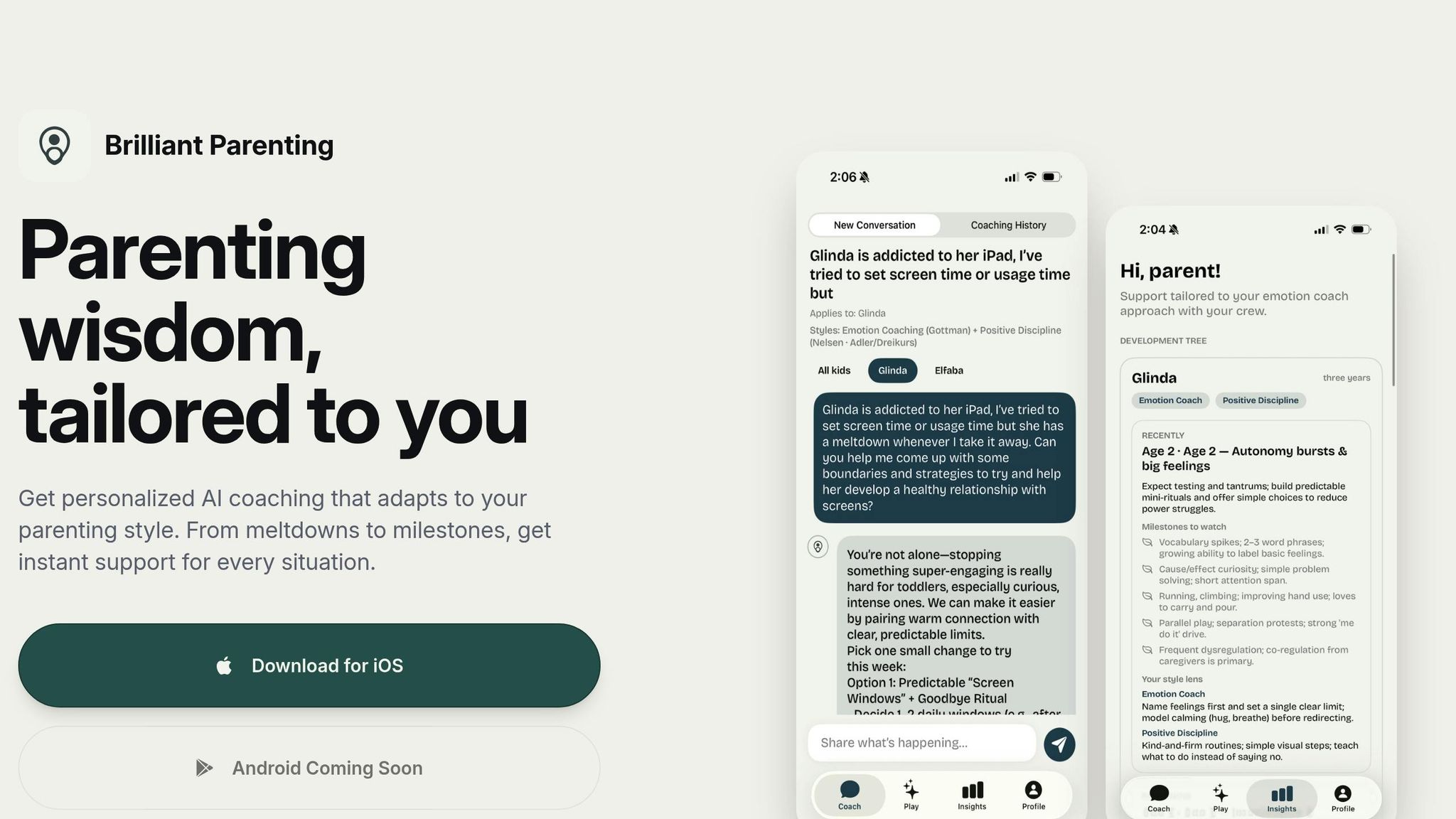
Brilliant Parenting is a platform designed to support families managing executive functioning challenges. It starts with an onboarding quiz that matches your family to one of seven evidence-based parenting styles. This ensures that all advice aligns with your values and parenting approach.
For families with multiple children, the multi-child support feature is a game-changer. It allows parents to track strategies and progress for each child individually, while still maintaining a unified family approach. This is especially helpful when siblings have different needs and developmental stages.
The platform also includes development tracking, which helps parents monitor their child’s growth over time. This data-driven feature makes it easier to see what’s working and when adjustments might be needed. It ties directly into the adaptive strategies offered, ensuring parents have actionable insights as their child progresses.
Another standout is the play ideas library, which provides tailored activities aimed at improving social skills and fostering structured play. Unlike generic suggestions, these activities are customized to your child’s specific challenges and interests, making them both engaging and effective.
Finally, all recommendations are grounded in evidence-based guidance, ensuring that strategies are rooted in research rather than fleeting trends. This is especially critical for executive functioning support, where ineffective methods can lead to more frustration for both parents and children.
By integrating these tools into daily routines, the platform helps create consistency and enhances collaboration among all caregivers.
Benefits of AI for Executive Functioning Support
AI tools offer distinct advantages that go beyond personalized coaching. They provide instant solutions, reduce decision fatigue, alleviate stress, and offer actionable insights. These features can make parenting less overwhelming and more manageable.
For parents of children with executive functioning challenges, the constant need to make strategic decisions – whether about morning routines or homework approaches – can be exhausting. AI simplifies this by narrowing down options to what’s most likely to work for your specific situation.
Another key benefit is the confidence boost that comes from expert-backed guidance. Instead of second-guessing whether you’re handling a situation correctly, you’ll have a clear plan that’s tailored to your child’s needs. For instance, rather than simply being told that "structure is important", you’ll receive detailed advice on how to create age-appropriate routines for your child.
Consistency is another major advantage. When multiple caregivers are involved – like grandparents or babysitters – AI tools ensure everyone is on the same page. This reduces confusion and helps children thrive in a predictable environment.
Perhaps the most lasting benefit is the confidence parents gain as they see positive results. Over time, these tools help parents develop their instincts, making them more effective in addressing new challenges. The goal isn’t to create reliance on technology but to empower parents to become stronger advocates and supporters for their children.
Conclusion: Helping Parents with Practical Solutions
Supporting a child with executive functioning challenges doesn’t have to feel overwhelming. The strategies shared here provide practical tools to help nurture these essential skills. It’s important to remember that executive functioning develops gradually, requiring patience, consistency, and an approach tailored to your child’s unique needs.
Every child grows at their own pace, and the strategies you use should grow with them. The beauty of these evidence-based techniques lies in their adaptability – they can evolve alongside your child, ensuring the support you provide remains relevant and effective. As your child progresses, it’s crucial to adjust your approach to meet their changing developmental needs.
Technology can now play a big role in making this process easier. Platforms like Brilliant Parenting bring AI-powered coaching to the table, offering tools designed to align with your parenting style and your child’s specific stage of development. With features like multi-child support, progress tracking, and a library of creative play ideas, parents can access personalized, on-demand support – no waiting required.
The platform even offers a 7-day free trial, giving families the chance to explore its tools without any commitment. This can be a lifeline for parents seeking immediate solutions to everyday challenges, like streamlining morning routines, managing homework, or helping their child navigate social situations.
Building these skills isn’t about quick fixes – it’s about fostering long-term independence. Whether you’re incorporating structured play, collaborating with educators, or using AI tools for tailored guidance, the ultimate goal remains the same: helping your child grow into a confident, self-reliant individual. These strategies, applied consistently, strengthen the foundation for your child’s future success.
Choose one strategy that resonates with your family and stick with it. Seeking help isn’t a sign of weakness – it’s a step toward empowering your child.
FAQs
What are the early signs of executive functioning challenges in children, and how can I recognize them?
Children who face challenges with executive functioning might exhibit behaviors like struggling to follow multi-step directions, frequently forgetting tasks or assignments, having a hard time starting or finishing projects, and finding it difficult to stay organized. They may also appear easily distracted or feel overwhelmed when trying to manage their time or responsibilities.
These behaviors often differ based on a child’s age and stage of development, so it’s crucial to look for consistent patterns over time. Recognizing these signs early on allows you to support your child in developing important skills and building their confidence.
How can I help my teenager develop stronger executive functioning skills as they become more independent?
Supporting your teenager’s ability to manage and organize themselves is a key step in helping them navigate growing independence. Here are some actionable ways to help them build these skills:
- Encourage better organization: Introduce tools like planners, calendars, or task management apps to help them keep track of assignments, appointments, and deadlines.
- Simplify big tasks: Show them how to break larger projects or responsibilities into smaller, more achievable steps to make them less overwhelming.
- Create flexible routines: Help establish consistent daily habits while leaving room for adjustments when life throws a curveball.
- Teach problem-solving: Encourage them to think through challenges by reflecting on what went wrong and brainstorming potential solutions to sharpen their decision-making skills.
- Limit distractions: Set up an environment that supports focus by reducing interruptions, like silencing unnecessary notifications or creating a quiet workspace.
And don’t forget – acknowledge their hard work and progress along the way. Celebrating their wins, big or small, can boost their confidence and keep them motivated as they take on more responsibility.
How can AI tools help me support my child with executive functioning challenges?
AI tools, like those from Brilliant Parenting, are designed to offer personalized support for tackling your child’s executive functioning challenges. These tools provide strategies and advice rooted in proven parenting methods, ensuring the guidance aligns with your child’s unique needs.
With AI-driven insights, you can quickly access resources and tips to help your child improve focus, manage time effectively, and develop better organizational skills. Plus, these tools adapt to your child’s developmental stage, making it easier for you to support their growth and handle everyday hurdles with confidence.