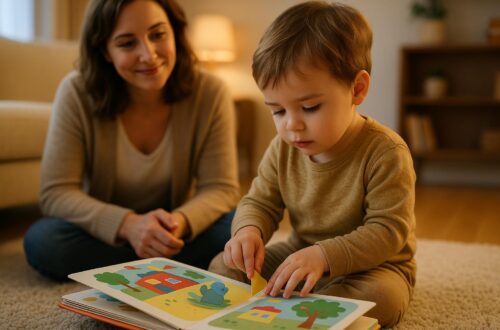
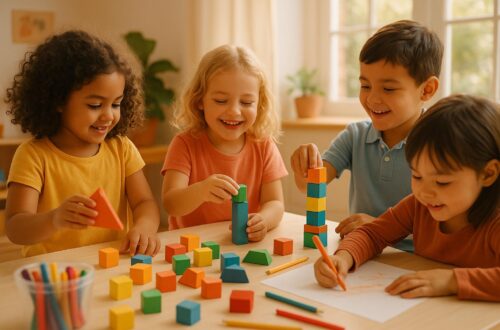
Play-based learning is a powerful way for children to develop emotional intelligence, a set of skills that help them understand and manage their emotions, connect with others, and build meaningful relationships. Through activities like pretend games, group play, and free play, kids naturally practice key emotional skills such as:
- Self-awareness: Recognizing their own emotions.
- Self-regulation: Managing feelings like frustration or excitement.
- Social awareness: Understanding how others feel.
- Relationship management: Resolving conflicts and collaborating with peers.
Play creates real-life emotional situations in a stress-free environment, allowing children to learn empathy, problem-solving, and emotional resilience. For example, losing a game teaches handling disappointment, while role-playing helps kids see life from someone else’s perspective. Parents can encourage emotional growth through simple activities like dress-up games, storytelling, and cooperative group play.
Research shows that children with higher emotional intelligence tend to perform better academically, form healthier relationships, and handle stress more effectively as they grow. By intentionally guiding play, parents can help their kids build these lifelong skills in a fun and engaging way.
EQ Classroom Ep. 8: How Play Builds Emotional Intelligence
Types of Play That Build Emotional Intelligence
Different types of play target specific emotional skills, helping parents guide their children’s growth with purpose. Let’s take a closer look at how free play, pretend play, and group play each contribute to emotional development.
Free Play: Exploring Emotions Independently
Free play allows kids to explore their emotions in a completely unstructured environment. Whether they’re building with blocks, drawing, or simply daydreaming, children gain the freedom to process their feelings without outside interference. For instance, a child might repeatedly knock down and rebuild a tower, working through frustration in a way that feels natural to them. Or they might express pure joy through an impromptu dance. These moments help kids become more aware of their emotions and build resilience, laying the groundwork for self-regulation and empathy.
Pretend Play: Practicing Empathy and Perspective-Taking
Pretend play gives children a chance to step into someone else’s shoes and explore different viewpoints. Through role-playing – whether pretending to be a doctor, a teacher, or a parent – kids learn how to navigate emotions in a safe and imaginative way. These activities act as emotional rehearsals, helping them experiment with responses to various scenarios. For example, pretending to comfort a sad friend teaches them to think about what someone else might be feeling. This kind of play strengthens empathy by encouraging kids to consider the emotions and needs of others.
Group Play: Building Social Skills and Emotional Regulation
Group play introduces children to the complexities of working with others, making it a powerful tool for developing social and emotional skills. Activities like building a fort together or playing team sports require kids to negotiate, share, and resolve disagreements. These situations naturally strengthen their ability to regulate emotions. Board games, for example, teach the importance of fair play and turn-taking, while collaborative projects encourage teamwork by requiring kids to share ideas and solve problems together.
Research from The Yale Center for Emotional Intelligence highlights how group play can act as a "mini emotional roller coaster", giving children real-time opportunities to practice managing their feelings. These experiences not only teach conflict resolution and cooperation but also help kids develop emotional strategies they’ll carry with them for life.
How Play Builds Emotional Intelligence: Key Processes
Play isn’t just fun – it’s a powerful way for children to learn emotional resilience and regulation. By diving into the "how" behind play-based learning, parents can better understand why these activities are so effective in shaping emotional intelligence.
Problem-Solving and Building Resilience
Play naturally introduces kids to challenges, offering a safe space to practice problem-solving and emotional regulation. Think about it: when a block tower tumbles or a disagreement arises over game rules, children are faced with an opportunity to manage their emotions and find new solutions. These moments teach them to handle setbacks with confidence and flexibility – skills that are essential for building emotional intelligence. Whether it’s during pretend play, free play, or group games, these experiences layer onto earlier lessons in empathy and emotional control.
On a deeper level, play also supports brain development, particularly in the prefrontal cortex – the area responsible for decision-making and managing emotions. Through activities that encourage executive functioning skills like cognitive flexibility, working memory, and self-control, children learn to regulate their emotions more effectively. In these low-pressure scenarios, they can experiment, make mistakes, and try again, all while strengthening the tools they’ll rely on to navigate future challenges.
sbb-itb-e558fb0
Practical Tips for Play-Based Emotional Learning
You don’t need fancy toys or elaborate setups to turn everyday play into a chance for emotional growth. The secret lies in guiding your child’s natural play instincts to help them build emotional skills. Here’s how you can weave emotional learning into your daily routine.
Encourage Role-Playing Activities
Dress-up games are a fantastic way for kids to explore emotions and perspectives. When your child puts on a firefighter’s hat or a superhero cape, they’re not just playing – they’re learning about bravery, responsibility, and the joy of helping others. Create a dress-up corner with old clothes, hats, and accessories. As they step into different roles, they’ll practice understanding others’ feelings and experiences.
Puppet shows can help kids express emotions they might struggle to put into words. Using sock puppets or stuffed animals, act out scenarios they’re facing. For example, if they’re navigating friendship challenges, let the puppets work through similar situations. This indirect approach makes it easier for kids to process emotions without feeling pressured.
Storytelling sessions are another great tool. Work with your child to create stories where characters face relatable challenges. Ask questions like, “How do you think the character felt?” or “What would you do in their place?” This helps nurture empathy and problem-solving skills while making the experience fun and collaborative.
"In imaginative play of that type, they’re stepping into each other’s shoes, learning to understand and feel for their peers." – Dr. Simone G. de Bruin’s research on pretend play
Playing house allows children to explore family roles and dynamics. Whether they’re pretending to be the parent, the child, or even the family pet, they learn how different actions and perspectives impact others. Stock up on simple props like toy dishes, dolls, or blankets for fort-building to encourage this kind of imaginative play.
These role-playing activities naturally help children develop emotional awareness and cooperation skills.
Set Up Group Play Opportunities
Cooperative outdoor games are excellent for teaching teamwork and emotional regulation. Activities like building a sandcastle, designing an obstacle course, or playing team games encourage kids to communicate, listen, and manage frustration when things don’t go as planned. These shared experiences are perfect for fostering emotional growth in a fun, active way.
Pretend cooking, serving, and shopping are especially engaging for preschoolers. Set up a play kitchen or a mini store where kids can take turns being the customer or cashier. These scenarios not only teach social skills but also give children a safe space to practice expressing emotions in structured interactions.
Guide Emotional Conversations During Play
Playtime is also a great opportunity to guide kids in understanding and expressing their feelings.
Use emotional vocabulary to help children identify and articulate their emotions. Instead of just saying, “Good job,” try something more descriptive like, “You looked so proud when you finished that puzzle,” or “I noticed you felt frustrated when the tower fell – it’s okay to feel that way.”
Ask playful questions that encourage deeper emotional thinking. Instead of the typical “How was school today?” try something like, “What was the trickiest part of your spaceship adventure?” or “How did your LEGO characters solve their problem?”
Practice expressing different emotions through pretend play. If a toy character is “angry,” guide your child in exploring healthy ways to handle that anger, like using words instead of acting out physically. Modeling this behavior can help kids learn emotional regulation.
Address real-life situations through role-play. For instance, if your child struggles with separation anxiety, you can create a scenario where their toy helps another toy cope with loneliness. This lets them practice empathy and develop coping strategies without feeling directly confronted about their own emotions.
Long-Term Benefits: Emotional Intelligence and Life Success
The skills children develop through play form a solid foundation for their future. Research highlights that early emotional learning has effects that reach far beyond the classroom, influencing academic achievement, social interactions, and even professional success.
Why Early Emotional Development Matters
Early emotional growth plays a critical role in shaping a child’s academic journey. Studies show that managing emotions effectively enhances focus and participation in the classroom, which can lead to better grades and more active engagement. Kids who learn to regulate their emotions are better equipped to handle challenges like test anxiety, collaborate on group projects, and bounce back from setbacks. These experiences set the stage for lifelong personal growth.
Beyond academics, emotional development also strengthens relationships. Play fosters essential skills like communication, conflict resolution, and empathy, all of which contribute to healthier, more meaningful connections with others.
The benefits don’t stop there – these early skills also translate into the workplace. Social awareness and problem-solving abilities developed during childhood can pave the way for smoother professional interactions and career advancement.
Play-based learning doesn’t just address short-term goals. It helps children build emotional intelligence that supports their success in school, relationships, and careers, making it clear just how important guided emotional development is.
How Brilliant Parenting Supports Emotional Growth
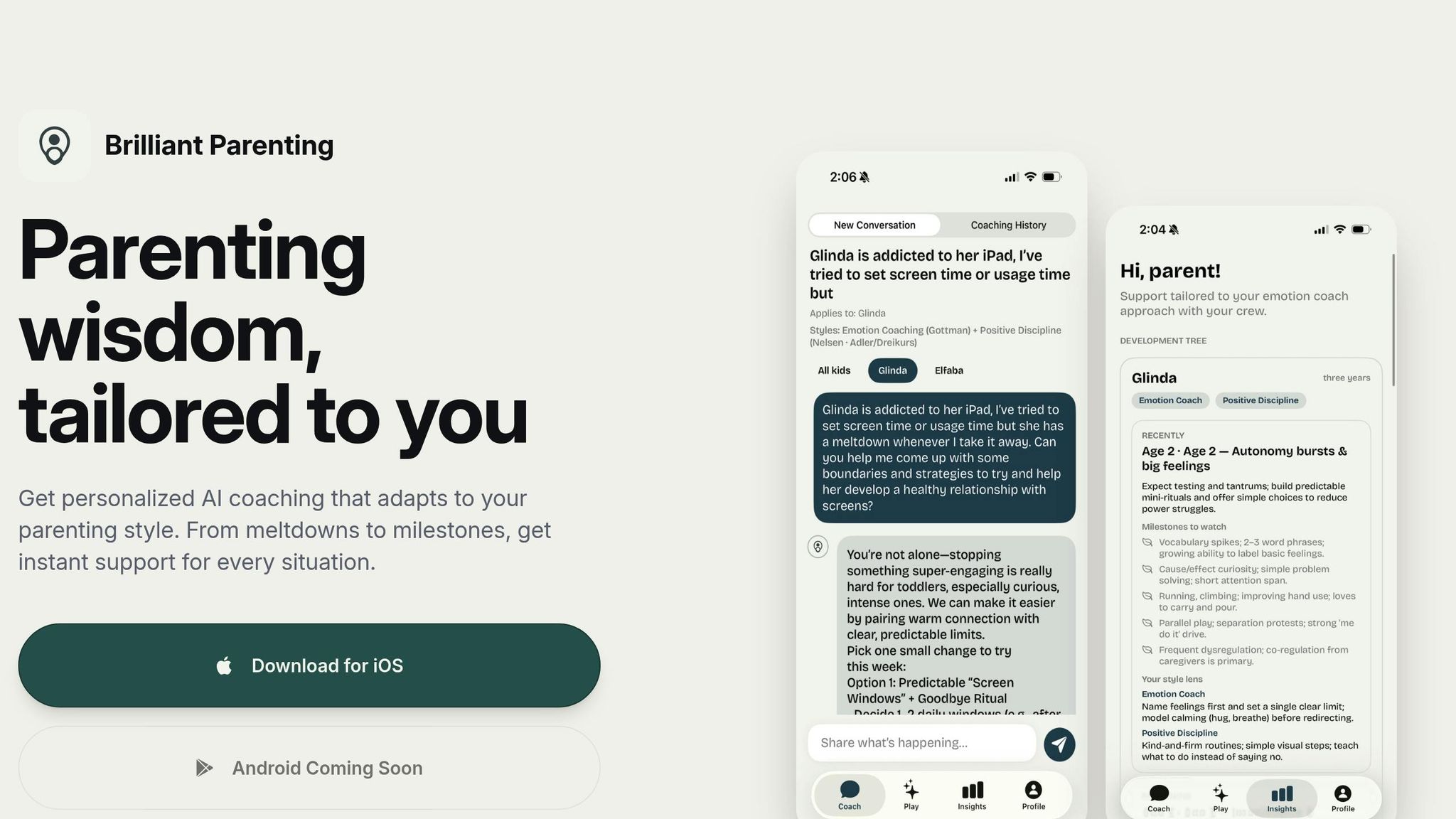
Brilliant Parenting takes a personalized approach to helping parents nurture their child’s emotional intelligence. With tailored AI coaching, the platform adapts to various evidence-based parenting styles, ensuring that its guidance aligns with both the parent’s approach and the child’s unique needs.
The play ideas library is packed with activities specifically designed to build emotional intelligence. These activities focus on key skills like empathy, self-regulation, and social awareness. Parents are provided with step-by-step guidance to facilitate these activities and recognize pivotal moments for emotional growth.
Through development tracking, parents can keep an eye on their child’s progress in emotional intelligence, celebrate milestones, and address areas needing extra attention. This feature is especially helpful for families with multiple children, as it offers individualized insights for each child’s development.
With 24/7 AI coaching, parents can turn everyday challenges into opportunities for growth. Whether it’s navigating a bedtime meltdown or resolving a sibling conflict, the platform offers immediate, practical advice to guide parents through tricky moments.
Finally, all strategies are grounded in evidence-based research, giving parents confidence that the tools and techniques they’re using are backed by science and truly effective in fostering their child’s emotional growth.
Conclusion: Play as a Foundation for Emotional Intelligence
Play isn’t just about fun – it’s a key way for children to develop emotional intelligence. Through play, kids gain emotional awareness, learn to manage their feelings, and build essential social skills that set them up for success in life.
Research backs this up, showing that play strengthens the core elements of emotional intelligence that children carry with them into adulthood. These skills form the bedrock for problem-solving, creativity, and resilience – qualities that are crucial in navigating the challenges of the modern world. Every playful moment becomes an opportunity to reinforce the emotional tools kids need for academic, social, and personal growth.
As a parent, you can use play intentionally to nurture these skills. Role-playing games, for instance, can help your child explore emotions and understand different perspectives. Group play offers valuable lessons in teamwork and resolving conflicts. Being present during these activities allows you to guide conversations about feelings and help your child process their experiences. These small, intentional moments make a big impact.
FAQs
How can parents use play-based learning to help their child build emotional intelligence?
Parents can nurture their child’s emotional growth through play-based learning by encouraging imaginative play. Activities like role-playing or storytelling allow kids to explore their emotions and better understand how others feel, fostering empathy in the process.
Cooperative games and problem-solving activities are also great tools for teaching kids important skills like self-control and teamwork. When parents create a safe and supportive space for play, they give their children the chance to naturally develop key social and emotional abilities.
What are some role-playing activities that help children build empathy and understand different perspectives?
Role-playing activities offer a playful yet impactful way for kids to build empathy and understand different perspectives. When children pretend to be a firefighter, teacher, or doctor, they step into someone else’s shoes, imagining how that person might feel or respond in various situations.
Everyday scenarios, like taking care of a pet or working through a disagreement with a friend, also provide valuable opportunities for kids to explore emotions and practice kindness. These imaginative exercises not only nurture emotional awareness but also make learning feel fun and purposeful.
How does play-based learning help children succeed socially and academically in the long run?
Play-based learning plays a crucial role in building emotional intelligence, which is essential for success in both academics and social interactions. When children engage in play, they naturally explore ways to identify and manage their emotions, show empathy toward others, and practice important skills like self-regulation and problem-solving.
By encouraging these abilities, play-based learning supports mental well-being and strengthens social bonds. It also equips children with the confidence to tackle challenges, laying the groundwork for success in school, relationships, and life as a whole.