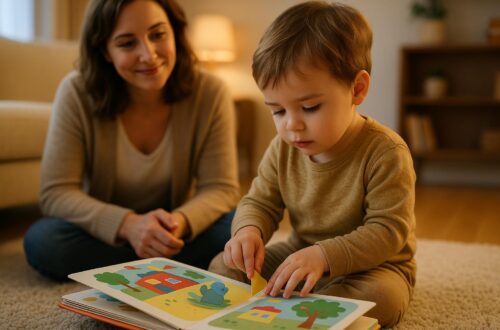
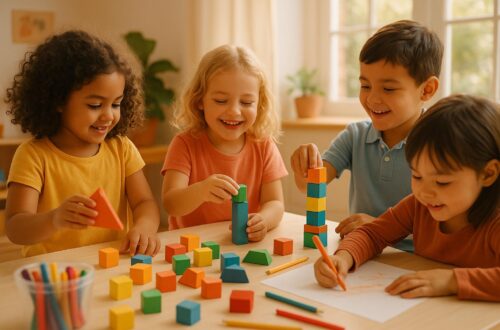
Teaching kids emotional regulation is about helping them manage feelings constructively – like a thermostat for their emotions. It’s not about avoiding big emotions but learning how to handle them. Here’s what you need to know:
- What it is: Emotional regulation involves recognizing, understanding, and managing emotions. It’s a skill that develops over time and varies by age.
- Key skills: Naming emotions, identifying triggers, and using coping strategies like deep breathing or physical activity.
- Parent’s role: Model emotional control, create supportive environments (like a calm space), and teach age-appropriate strategies.
- Handling meltdowns: Stay calm, validate feelings, ensure safety, and reflect together afterward.
- Long-term growth: Encourage routines, emotional check-ins, and unstructured play to build resilience.
This guide breaks down methods for toddlers, school-age kids, and teens, offering practical tips to help your child navigate emotions with confidence.
Coping Skills For Kids – Managing Feelings & Emotions For Elementary-Middle School | Self-Regulation
What Is Emotional Regulation?
Emotional regulation is your child’s ability to navigate their feelings in healthy ways. It’s not about shutting emotions down but about understanding them and responding in a constructive manner.
Take this example: a 4-year-old gets upset when their block tower collapses. Emotional regulation means they learn to express their frustration without resorting to hitting or throwing toys.
There are three essential parts to emotional regulation:
- Awareness: Recognizing the emotion they’re feeling.
- Understanding: Knowing why they feel that way.
- Management: Deciding how to respond to those emotions.
Some parents assume that a well-regulated child never has tantrums or strong emotions. That’s a misconception. All kids experience big feelings, and that’s perfectly normal. The key difference is in how they learn to handle and express those emotions as they grow.
What emotional regulation is NOT about:
- Hiding or suppressing emotions.
- Avoiding meltdowns or tough moments altogether.
- Being cheerful all the time.
- Instantly calming down on command.
What emotional regulation IS about:
- Developing strategies to handle overwhelming emotions.
- Recognizing that all feelings are valid, even if certain behaviors aren’t acceptable.
- Building resilience to recover from emotional challenges.
It’s important to remember that a child’s brain is still developing, especially the prefrontal cortex, which is responsible for emotional control. So, when your 3-year-old has a meltdown, it’s not defiance – it’s simply that their brain isn’t yet equipped to manage those complex emotions.
Emotional regulation evolves with age. A toddler might need help identifying their feelings and learning basic calming techniques. A school-age child can start recognizing emotional triggers and practicing more advanced coping skills. By the time they’re teenagers, they’re working on managing social stress and more nuanced emotions.
Your child will still have emotional outbursts as they develop these skills. That’s part of the process. Just like learning to walk involves falling down, learning emotional regulation takes practice, patience, and support – from both you and your child.
Having this foundation in mind helps you approach your child’s emotional moments with realistic expectations and effective strategies. Up next, we’ll dive into the specific skills that support emotional regulation.
Key Skills for Emotional Regulation
Think of emotional regulation as constructing a sturdy house. You need a solid foundation, dependable walls, and a reliable roof. For kids, these skills provide that structure, offering a sense of safety and control when emotions run high. Building on the basics of understanding emotions, these methods provide practical tools to help children manage and express their feelings in healthy ways.
Recognizing and Naming Emotions
Before kids can manage their emotions, they need to identify them. Many children, and even adults, struggle to articulate what they’re feeling.
Start with simple words. Young kids often recognize emotions like "happy", "sad", or "mad." From there, expand their vocabulary with terms like frustrated, disappointed, excited, worried, or overwhelmed. Being able to name their feelings helps them understand what’s going on inside.
Use visual aids like emotion charts. Brightly colored charts with faces showing different emotions can help kids point out what they’re feeling. Hang one in a spot they can easily access, like their bedroom or a shared family space, to encourage frequent use.
Make it a daily conversation. Ask questions like, “What emotions did you feel today?” or pause during a movie to discuss what the characters might be experiencing. These moments naturally build their emotional vocabulary.
Model naming your own emotions. Share your feelings out loud, like saying, “I’m feeling frustrated because the traffic is so bad,” or “I’m excited about our plans this weekend.” This normalizes talking about emotions and shows how it can be helpful.
Read emotion-focused books together. Stories can introduce kids to different feelings and show how characters handle tough situations. This creates opportunities for gentle, meaningful conversations.
Identifying Triggers and Body Signals
Understanding the link between physical sensations and emotions can help kids recognize when emotions are building before they become overwhelming.
Talk about how emotions feel in the body. When your child is calm, discuss how emotions like anger or anxiety might show up physically. For example, anger might feel like tight fists or tense shoulders, while anxiety could feel like a fluttery stomach or a racing heart.
Teach body awareness with simple check-ins. Ask questions like, “How do your shoulders feel? Is your stomach tight? Are your hands relaxed or clenched?” This helps kids tune into their body and notice changes tied to emotions.
Create a body signals chart. Use images to connect body parts with feelings, like a red face for anger or a slouched posture for sadness. This visual tool can remind kids to pay attention to their physical cues.
Identify common triggers together. Look for patterns in what upsets your child. Maybe they struggle when they’re hungry, tired, overstimulated, or when plans change suddenly. Recognizing these triggers can help everyone anticipate emotional challenges.
Coping Methods for Strong Emotions
Once kids can recognize and name their emotions, they need strategies to manage them. Teaching these tools during calm moments, rather than in the heat of the moment, sets them up for success.
Try deep breathing exercises. Simple techniques like “smell the flower, blow out the candle” can activate the body’s natural calming response. Another option is “deep belly breathing,” where they place one hand on their chest and the other on their belly, focusing on making their belly rise with each breath.
Encourage physical movement. Activities like walking, biking, dancing, or even jumping on a trampoline can help release pent-up energy and tension. For younger kids, crashing into a pile of pillows can also be a fun way to let out strong feelings.
Prepare a calm-down kit. Fill a small box with sensory items like a soft stuffed animal, a fidget toy, or headphones for calming music. Having these tools handy gives kids immediate options when emotions feel overwhelming.
Introduce mindfulness activities suited to their age. For younger kids, this could mean paying attention to the sounds around them or enjoying a snack mindfully by focusing on its taste, texture, and smell. Older kids might prefer guided imagery or progressive muscle relaxation exercises.
A mix of physical, sensory, cognitive, and social techniques works best for developing emotional regulation skills. Keep in mind, learning these tools is a process. Emotional outbursts will still happen as kids practice, and that’s okay. The goal isn’t to eliminate big emotions but to help kids handle them in healthier ways over time. Next, we’ll dive into how parents can actively teach and reinforce these strategies.
How Parents Can Teach Emotional Regulation
Helping kids learn emotional regulation involves creating a space where they can safely practice and develop these skills. As a parent, you have the most important role in shaping your child’s emotional understanding. Your behavior, the environment you provide, and the activities you encourage all contribute to building their emotional resilience.
Leading by Example: Showing Emotional Control
Kids often mirror what they see. They observe how you handle stress, frustration, and disappointment, and they learn from your actions. Your ability to model healthy emotional responses is far more impactful than any speech or lesson.
Stay composed during your own emotional challenges. Whether you’re stuck in traffic or dealing with a tough day at work, share your coping strategies. For example, you could say, “I’m feeling really frustrated, so I’m going to take a few deep breaths,” or “This is stressful, but I’ll focus on what I can do.” This shows kids that even adults experience big emotions and that there are healthy ways to manage them.
Own your mistakes and make amends. If you lose your temper, apologize and explain how you’ll handle it differently next time. For instance, you might say, “I’m sorry I yelled earlier. I was overwhelmed, but that wasn’t the right way to respond. Next time, I’ll take a moment to calm down first.” This teaches kids that it’s okay to make mistakes and that growth is always possible.
Demonstrate a variety of coping strategies. Let your child see you using different methods to manage emotions throughout the day. Whether it’s stepping outside for fresh air, listening to music, or calling a friend for support, you’re showing them that there are many ways to handle life’s challenges.
Explain your thought process in tricky situations. For example, you could say, “I’m disappointed our plans got canceled, but I’m focusing on what we can do instead.” This helps kids learn how to reframe negative experiences and find solutions. Through these actions, your child will begin to internalize healthy emotional habits.
The next step is creating a physical environment that supports these lessons, such as a calm space.
Setting Up a Calm Space
A calm space provides a safe retreat where children can regroup when emotions feel overwhelming. Unlike a punishment, this area is designed to help them reset and regain control.
Pick a quiet and accessible location. It could be a cozy corner of their bedroom, a spot in the living room, or even a small section of the hallway. The space doesn’t need to be large, but it should feel separate from busy areas of the home.
Add comforting, personal items. Include things like a favorite stuffed animal, family photos, or artwork your child has made. These small touches make the space feel welcoming and secure.
Post visual reminders of coping tools. For younger children, use pictures to illustrate breathing exercises or calming techniques. Older kids might benefit from written affirmations or a list of strategies they’ve learned. Having these reminders nearby can guide them when they’re feeling overwhelmed.
Set clear rules for the space. Explain that this area is for calming down, not for playing or avoiding tasks. Let your child know they can use it whenever they need to and that you’ll respect their time there unless they ask for help. This gives them ownership of their emotional regulation.
Keep it tidy and refresh it regularly. A cluttered space won’t feel inviting, so make sure it stays organized. Rotate items occasionally to keep the area engaging and effective.
In addition to a calm space, movement can be a powerful tool for emotional regulation.
Using Physical Activity and Movement
Physical activity is a great way for kids to release tension and manage strong emotions. Movement not only helps burn off pent-up energy but also provides a healthy outlet for big feelings.
Match activities to their emotions. For anger or frustration, try active options like running, jumping, or even punching a pillow. For anxiety, slower activities like yoga, stretching, or a gentle walk can be calming. If your child feels sad, rhythmic movements like swinging or rocking may help.
Make movement a regular habit. Don’t wait for emotional crises to encourage physical activity. Daily routines like dancing in the kitchen, walking the dog, or taking quick movement breaks during homework can make a big difference. Even a few minutes of activity can help regulate emotions.
Take advantage of outdoor spaces. Nature has a calming effect, so head outside when emotions run high. A walk around the block, playing in the backyard, or sitting together on the porch can help shift their mood and provide a fresh perspective.
Build movement into daily routines. Incorporate physical activity into your day so it becomes second nature. This might include stretching before bed, having a morning dance session, or doing jumping jacks during long car rides. When movement is already part of their routine, kids are more likely to turn to it when they need emotional support.
Let them choose activities they enjoy. Some kids thrive in organized sports, while others prefer free-form activities like dancing or climbing. Pay attention to what excites them and encourage those preferences. The more they enjoy the activity, the more likely they are to use it as a coping tool.
Join in the fun. Participating in movement activities with your child not only strengthens your bond but also shows them the value of physical activity. Whether it’s trying yoga together, shooting hoops, or simply walking and talking, your involvement makes the experience more meaningful.
Teaching emotional regulation isn’t about a single lesson – it’s a continuous process. By modeling healthy habits, creating supportive environments, and encouraging movement, you’re equipping your child with skills that will serve them for life. From here, you can tailor these strategies to suit your child’s unique needs and developmental stage.
Age-Appropriate Strategies
Children’s emotional development progresses in predictable stages, but each phase requires specific approaches. By understanding these developmental shifts, you can choose tools that align with your child’s needs and set realistic expectations for their emotional growth. These strategies build on earlier skills, preparing both you and your child for the next steps.
Toddlers and Preschoolers
Toddlers experience emotions with full intensity, but they lack the language and reasoning skills to process them. Emotional outbursts are a normal part of this stage as their brains are still maturing.
Start with simple emotion words. Use basic terms like happy, sad, mad, and scared to help your toddler label their emotions. For example, if they’re upset, you might say, "You look really mad that we have to leave the playground." A feelings chart with pictures can also be a helpful tool for nonverbal communication.
Redirect and distract, but acknowledge their feelings first. If your 2-year-old is having a meltdown because they can’t have a cookie, start by validating their emotion: "You really wanted that cookie." Then gently redirect their attention: "Let’s go see what the dog is doing." This approach balances empathy with practical distraction.
Try playful breathing exercises. Instead of traditional deep breathing, use fun techniques like "smell the flower, blow out the candle" or "balloon breathing", where they pretend to inflate their belly like a balloon. These methods make calming down feel like a game.
Establish simple routines for managing big feelings. For example, when your preschooler feels overwhelmed, guide them through predictable steps like hugging a stuffed animal, taking three deep breaths, and talking about what happened. Routines provide a sense of control and security.
Offer comfort objects. Items like a favorite blanket, stuffed animal, or even a smooth stone can help soothe your child during emotional moments. These objects serve an important role in their development, and they’ll naturally outgrow the need for them in time.
Keep explanations short and concrete. Instead of lengthy discussions about emotions, use clear phrases like, "When we’re angry, we can stomp our feet or squeeze our hands tight." Demonstrate these actions to make them easy to understand.
These foundational skills lay the groundwork for more advanced strategies as your child grows, which are especially relevant for school-age children.
School-Age Children
By the time kids are 6 to 11 years old, they’ve developed better language skills and can start connecting their thoughts, feelings, and behaviors. This stage is ideal for introducing more structured emotional regulation techniques.
Encourage journaling and problem-solving. Provide a notebook where your child can draw or write about their feelings. If they’re upset about a conflict with a friend, guide them through questions like: What happened? How did it make you feel? What are three things you could do about it? What might happen with each choice?
Practice role-playing. When emotions are calm, rehearse scenarios they might encounter. For example, say, "Let’s pretend someone cuts in front of you in line. Show me two ways you could handle that." This practice helps them prepare for real-life situations.
Teach them to recognize physical signs of emotions. Help your child notice when their body signals rising emotions, like tight shoulders, clenched fists, or a racing heart. Recognizing these signs early allows them to use coping strategies before emotions escalate.
Let them build their own coping toolkit. Encourage your child to choose strategies that work best for them, such as drawing, listening to music, or moving around. Giving them ownership over their tools increases the likelihood they’ll use them.
Expand their emotional vocabulary. Introduce more nuanced words like frustrated, disappointed, or nervous. The ability to name emotions with precision helps them address those feelings more effectively.
For older kids, these strategies evolve further to address the unique challenges faced by pre-teens and teenagers.
Pre-Teens and Teenagers
As children enter adolescence, they begin to face more complex emotional challenges. Their brains are undergoing significant changes, enabling abstract thinking, but they’re also navigating hormonal shifts and social pressures. At this stage, your role transitions from teacher to coach.
Respect their growing independence. Ask whether they need advice or just someone to listen. This approach acknowledges their autonomy while keeping the lines of communication open. Sometimes, they just need to vent without hearing a lecture or solution.
Foster deeper self-reflection. Teens can explore more complex emotional ideas. Encourage questions like, "What patterns do you notice in your stress?" or "How do your emotions impact your relationships?" These discussions help build self-awareness and emotional insight.
Adapt to their preferred communication style. Some teens open up during car rides, others prefer texting, and some need face-to-face talks. Pay attention to what works best for your teen and be available during those moments.
Introduce mindfulness and grounding techniques. Apps like Headspace or Calm can be useful, or try simple exercises like the 5-4-3-2-1 technique: name 5 things you see, 4 things you hear, 3 things you feel, 2 things you smell, and 1 thing you taste. These tools help manage anxiety and bring them back to the present moment.
Set emotional goals together. Work with your teen to identify specific emotional skills they want to improve. For instance, they might aim to stop snapping at siblings when stressed or feel more confident speaking up in class. Clear goals make progress feel achievable.
Model healthy boundaries. Show them how to say no to draining commitments, step away from toxic relationships, and prioritize mental health. Teens are navigating increasingly complex social dynamics and benefit from seeing these skills in action.
Validate their feelings. If your teen is stressed about a test or upset over friend drama, avoid dismissing their emotions with comments like "It’s not a big deal." Instead, try saying, "That sounds really stressful" or "I can see why that would upset you." This approach affirms their experiences without minimizing them.
At every stage, the key is to meet your child where they are developmentally and support their growth with patience and consistency. Emotional regulation is a skill that evolves over a lifetime – even adults are still learning how to master it. With your guidance, your child will build the tools they need to navigate their emotions with confidence.
sbb-itb-e558fb0
Handling Emotional Outbursts and Tantrums
Dealing with a child’s meltdown can feel overwhelming, but having a plan can make a big difference. Focus on ensuring safety, validating their emotions, and maintaining clear boundaries. How you respond during these moments plays a crucial role in teaching your child how to manage their feelings in the future.
Start by calming yourself. Your own emotional state sets the tone. Take a deep breath, lower your voice, and remind yourself that this is an opportunity to guide your child. If you escalate, they’re likely to follow your lead.
Prioritize safety first. If your child is hitting, throwing things, or putting themselves or others in danger, step in to create a safe space. Move breakable or hazardous items out of reach, and position yourself nearby to intervene if needed. Avoid physically restraining them unless absolutely necessary, as it can heighten the intensity of the situation.
Stick to simple, validating phrases. When emotions are running high, your child isn’t ready for long explanations or reasoning. Keep your words short and empathetic, like “I can see you’re upset.” Save deeper conversations for later, when they’re calm.
Let the emotions flow. It’s tempting to try to stop the tantrum immediately, but emotions need time to pass. Trying to shut it down too quickly can backfire. Instead, stay close and offer quiet support. You might say, “I’ll be right here with you until you’re ready.”
Wait to problem-solve. During a meltdown, your child’s ability to reason is temporarily offline. Focus on offering comfort and connection. Once they’ve calmed down, you can address the issue and discuss solutions.
Hold firm on boundaries. Validating feelings doesn’t mean giving in to unreasonable demands. For example, you can say, “I understand you’re upset that we have to leave the park, but it’s time to go home.” This teaches that while all emotions are okay, certain behaviors are not.
Offer comfort without taking over. As the intensity fades, you can provide gentle comfort, like a hug or a glass of water. Follow their cues – some kids want closeness, while others need space. Pay attention to what helps them feel better.
Reflect together afterward. Once your child is calm – whether it’s 10 minutes or a few hours later – briefly revisit what happened. Ask questions like, “What do you think made you so upset?” or “How can we handle that differently next time?” This helps them build emotional awareness and problem-solving skills.
Look for triggers. After the meltdown, consider what might have caused it. Were they hungry, tired, or overstimulated? Identifying patterns can help you address potential triggers before they escalate in the future.
Take care of yourself. Handling outbursts can be draining, so don’t forget to prioritize your own well-being. Whether it’s talking to a partner, taking a short break, or seeking advice from others, make sure you’re recharging. Your resilience sets an example for your child.
Keep perspective – it’s a phase. Emotional outbursts are a normal part of growing up, especially during times of change or development. With consistent and patient responses, your child will gradually learn to manage their emotions. These moments, while challenging, are stepping stones toward building emotional resilience.
The goal isn’t to stop all tantrums – that’s unrealistic and unhealthy. Instead, it’s about helping your child understand that emotions are natural and manageable. By being a steady, supportive presence, you’re giving them the tools they need to navigate their feelings and build lasting emotional strength.
Building Long-Term Emotional Skills
Helping children develop emotional skills is a gradual process, much like learning to ride a bike. The more they practice managing their emotions in everyday moments, the more prepared they’ll be to handle life’s bigger challenges.
Stick to predictable routines for emotional stability. Kids thrive when they know what to expect. Having consistent mealtimes, bedtimes, and family rituals creates a sense of security. It doesn’t mean you need to plan every second of the day, but a reliable structure helps children feel grounded and less overwhelmed by unexpected changes.
Make emotional check-ins a regular habit. These don’t have to be formal. Use casual moments, like car rides or dinner, to ask questions like, "What made you smile today?" or "Did anything upset you?" These conversations help kids feel comfortable discussing their emotions and build their ability to articulate how they feel. Keep the tone light and natural – this is about connection, not interrogation.
Let kids have unstructured playtime. Free play is a powerful tool for emotional growth. Avoid overloading their schedules, as downtime often sparks creativity and helps them develop emotional resilience. Even boredom can be a valuable teacher.
Practice emotional skills during family activities. Simple activities like cooking, gardening, or playing board games offer great opportunities to work on patience, coping, and teamwork. These shared moments make learning emotional skills feel natural and fun.
Prepare for transitions and challenging situations. If you know a change is coming – like leaving the playground or attending a big family gathering – give your child a heads-up. For instance, a five-minute warning before leaving helps them adjust. If they get overwhelmed at events, create a quiet space where they can take a break. Planning ahead can prevent meltdowns before they start.
Show them how to recover, not just control emotions. Kids learn a lot from how you handle your own emotions. If you lose your temper, apologize and explain what you’ll do differently next time. Let them see that making mistakes is normal and that what matters most is how we repair and grow from those moments.
Introduce emotional vocabulary step by step. Start with basic feelings like happy, sad, or angry, and gradually add more complex emotions as they grow. The more words they have to describe their feelings, the better they’ll be at communicating their needs.
Create family traditions that support emotional growth. These could be weekly family meetings to share highs and lows, or bedtime routines where everyone says one thing they’re grateful for. These rituals emphasize that emotions matter and that family is a safe space to express them.
Acknowledge emotional milestones, not just academic ones. When your child handles a tough situation well or shows kindness, point it out. For example, you might say, "I saw how you stayed calm when you were frustrated with that puzzle. That was really impressive." This reinforces the importance of emotional growth and shows that these skills are just as valuable as other achievements.
Finally, be patient with the process. Emotional development isn’t a straight path – it’s full of ups and downs. Your child might handle emotions well for weeks, only to struggle during stressful times or growth spurts. That’s completely normal. What matters most is the consistency of your support, not perfection in their behavior.
Every small moment of emotional guidance adds up, laying the groundwork for your child to face future challenges with confidence and resilience. These early lessons will stay with them for a lifetime.
How Brilliant Parenting Can Help Your Family
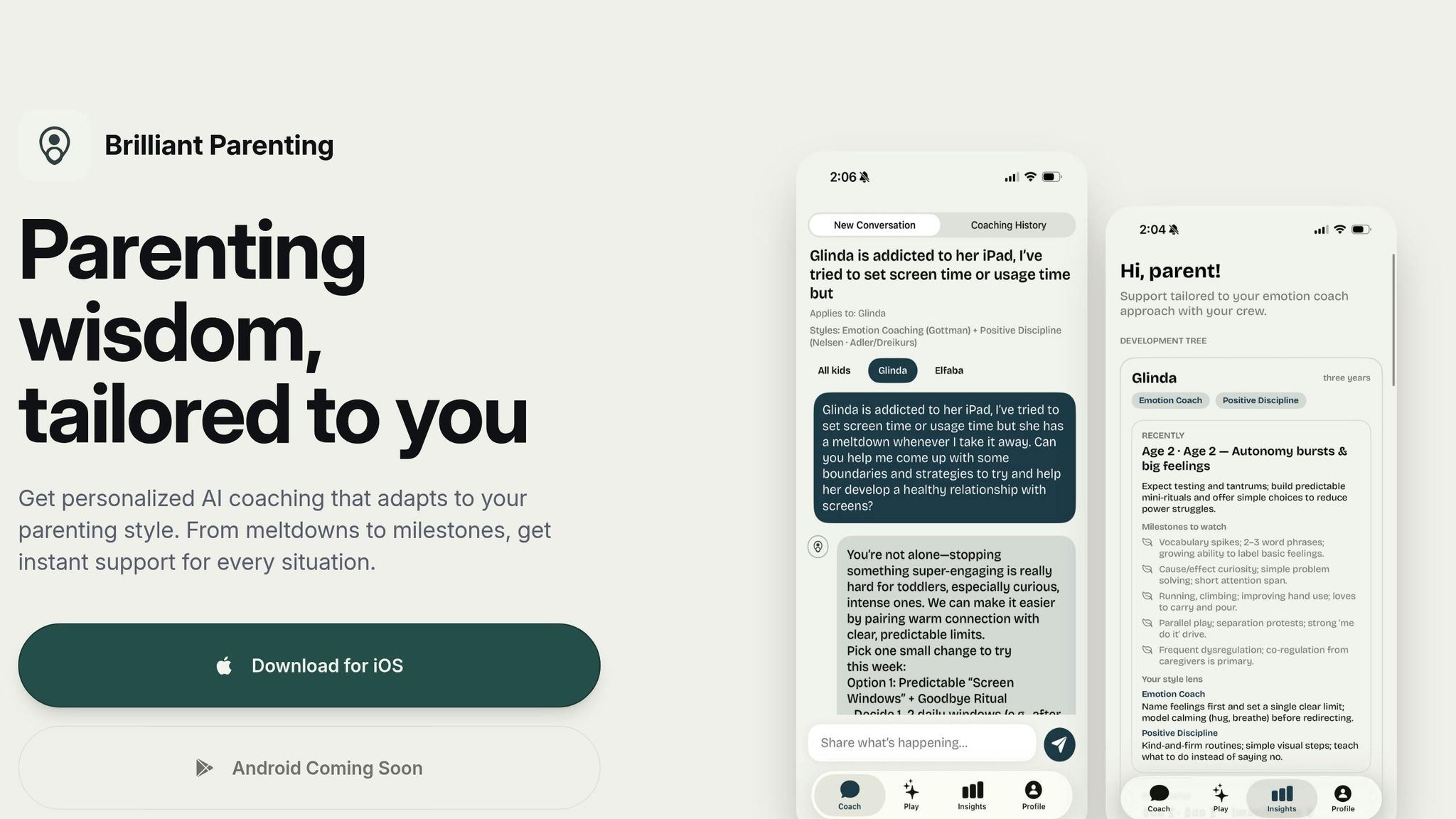
Teaching emotional regulation is no small feat, especially when faced with tantrums and meltdowns. This is where Brilliant Parenting steps in, offering personalized AI coaching to guide you with strategies tailored to your family’s unique needs – all in real time.
The platform begins by understanding your parenting style through a quick onboarding quiz. Based on your answers, it identifies one of seven parenting styles and adapts its recommendations to align with your natural approach. Whether you’re calm and nurturing or more structured and goal-oriented, the AI ensures its guidance fits seamlessly into your parenting routine, helping you teach emotional regulation in a way that feels natural.
Real-time support is a standout feature of Brilliant Parenting. When a meltdown happens, you don’t have time to sift through books or articles. The platform’s 24/7 availability ensures you receive immediate, actionable advice. It provides specific scripts and strategies to help you stay calm, handle the situation effectively, and guide your child through their emotions in the moment.
For a more engaging approach, the platform includes a play ideas library filled with fun, age-appropriate activities that promote emotional learning. Instead of formal lessons, your child can build emotional skills through games and activities they’ll actually enjoy. These activities help kids identify emotions, manage frustration, and develop coping tools – all while having fun. Plus, you can track their progress to see how these playful moments are making a difference.
Speaking of tracking, the development tracking feature is a game-changer. Emotional growth can sometimes feel slow and hard to measure, but this tool allows you to monitor your child’s milestones alongside their broader development. For families with multiple children, it’s especially helpful, as the platform offers personalized advice for each child, taking into account their unique emotional needs and personalities.
Another helpful feature is the personalized scripts. These go beyond generic advice, offering practical, targeted suggestions based on your child’s age and your family dynamics. If you’re managing siblings with different emotional needs, the platform adjusts its recommendations accordingly. This ensures you have strategies that work for each child, making it easier to navigate emotional moments and teach regulation skills tailored to their individual personalities and developmental stages.
What sets Brilliant Parenting apart is its foundation in research. Every strategy and recommendation is rooted in proven parenting methodologies, giving you confidence that the tools you’re using will help your child build lasting emotional skills.
Getting started is simple. A free 7-day trial lets you explore the platform and test its features in real-life situations with your family. This way, you can see firsthand how the personalized recommendations address your specific challenges before deciding to commit.
Brilliant Parenting transforms emotional regulation into manageable, everyday practices, giving you a reliable resource that grows and adapts alongside your family.
Conclusion: Helping Parents Build Emotionally Strong Kids
Teaching emotional regulation goes far beyond curbing tantrums – it’s about equipping your child with the tools they’ll rely on to face life’s ups and downs with confidence and strength. This guide has shared practical strategies to help nurture emotional intelligence in your child.
At its core, emotional regulation is a skill that takes time, patience, and consistent practice to develop. Your own behavior plays a key role in this process. Kids learn more from what they see than what they’re told, so your calm and measured responses during tough moments become their blueprint. When you validate their emotions, stay composed, and model healthy coping mechanisms, you’re giving them a real-world example of how to manage their own feelings.
The strategies in this guide provide a starting point for fostering emotional growth. You don’t have to tackle everything at once – begin with one or two approaches that feel natural for your family and build from there. Small, consistent steps can make a big difference over time.
Additionally, resources like Brilliant Parenting’s personalized AI coaching can complement your efforts. Building emotional strength in children is a gradual process, and having the right tools and support makes the journey smoother. These strategies, paired with supportive systems, can help you manage the daily challenges while laying the groundwork for your child’s long-term emotional well-being.
Every child’s path is unique, and progress won’t always be linear. Some days may feel harder than others, but the skills they develop now will serve as a foundation for resilience and self-confidence in the future. What matters most is your dedication to guiding them as they learn and grow into emotionally strong individuals.
FAQs
How can I teach my child to recognize their emotions and physical responses?
Helping your child recognize and understand their emotions begins with teaching them to identify and name their feelings. Tools like an emotion chart can be incredibly helpful. These visual aids show a range of emotions, making it easier for kids to match their experiences with the right words. When your child seems upset, excited, or overwhelmed, encourage them to pause and describe what they’re feeling in that moment.
It’s also important to help them notice physical signals their body might be sending. For example, a racing heart might indicate nervousness, or clenched fists could signal anger. By practicing this regularly, your child can build stronger self-awareness and gradually improve their ability to manage their emotions.
What are some effective ways to help teenagers develop emotional regulation skills?
Helping teenagers learn to manage their emotions takes a mix of practical strategies and open, supportive communication. Start by ensuring they have a safe, judgment-free space where they can openly share what they’re feeling. Simple techniques like deep breathing or practicing mindfulness can help them stay grounded when stress levels rise.
Encourage physical activities – whether it’s playing sports, dancing, or just taking a brisk walk – as these can help release built-up energy and lighten their mood. Suggesting they keep a journal can give them a private outlet to sort through their thoughts and feelings. Teaching them how to use positive self-talk can also boost their confidence and emotional resilience. And if they need extra help, reaching out to a therapist can equip them with additional tools tailored to their situation.
What is a calm space, and how can it help kids with emotional regulation?
A calm space is a dedicated spot where children can retreat to when they need a moment to settle their emotions. It doesn’t have to be elaborate – think of a cozy corner with soft cushions, a favorite blanket, or soothing items like stuffed animals or sensory toys.
Encouraging your child to use this space during moments of frustration, overwhelm, or upset can make a big difference. Over time, it helps them identify their feelings and practice self-regulation in a nurturing environment. Keep the area free from distractions and focus on making it warm and inviting.