Sequencing games help children develop critical thinking, memory, and language skills by arranging events or objects in logical order. From organizing story cards to following routines like setting the table, these activities teach kids how to plan, recognize patterns, and solve problems step-by-step. They also improve focus, attention to detail, and communication skills by encouraging the use of words like "first" and "next."
Key Takeaways:
- Logical Thinking: Kids learn cause-and-effect relationships and problem-solving.
- Memory & Attention: Recalling sequences strengthens working memory and focus.
- Language Development: Improves vocabulary and storytelling abilities.
- Everyday Integration: Use routines like cooking or bedtime to practice sequencing.
Start small with simple tasks for toddlers and gradually increase complexity for older kids. Using tools like story cards, puzzles, or even daily chores can make learning fun and effective.
14 Brain gym Activities For Kids | Sequencing Activities (Age 3+)
Cognitive Skills Strengthened by Sequencing Activities
Sequencing activities do more than entertain – they help sharpen key cognitive abilities in children.
Logical Thinking and Problem-Solving
When kids play sequencing games, such as arranging story cards or assembling puzzles, they practice organizing events in a logical order. This helps them recognize patterns and understand cause-and-effect relationships, like how a seed grows into a flower. These activities naturally encourage problem-solving too. For instance, if a story doesn’t flow correctly in the order they’ve chosen, they learn to step back, figure out what’s off, and try again. This trial-and-error approach builds their ability to evaluate solutions and refine their thinking. Along the way, they also strengthen memory and focus, which tie into the next skill set.
Memory and Attention Development
Sequencing activities are a workout for a child’s working memory. Whether they’re recalling the order of events in a story or completing a pattern, they’re actively holding and manipulating information in their minds. This process helps improve their ability to retain and process details simultaneously.
These activities also sharpen attention to detail. For example, when arranging pictures of daily routines, kids have to notice subtle cues – like whether the sun is rising or setting, or if someone is getting dressed for bed or for the day.
The focus required for sequencing games is another big plus. Unlike passive activities, these games demand continuous engagement. Kids learn to stick with a task even when it gets tricky, building the persistence they’ll need for schoolwork and other complex challenges.
Language and Communication Skills
Sequencing games are great for expanding vocabulary, especially when it comes to time-related words like "before", "after", "meanwhile", and "finally." These words help kids organize their thoughts and express ideas more clearly.
Storytelling skills also get a boost. When children arrange story cards and narrate the sequence, they’re learning about narrative structure – beginning, middle, and end. This not only supports reading comprehension but also encourages creative writing.
These activities also improve communication. As kids explain why they placed events in a particular order, they practice logical thinking and clear articulation. Additionally, sequencing games enhance listening skills, especially when children follow multi-step instructions or work in groups. They learn to process information in sequence, remember steps, and interact effectively with others – all while staying engaged in the activity.
How to Add Sequencing Games to Daily Play
Sequencing games can easily fit into your daily routines without the need for special tools or equipment. By incorporating these activities into everyday moments, you can help your child develop important cognitive skills – all while having fun together.
Adding Sequencing to Playtime
You can seamlessly include sequencing in activities your child already enjoys. For example, jigsaw puzzles are a fantastic way to teach sequencing. Kids learn to start with the edges or specific sections and build their way inward. Start with simple puzzles of about 12 pieces and gradually move to more complex ones as they gain confidence.
Another fun option is using story cards. You can make your own by taking photos of your child’s daily routines – for instance, their morning activities. Mix up the photos and have them arrange the images in the correct order. Using personal photos not only makes the activity relatable but also reinforces daily habits.
Building blocks and pattern games are also great for sequencing. Arrange colored blocks in simple patterns, like red-blue-red-blue, and challenge your child to continue the sequence or create a new one.
Even classic board games can help. Games like Sequence for Kids or matching card games naturally involve sequencing. And don’t forget timeless favorites like Candy Land, which teach progression and following steps.
These play-based activities are a great foundation for introducing sequencing into everyday routines.
Using Daily Routines to Build Skills
Everyday routines are perfect for practicing sequencing. Take morning routines, for example. Instead of rushing through the process, involve your child in planning the steps. Ask questions like, "What comes after brushing your teeth?" or "What do we do before putting on shoes?" This helps them think through the sequence of events.
Cooking together is another excellent opportunity. If you’re making pancakes, let your child help measure ingredients in order and talk through each step: "First, we mix the dry ingredients. Then, we add the wet ingredients. Finally, we cook them on the griddle." It’s both practical and fun.
Bedtime routines are another natural fit. Create a visual chart showing each step – bath time, pajamas, brushing teeth, reading a story – and let your child check off each activity as it’s completed. This not only reinforces sequencing but also fosters independence.
Even chores can provide sequencing practice. Sorting laundry by family member or type, for example, teaches organization and order. These everyday activities help your child internalize sequencing skills in a practical, hands-on way.
Activities by Age Group
Sequencing activities should match your child’s developmental stage to keep them engaging and effective.
Toddlers (18 months to 3 years) thrive with simple, hands-on activities. Use three large picture cards to illustrate basic routines, like sitting down to eat, taking a bite, and wiping their mouth. Keep sequences short and familiar. Stacking toys are also excellent for toddlers, as they learn that certain pieces must go on before others.
For preschoolers (3 to 5 years), you can introduce more complex sequences and storytelling. Use four to six picture cards to create simple stories or show processes like a seed growing into a flower or a caterpillar transforming into a butterfly. Preschoolers also enjoy following simple recipes with your help, learning to complete steps in the correct order.
Early elementary children (5 to 8 years) are ready for multi-step sequences and more abstract ideas. They can arrange story cards into longer narratives, create comic strips, or follow detailed building instructions. Activities like timelines are especially engaging – have them arrange pictures of themselves from babyhood to now, or explore historical events in order.
For this age group, science experiments are an exciting way to practice sequencing. Simple projects, like growing beans in a jar or making a baking soda volcano, teach them to follow steps carefully while observing the results over time.
The key is to start with simple tasks and gradually increase the complexity as your child grows. If they seem frustrated, scale back to something more manageable. The goal is to make learning enjoyable and stress-free while building their cognitive skills through fun and meaningful experiences.
sbb-itb-e558fb0
Making Sequencing Games More Effective
How you present sequencing activities can make a big difference in how much your child learns and enjoys them. With just a few tweaks, a simple game can become a powerful tool for building cognitive skills while keeping your child engaged. Below are some strategies to make these activities even more effective and fun.
Interactive and Hands-On Play Ideas
Involving movement and sensory experiences can make sequencing activities more engaging and easier to remember:
- Incorporate physical movement. Encourage your child to act out daily routines, like brushing their teeth, getting dressed, or eating breakfast. Acting out the steps helps them internalize the sequence.
- Use textures and materials. For story sequencing, try using items with different textures – like sandpaper for a desert, cotton for clouds, or smooth plastic for water. These tactile elements help reinforce memory.
- Turn sequences into movement games. Set up stations for each step in a sequence. For example, if you’re teaching the life cycle of a butterfly, have your child crawl like a caterpillar to one station, curl up at the chrysalis station, and flutter their arms at the butterfly station.
- Work with real objects. Abstract ideas can be tricky for kids, so use tangible items they can touch and move around. For example, use actual food items to sequence making a sandwich.
- Collaborate on sequences. Start a sequence together, with each of you adding a step. This back-and-forth keeps your child actively involved and thinking ahead.
Questions That Build Critical Thinking
Asking the right questions can turn sequencing into a deeper learning experience. Here are a few examples:
- "What happens if we skip this step?" This helps kids think about cause and effect, encouraging them to see how each step connects to the next.
- "How did you know that comes next?" Asking children to explain their reasoning strengthens their analytical skills and builds confidence.
- "Can you think of another way to do this?" This encourages flexibility. For example, while some steps in getting dressed are flexible (like socks before or after pants), others (like shoes after socks) are not.
- "What do you predict will happen next?" Pausing mid-sequence, whether in a story or activity, and asking for predictions builds anticipation and reinforces logical thinking.
These types of questions not only deepen understanding but also make the activity feel more like a conversation.
Building Complexity Over Time
To keep things challenging and interesting, gradually increase the difficulty of sequencing activities:
- Start simple and build up. Begin with three-step sequences, like "wake up, eat breakfast, get dressed." As your child masters these, add more steps. For older kids, sequences with eight or more steps can be a fun challenge.
- Introduce different types of sequences. Start with chronological sequences (like daily routines), then move to cause-and-effect sequences (e.g., what happens when you plant a seed) or problem-solution sequences (e.g., arranging cards to show a problem, the solution, and the outcome).
- Explore branching sequences. Create scenarios with multiple correct outcomes. For example, getting dressed for different weather conditions might have different sequences depending on whether it’s sunny, rainy, or snowy.
- Add light time challenges. Once your child is comfortable, introduce mild time constraints. For example, ask them to complete a sequence before a song ends. This builds speed and focus without adding unnecessary pressure.
- Connect sequences to real-world activities. Show how sequencing applies across different contexts, like following a recipe, organizing toys, or building with blocks. This helps them see patterns and apply their skills in new situations.
- Repeat with variations. If your child enjoys sequencing their bedtime routine, try sequencing a teddy bear’s bedtime or a different family member’s routine. These small changes keep things fresh while reinforcing the same skills.
Resources for Personalized Support and Guidance
When it comes to helping your child develop sequencing skills, personalized support can make a big difference. Tailoring activities to your child’s unique pace and preferences ensures they stay engaged while building a strong foundation for cognitive growth. While general strategies are helpful, customized guidance takes things a step further, making learning more effective and enjoyable.
How Brilliant Parenting Supports Cognitive Skill Development
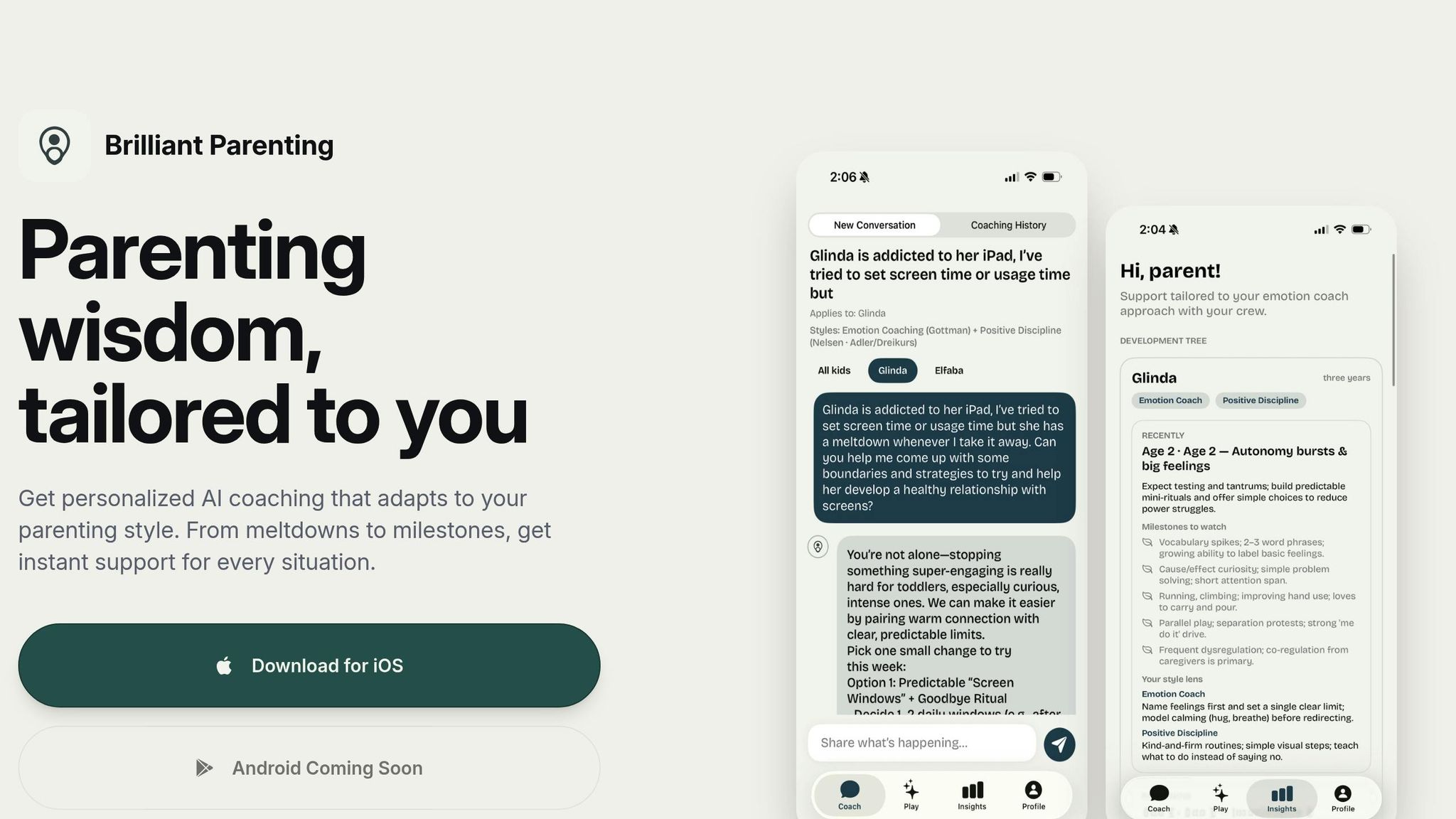
Brilliant Parenting uses AI-powered coaching to adapt to your family’s specific needs and your child’s developmental stage. With a library of over 2,500 evidence-based activities, including sequencing games, this platform focuses on boosting skills like logical thinking, memory, and problem-solving. Instead of one-size-fits-all advice, the AI considers your child’s age, interests, and progress to suggest activities that truly resonate.
One standout feature is the personalized analysis, which helps you understand the cognitive skills your child is building through different activities. The AI even provides ready-to-use conversation scripts to encourage critical thinking, making it easier for you to guide discussions that deepen your child’s understanding.
Brilliant Parenting also offers interactive resources designed for both school and home settings. These include engaging stories, puzzles, challenges, and hands-on exercises – all crafted to strengthen sequential thinking and logical connections. Plus, its personalized approach ensures you can track your child’s development and adjust activities as needed.
Tracking Progress and Customizing Activities
One of the platform’s key benefits is its ability to track your child’s progress over time. The system pinpoints which activities your child enjoys most and highlights areas where they might need extra practice. This means you can continually adapt the learning experience to keep it both challenging and fun.
For families with multiple children, the multi-child support feature is a game-changer. You can monitor each child’s progress individually and receive tailored activity suggestions for their unique needs. This ensures that all your kids, regardless of their developmental stage, stay engaged and challenged.
Available 24/7, Brilliant Parenting’s AI coaching provides instant, research-backed support. Whether you’re looking to increase the difficulty of activities or find new ways to keep your child engaged, this resource is always ready to help.
Conclusion
Sequencing games are a fantastic way to build cognitive skills while making everyday problem-solving a bit easier. They help sharpen logical thinking, improve memory and attention, and strengthen language skills – tools that are crucial for academic success and tackling daily life challenges.
You can weave sequencing into your routine with activities like story cards, cooking steps, or even bedtime rituals. Start small, with simple two-step sequences for toddlers, and gradually increase the complexity as your child grows. This gradual approach keeps things engaging and ensures your child stays challenged in a fun, manageable way.
Tailoring activities to your child’s developmental stage is key. This is where resources like Brilliant Parenting come in handy. With its AI-powered coaching and extensive library of play ideas, it offers personalized guidance that aligns with your child’s unique needs.
Brilliant Parenting also provides tools to track progress and adjust activity levels over time. Whether you’re looking to introduce more complex tasks or just need fresh ideas to keep your child interested, having access to research-backed support 24/7 ensures you’re never on this journey alone.
FAQs
How can I include sequencing games in my child’s daily routine without needing extra supplies?
You can seamlessly weave sequencing games into your child’s everyday life through simple, familiar activities. For instance, get them involved in making a sandwich, following a recipe, or arranging their toys in a particular order. Storytelling works wonders too – encourage them to recount a story in the right sequence or even come up with one of their own.
Another idea is to create a visual schedule of their daily routine using drawings or photos. This not only makes practicing sequencing enjoyable but also boosts their cognitive development, all without needing any fancy tools or materials.
What are some fun sequencing activities for kids of different ages?
Sequencing activities are a fun and effective way to sharpen cognitive skills while keeping kids entertained. Here are a few ideas tailored to different age groups:
- Story Sequencing: Arrange picture cards to form a story in the right order. This helps kids grasp how events flow in a narrative.
- Daily Routines: Use visual cards to map out everyday tasks like brushing teeth, getting dressed, or bedtime steps.
- Cooking Together: Try simple recipes, like assembling a sandwich or baking cookies, to teach kids how to follow step-by-step instructions.
- Life Cycle Exploration: Dive into nature by sequencing stages like a butterfly’s metamorphosis or a plant’s growth.
- Action Songs: Sing and act out songs such as "Head, Shoulders, Knees, and Toes" to practice ordered movements in a playful way.
These activities don’t just build critical thinking – they make learning interactive and enjoyable!
How do sequencing games help children improve their language and communication skills?
Sequencing games are a fantastic way to help kids strengthen their language and communication skills. By working through these activities, children pick up new vocabulary and learn how events fit together in a logical sequence. As they describe each step, they get to practice forming sentences and sharing their thoughts clearly.
These games also promote active listening and storytelling – both essential for good communication. Through sequencing, kids learn to organize their ideas and express themselves with greater confidence in daily interactions.