
AI is changing how families manage stress and connect emotionally. With tools like mindfulness apps, parents and children are finding new ways to reduce anxiety, improve focus, and strengthen relationships. Here’s what you need to know:
- Mindfulness for families: Shared activities like breathing exercises and gratitude practices promote emotional awareness and teamwork.
- AI tools in action: Apps like Headspace, Calm, and Inner Explorer offer guided meditations and personalized exercises for all ages.
- Proven results: Studies show reduced stress, better emotional control, and improved family communication after consistent use of AI-powered tools.
- Affordable and flexible: Most apps cost $10–$50/month and fit easily into daily routines.
AI mindfulness tools are helping families balance life’s demands while improving mental well-being. But privacy concerns and over-reliance on tech are challenges to consider. Ready to explore how AI can support your family? Let’s dive in.
Exploring Cultural AI Meditation: The Cycle App
Research Findings on AI Family Mindfulness Tools
Recent research highlights a growing trend: AI-powered mindfulness tools are proving to be effective in helping families manage daily stress and emotional challenges. These tools have shown benefits across various age groups and family situations, from young children to caregivers supporting loved ones with dementia. The findings suggest potential advantages in both cognitive and relational aspects of family life.
Lower Stress and Better Emotional Control
One of the strongest outcomes from these studies is a noticeable reduction in stress levels. Controlled trials have demonstrated that these tools can significantly improve emotional well-being for both children and caregivers. For example, a randomized controlled trial involving 279 children aged 8-10 found that regular use of the mindfulness app Inner Explorer led to reduced self-perceived stress and fewer negative emotions. These effects were observed after at least 30 days of app use over an 8-week period.
Similarly, a study targeting family caregivers of individuals with dementia reported that participants using a mindfulness-based app experienced reduced stress and improved emotional well-being. Published in the journal Mindfulness, this research underscores the practical value of AI tools in providing relief during some of the most demanding family situations.
"Mindfulness-based interventions show promise for improving stress, emotional distress, and sleep disturbance in caregivers."
- Emily C. Woodworth, Researcher, Massachusetts General Hospital
These findings are particularly meaningful because they were achieved in everyday family environments. The apps seamlessly integrated into daily routines, offering stress reduction without requiring families to attend external classes or therapy sessions.
Better Focus and Self-Control
The benefits of AI mindfulness tools extend beyond stress management. A systematic review of 66 experimental studies found that these tools significantly enhance self-regulation skills, which are essential for maintaining focus and emotional control. Both children and parents benefited, with improvements in what researchers call "attentional control".
In October 2023, a study published in Mindfulness revealed that children using the Inner Explorer app experienced fewer negative emotions and lower stress levels compared to a control group using audiobooks. Consistent app use over time was linked to greater emotional benefits, highlighting the importance of sustained practice.
"AI-powered mindfulness tools can effectively assist trainees in developing a wide range of cognitive, emotional, and behavioral self-regulation skills."
- Eleni Mitsea, Researcher
For families balancing multiple responsibilities and digital distractions, these tools offer a practical way to develop focus and self-discipline.
Stronger Family Connections
The advantages of AI mindfulness tools are not limited to individual improvements – they also foster stronger family bonds. In one randomized controlled trial involving 53 families at elevated risk, mindfulness-based interventions helped parents improve their coping strategies and positively influenced their perceptions of their children’s behavior. Parents reported reduced stress levels, which directly impacted how they interacted with their children.
When parents develop better emotional regulation skills through mindfulness tools, the entire family benefits. Parents become more attuned to their children’s needs and less reactive to challenging behaviors.
"Mindfulness may be a key psychological resource for parents, allowing them to better regulate their emotions and respond sensitively to their children’s needs."
- Jill T. Krause, Researcher, Colorado State University
AI tools are also showing promise in improving family communication. Research from Cedars-Sinai demonstrated that virtual therapists using AI provided unbiased counseling, enhancing how families address emotional challenges together.
The overall findings are clear: families who use AI mindfulness tools report better communication, greater empathy, and deeper emotional connections. By encouraging shared mindfulness practices, these tools not only strengthen individual resilience but also create a foundation for healthier, more connected family relationships.
How AI Makes Family Mindfulness Work Better
AI-powered mindfulness tools excel by offering a personalized, engaging, and consistent approach to support families with varying needs. Unlike traditional programs that stick to a rigid framework, AI tailors experiences to fit each family’s unique dynamics, making mindfulness more effective and accessible.
Custom Mindfulness Programs
AI takes personalization to the next level by analyzing user data to craft mindfulness exercises that align with the specific needs and preferences of each family member. These tools can adjust the length, focus, and type of practices based on feedback and progress. For example, if a young child finds long meditation sessions challenging, the AI might suggest shorter, interactive breathing exercises. Meanwhile, a stressed parent could benefit from guided meditations targeting work-life balance or emotional regulation.
A systematic review has shown that AI-supported digital mindfulness interventions can help users build cognitive, emotional, and behavioral self-regulation skills, leading to better mental health outcomes. The technology learns from user interactions, continuously refining its recommendations to better suit everyone in the family.
"AI applications are expected to radically change mental health interventions, especially those addressed to people with special training needs." – Eleni Mitsea, Researcher
AI also monitors stress levels, engagement, and emotional states over time. This allows it to suggest the best times for mindfulness activities and recommend techniques tailored to each family member’s situation. By addressing individual needs, AI lays the groundwork for mindfulness practices that the whole family can enjoy together.
Features That Keep Families Engaged
Beyond personalization, AI keeps families motivated through interactive and immersive features. Guided meditations are tailored to different age groups and attention spans, while interactive activities make mindfulness a fun, shared experience.
Virtual environments, like serene forests or calming ocean soundscapes, create immersive settings that help families relax. Real-time support from chatbots or virtual coaches ensures that users stay engaged – if a child feels frustrated during an exercise, the AI can offer encouragement or suggest an alternative activity.
One standout example is the Inner Explorer app, which has been implemented in over 3,000 schools, reaching 2 million students. In October 2023, MIT researchers reported that children using the app for 40 days experienced noticeable improvements in mental health, including reduced stress and fewer feelings of loneliness and fear.
Gamification adds another layer of engagement. Features like progress badges, shared goals, and milestone celebrations motivate families to stick with their mindfulness routines.
Easy Access for All Families
AI-powered mindfulness tools are designed with accessibility in mind. Available on smartphones, they offer flexible and affordable options, often free with premium upgrades ranging from $5 to $15 per month. Their user-friendly design ensures that everyone – from tech-savvy teens to parents less familiar with technology – can easily navigate them.
These tools adapt to the rhythm of family life. A single parent juggling multiple jobs might use a quick stress-relief session during a lunch break, while a family with young children might opt for interactive mindfulness games on a weekend morning. The flexibility allows these tools to seamlessly fit into daily routines.
Research shows that consistent use of mindfulness apps for at least 30 days can lead to meaningful benefits. This accessibility proved especially crucial during the COVID-19 pandemic, when families relied on remote support to maintain emotional well-being. By integrating mindfulness into everyday life, AI tools make it easier for families to prioritize their mental health.
sbb-itb-e558fb0
How to Use AI Mindfulness Tools at Home
Bringing AI mindfulness tools into your home can be a game-changer, but it works best when approached with a balance of structure and flexibility. The key is to integrate these tools into your family’s daily routine in a way that feels natural and engaging for everyone.
Setting Up Family Mindfulness Time
Start by carving out specific times for family mindfulness sessions. Even just 10–15 minutes a day can make a difference, and you can gradually increase the duration as it becomes part of your routine. Regularity is the secret sauce here – families that stick to consistent mindfulness practices tend to see better long-term benefits compared to those who practice sporadically.
Research backs this up, showing that short but regular mindfulness sessions can reduce stress and improve emotional well-being.
To keep things fun and inclusive, let each family member take turns choosing the activity or session. This shared decision-making fosters a sense of ownership and keeps everyone engaged. For example, the FamLearn system, tested with 11 families, showed that dividing responsibilities based on availability encouraged collaboration and shared accountability.
"AI systems can surface invisible caregiving work, rebalance responsibilities, and calibrate trust between human and AI roles."
– Yao Li, Researcher, The Pennsylvania State University
When scheduling these sessions, consider your family’s natural rhythm. Some families might find morning mindfulness helps set a calm tone for the day, while others may prefer evening sessions to wind down. If weekdays are too hectic, weekend sessions can be a great alternative.
Privacy and Family Values
Privacy is a big deal when it comes to using AI tools at home, especially when kids are involved. Take the time to review the privacy policies of any app you use and adjust the data-sharing settings to reflect your family’s values. It’s also a good idea to talk to your children about how these tools work and agree on clear usage guidelines.
Look for apps that offer strong privacy controls and let you customize what data is shared. While some apps may require more data for full functionality, others are designed with minimal data collection in mind, offering robust privacy protections.
Establish clear rules about where and when these tools can be used, and make it a habit to discuss their impact on your family dynamics. Studies show that thoughtfully implemented digital parenting tools can be just as effective as traditional methods in supporting family values and emotional well-being. By taking these steps, you can ensure that mindfulness practices align with your family’s needs and priorities.
How Brilliant Parenting Helps with Family Mindfulness
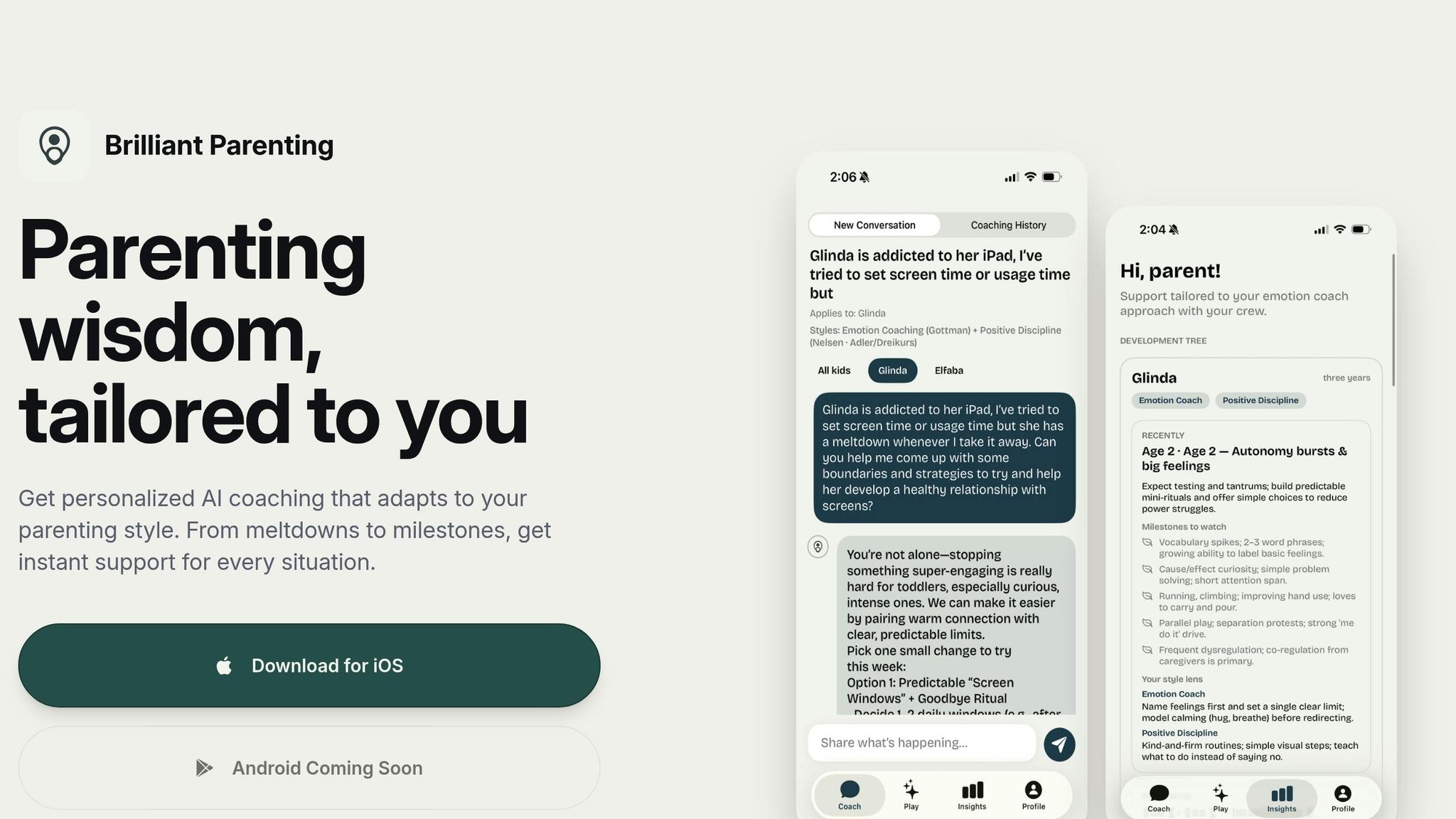
Brilliant Parenting is a standout app that offers personalized AI coaching to help families integrate mindfulness into their daily lives. It tailors strategies based on evidence-backed parenting styles and is available 24/7, making it a reliable resource for busy families.
The app starts with a detailed onboarding quiz to match your family with mindfulness approaches that suit your unique dynamics. This ensures the advice you receive is tailored and practical, rather than one-size-fits-all.
One of its standout features is the ability to track your family’s progress over time. By using real engagement data, you can tweak your mindfulness practices as needed. For families with multiple children, the app even adjusts recommendations based on each child’s age, temperament, and developmental stage.
"AI tools can provide immediate support and guidance, which could prevent the onset of more severe conditions or the worsening of an existing one."
– Milagros C. Escoredo, Researcher, Pontificia Universidad Católica Argentina
Brilliant Parenting also takes the guesswork out of leading mindfulness activities. It provides practical scripts and strategies for meditation and breathing exercises, empowering parents to confidently guide their families on this journey toward emotional well-being.
Benefits and Drawbacks of AI Family Mindfulness Tools
AI family mindfulness tools bring both opportunities and challenges to the table. While they offer unique advantages, it’s important to consider their limitations and potential risks as well.
Benefits vs. Challenges Comparison
When comparing AI-driven mindfulness tools with traditional methods, certain patterns emerge. Here’s a breakdown of what families might experience:
| Benefit/Challenge | Description | Research Evidence |
|---|---|---|
| 24/7 Accessibility | AI tools are always available, making mindfulness practices easy to fit into busy family schedules. | Over 80% of children in app-based mindfulness programs reported reduced stress. |
| Privacy Concerns | The collection of sensitive emotional data raises questions about security and privacy. | Studies emphasize the importance of robust data protection measures. |
| Personalized Experience | AI adapts techniques to suit each family member’s stress levels and preferences. | Each additional mindfulness session was linked to a 0.52-point reduction in perceived stress levels. |
| Over-Reliance Risk | Relying too much on AI could weaken a family’s ability to manage emotions independently. | Experts caution that overuse of AI may hinder the development of problem-solving skills. |
| Interactive Engagement | Features like games and animations make mindfulness practices more appealing, especially for children. | Apps like Headspace and Calm have been downloaded over 300 million times combined. |
| Limited Emotional Intelligence | AI lacks the human empathy and emotional support that in-person facilitators provide. | Traditional methods with human facilitators offer a level of emotional connection that AI cannot replicate. |
One of the standout benefits of AI tools is their 24/7 availability, which allows families to incorporate guided meditations into their routines, whether it’s during a chaotic morning rush or a stressful evening wind-down.
AI-assisted mindfulness has also shown promise in reducing burnout among healthcare professionals, hinting at its potential for easing family stress. As researcher Riya Ghotra explains:
"AI can play a crucial role in delivering targeted stress management strategies that cater to individual needs."
However, the risk of over-reliance is a legitimate concern. Máté Bence Szondy from the Institute of Psychology highlights this dual-edged nature:
"AI presents both opportunities and challenges for family systems. It can enhance communication, support role negotiation, and promote family cohesion, but it also raises ethical and privacy concerns."
The key is balance. Families that use AI tools to complement human interaction – rather than replace it – tend to see the best results. By setting clear boundaries and leveraging the personalization and accessibility that AI offers, families can integrate these tools into their routines effectively.
These considerations emphasize the importance of thoughtful and intentional use of AI in family mindfulness practices.
The Future of AI in Family Mindfulness
AI is paving the way for exciting advancements in family mindfulness, reshaping how families approach emotional well-being and stress management.
Main Points
Emerging technologies are set to revolutionize family mindfulness practices. Studies consistently show that AI-driven mindfulness tools can significantly reduce stress and improve emotional regulation across various age groups and family dynamics. Regular use of these tools benefits both parents and children, fostering healthier emotional habits.
One breakthrough is the rise of real-time support, which is transforming how families handle daily challenges. For example, researchers at Palo Alto University created the PAT initiative, which uses AI-powered conversational agents to assist parents in managing children’s behavioral issues exactly when they need help. As Milagros C. Escoredo points out:
"CAs can provide help precisely when parents need it rather than restricting assistance to scheduled therapy sessions."
Another promising trend is the focus on family-centered mindfulness experiences. Instead of targeting individual family members, AI tools are promoting shared activities that strengthen family bonds. A one-week study involving 11 families and the FamLearn AI system revealed how technology can lighten caregiving responsibilities while encouraging mutual understanding and learning.
What’s Next
The future of AI in family mindfulness builds on these successes, with innovations aimed at making tools even more personalized and immersive. John Gabrieli from MIT highlights the growing scientific foundation behind these advancements:
"There is growing and compelling scientific evidence that mindfulness can support mental well-being and promote mental health in diverse children and adults."
AI is already personalizing mindfulness practices, adapting to each family member’s unique stress triggers and preferences. This trend is expected to deepen, with future developments incorporating virtual reality for immersive mindfulness experiences. Additionally, AI tools are moving toward seamless integration with daily life, offering on-demand support during stressful moments rather than relying on scheduled sessions.
Platforms like Brilliant Parenting are leading the charge, offering personalized AI coaching based on evidence-based parenting techniques. These tools provide instant advice and practical strategies, empowering parents to weave mindfulness into their everyday routines.
Research shows that families who consistently engage with AI mindfulness tools – practicing for at least 30 days – report significant improvements in emotional health and stress reduction for both parents and children. As these technologies evolve, they promise to make mindfulness practices more accessible, effective, and an effortless part of family life.
FAQs
How do AI mindfulness tools adapt to meet the unique needs of each family member?
AI-powered mindfulness tools are crafted to deliver experiences that feel personal and relevant by analyzing individual habits, preferences, and stress triggers. These tools rely on data to suggest activities like guided meditations, breathing exercises, or relaxation techniques, all tailored to match each family member’s age, personality, and unique challenges.
For instance, parents juggling hectic schedules might get tips on managing stress efficiently, while kids could explore mindfulness through fun, engaging exercises. By addressing the specific needs of everyone in the household, these tools encourage healthier routines and create a more mindful, connected family atmosphere.
What steps can families take to protect their privacy when using AI mindfulness apps at home?
When using AI mindfulness apps, safeguarding your family’s privacy starts with a careful look at the app’s privacy policy. This will give you insight into how your data is being collected, stored, and used. Prioritize apps that emphasize data encryption and provide straightforward ways to manage or delete your personal information.
Another smart move is setting up individual user accounts for each family member. This minimizes unnecessary data sharing and keeps personal information more secure. Be cautious about entering sensitive details into the app and make it a habit to keep both the app and your device software updated. These updates often include critical security enhancements to keep your data safe.
How can families use AI tools to support mindfulness without becoming too dependent on technology?
Families can make the most of AI tools for mindfulness by selecting options that reflect their goals and values while ensuring these tools enhance – rather than replace – personal connections. It’s important to set clear boundaries around screen time and focus on activities that bring everyone together, like shared mindfulness practices or meaningful family conversations. Take time to regularly evaluate how these tools are influencing your family dynamics, and adjust their use to keep a healthy balance between technology and in-person interactions. By promoting digital literacy and using AI thoughtfully, families can reap the benefits without becoming overly dependent on it.