Teaching kids how to budget helps them develop independence, self-control, and decision-making skills. Research shows that early financial education improves problem-solving, cognitive abilities, and long-term financial habits. Parents play a key role by modeling good money management and providing hands-on learning opportunities. Starting with simple activities like managing an allowance and gradually introducing more complex concepts prepares children for adulthood.
Key takeaways:
- Budgeting builds independence: Kids learn to balance wants and needs, delay gratification, and plan for the future.
- Early lessons matter: Elementary school is the best time to introduce budgeting concepts.
- Parents are role models: Involving kids in family financial decisions reinforces smart money habits.
- Long-term benefits: Adults with budgeting skills from childhood tend to save more, avoid debt, and make better financial decisions.
Practical tips include setting up allowances with clear rules, involving kids in daily money decisions, and using games to teach financial concepts. These activities not only teach money management but also build confidence and essential life skills.
Budgeting For Kids: How To Teach It
Research Results: Budgeting Skills and Child Development
Recent studies highlight how introducing budgeting skills early in life can boost decision-making and improve cognitive abilities. Let’s dive into how budgeting impacts brain development, the best times to start teaching financial habits, and what real-world research reveals about its long-term benefits.
How Budgeting Impacts Brain Development
Engaging in budgeting tasks helps children strengthen key mental skills, often referred to as executive functions. These include planning, working memory, and the ability to adapt to new situations. For example, tracking spending encourages kids to weigh short-term desires against long-term goals. On top of that, budgeting offers hands-on practice with basic math and problem-solving, which further supports cognitive growth.
When to Start Teaching Budgeting
Research suggests that elementary school is an ideal time to introduce budgeting concepts. At this stage, kids begin to grasp cause-and-effect relationships and start forming their first money habits. Younger children can learn through simple activities, like saving spare change, while older kids can handle more advanced budgeting lessons. Structured financial education during preadolescence lays a solid foundation for managing money responsibly as they mature.
Insights from Real-World Studies
Studies tracking children who practice regular budgeting routines reveal some compelling outcomes. These kids tend to show greater independence, better problem-solving skills, and even improved academic performance. Moreover, school programs focusing on budgeting are linked to stronger decision-making abilities. Early exposure to financial education also seems to promote healthier financial habits well into adulthood.
How Budgeting Creates Independence and Life Skills
Budgeting isn’t just about managing money – it’s a way to nurture independence and teach essential life skills. When kids learn how to budget, they start balancing their wants and needs, equipping themselves to handle challenges as they grow. Below, we’ll explore how budgeting encourages self-control, practical decision-making, and the role parents play in shaping these habits.
Self-Control and Delayed Gratification
One of the most valuable lessons kids gain from budgeting is self-control. Imagine a child deciding whether to spend their allowance on a small toy now or save up for something bigger later. This process teaches delayed gratification, a skill that research has repeatedly shown to be crucial for saving money. By pausing to ask themselves, "Do I really need this now?" children begin to make thoughtful choices. For some, focusing on what they can achieve in the future – a "promotion focus" – makes saving for long-term goals even more appealing. Over time, this self-control becomes second nature, influencing their everyday financial decisions.
Hands-On Learning From Everyday Choices
Independence grows when kids are allowed to make their own financial decisions. Whether it’s managing a weekly allowance or deciding how to spend birthday money, these experiences teach them to weigh priorities and understand trade-offs. For example, a child choosing between buying a new book or saving for art supplies learns to evaluate what matters most to them. These small, everyday decisions are powerful teaching moments. By letting kids experience the outcomes of their choices – while still offering guidance – parents help them build confidence in their ability to manage money.
Parents as Role Models for Smart Money Habits
Parents play a huge role in shaping their children’s financial habits. Kids naturally absorb what they see, so modeling good money management is key. When parents openly discuss finances – like why they compare prices, how they prioritize spending, or the importance of saving for bigger goals – children pick up these positive behaviors. Sharing these thought processes helps kids internalize smart financial habits. Gradually increasing a child’s financial responsibilities, from simple decisions to more complex budgeting tasks, under a parent’s guidance, not only nurtures independence but also sets the foundation for sound money management. Research even highlights this type of parental involvement as a critical factor in a child’s overall development and well-being.
How to Teach Budgeting Skills at Home
Teaching budgeting starts with incorporating money management into everyday activities. By creating opportunities for hands-on practice, parents can help their children build financial skills in a supportive and natural way. These small, practical lessons can easily become part of daily family life.
Setting Up Allowances with Guidelines
An allowance is often a child’s first experience with managing money. To make it effective, establish clear rules that encourage thoughtful spending and saving. Instead of simply giving money, divide the allowance into categories like spending, saving, and giving. You can also tie extra earnings to age-appropriate chores, teaching that money is earned through effort.
For instance, if a child gets $10 weekly, they might allocate $6 for spending, $3 for saving toward a bigger goal, and $1 for charity. This simple system introduces them to balancing financial priorities early on.
Consistency is key. Whether you choose weekly or bi-weekly allowances, sticking to a regular schedule helps children plan their spending and develop patience. Knowing when their next allowance arrives encourages them to manage their money over time.
Involving Children in Family Money Decisions
Beyond allowances, involving kids in family financial decisions can deepen their understanding of money management. Everyday activities like grocery shopping or planning a vacation are great opportunities to teach concepts like comparing prices, prioritizing needs, and understanding trade-offs.
You can also hold simplified family budget meetings to explain basic financial ideas. For example, discuss fixed expenses like rent and utilities versus variable ones like groceries or entertainment. When children see how families make decisions about spending, they gain a more realistic view of how money works in the real world.
Teaching Through Games and Activities
Games and interactive challenges are a fun way to reinforce budgeting skills. Classics like Monopoly, Payday, or The Game of Life introduce financial decision-making in a playful setting. Simulated shopping or dining activities can also help kids practice real-world budgeting.
For younger children, envelope budgeting games are especially effective. Use play money and envelopes labeled with categories like "toys", "savings", "treats", and "gifts." Present them with scenarios and let them decide how to allocate their funds. This hands-on method helps them grasp how budgeting choices impact what they can afford.
Digital tools, such as apps and online games designed for kids, can also be helpful. These programs often simulate real-world financial situations and reward progress. However, they should complement – not replace – real-life money experiences.
sbb-itb-e558fb0
Long-Term Benefits of Teaching Budgeting
Teaching kids about budgeting early on sets them up for a lifetime of advantages. When children learn to handle money from a young age, they develop habits that can shape their financial stability, decision-making, and overall happiness well into adulthood.
Better Money Management as Adults
The lessons learned in childhood often translate into smart financial habits later in life. Adults who were taught budgeting early tend to show stronger money management skills. They’re more likely to maintain emergency savings, steer clear of unnecessary debt, and make thoughtful choices about how they spend their money.
They also have a better understanding of debt and borrowing. By grasping the true cost of loans, they can avoid overextending themselves financially. This helps them maintain good credit scores, which opens the door to better loan terms when they need to borrow.
Budgeting at an early age also lays the groundwork for retirement planning. Adults who grew up saving and planning ahead are more likely to contribute regularly to retirement accounts. They understand how compound interest works – how small, consistent savings can grow into significant wealth over time.
Additionally, they’re skilled at building emergency funds, prioritizing expenses, and planning larger purchases carefully. Having this financial safety net reduces the need to rely on credit cards or loans during tough times, offering both peace of mind and financial stability.
How Budgeting Improves Overall Life Skills
The benefits of early budgeting go beyond just managing money. It helps develop skills that positively impact other areas of life, from school and work to personal relationships.
Goal-setting and achievement become second nature to those with budgeting experience. Saving for specific items teaches kids how to break big goals into smaller, manageable steps and stay committed over time. These skills are just as useful for academic success, career growth, or personal projects.
Budgeting also builds self-control, which can influence decisions in areas like health, education, and career paths, leading to better outcomes across the board.
Stress management improves when people feel secure about their finances. Adults who learned budgeting as kids often experience less anxiety about money and feel more in control of their future. This reduced stress can lead to better physical health, stronger relationships, and greater job satisfaction.
Through family discussions about money, kids also develop communication and negotiation skills. Talking about finances teaches them how to express their needs, listen to others’ perspectives, and find compromises that work for everyone involved.
Lastly, financial literacy fosters confidence and independence. Adults who understand money feel empowered to make their own decisions, take calculated risks, and pursue opportunities like starting a business or switching careers. They’re able to make major life choices based on their values rather than being held back by financial limitations.
All of these skills combine to create a foundation for long-term independence and success.
Getting Personalized Help for Parents
Teaching kids about budgeting can feel like walking a tightrope. Every child learns differently, and it’s natural for parents to wonder if their approach aligns with their child’s development. That’s where personalized support can make a world of difference.
How Brilliant Parenting Supports Budgeting Education
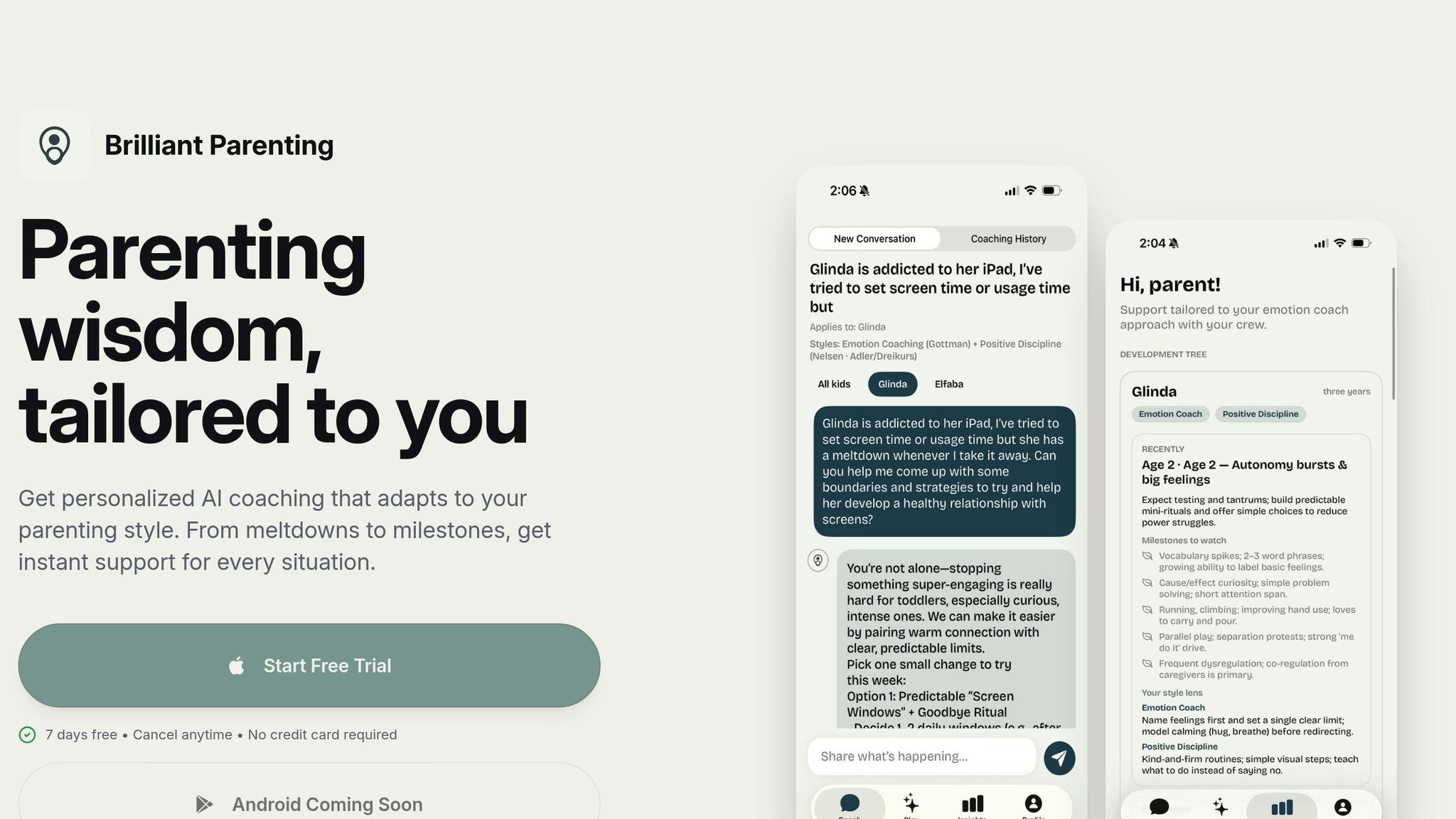
Brilliant Parenting steps in with personalized AI coaching designed to meet your family’s unique needs when it comes to financial literacy. It starts with a simple quiz to understand your parenting style and tailors its advice to fit. For example, if you lean toward a collaborative approach, the app might encourage involving your child in family budget talks earlier. Prefer a more structured style? It could suggest clear allowance rules paired with specific consequences.
The app’s play ideas library is packed with age-appropriate activities to make learning about money engaging. From sorting coins for younger kids to tackling advanced budgeting challenges for teens, it even provides practical scripts and strategies to guide you through the process.
For families with multiple kids, the platform offers multi-child support, delivering tailored advice for each age group. Plus, with 24/7 instant support, you can access guidance whenever those teachable moments pop up.
Tracking Progress and Adjusting Methods
Brilliant Parenting doesn’t just stop at offering advice – it helps you track how your child is progressing. Its progress tracking feature allows you to log milestones, like saving up for a toy or grasping the difference between needs and wants. This helps identify patterns and refine your approach as needed.
As your child matures, the app adjusts its recommendations to match their growing cognitive abilities. For example, if your child struggles with delayed gratification, it suggests targeted activities and conversation starters to keep them engaged and learning.
Every recommendation is grounded in research, ensuring the methods are appropriate for your child’s age and developmental stage. This tailored approach not only strengthens budgeting skills but also nurtures independence, setting the foundation for long-term financial success. With Brilliant Parenting, you’re not just teaching budgeting – you’re equipping your child with tools for life.
Conclusion: Building Independence Through Budgeting Education
Teaching kids how to budget lays the groundwork for a lifetime of independence. Research shows that kids who learn money management early tend to develop stronger self-control, make better decisions, and gain confidence when facing everyday challenges.
Budgeting starts with simple ideas – like understanding the difference between needs and wants – and gradually grows to include long-term planning and weighing opportunity costs. These lessons go beyond just handling money; they help build critical thinking and decision-making skills that kids will rely on throughout their lives.
What makes budgeting so impactful is how often it comes into play in daily life. Money decisions pop up constantly, offering plenty of chances for kids to practice making choices. Whether it’s deciding to spend their allowance on candy or save up for a video game, these moments serve as hands-on lessons in responsibility and independence.
The trick is tailoring the approach to a child’s age and abilities. For instance, a 6-year-old counting coins is building essential skills in a very different way than a 14-year-old drafting their first monthly budget. Both, however, are learning to be more self-reliant and confident in their financial decisions.
Parents don’t have to figure this out on their own. Tools like Brilliant Parenting’s personalized AI coaching offer support by providing age-appropriate strategies and tracking progress as kids develop these important skills. With the right guidance, children can build a strong foundation for confident, independent decision-making.
Teaching budgeting early helps kids learn how to make choices, delay gratification, and solve problems effectively. These skills shape them into capable, independent adults who are ready to tackle life’s challenges with confidence. It’s about nurturing independence that will benefit them for years to come.
FAQs
How can parents teach budgeting skills to children at different stages of development?
Teaching kids about budgeting can be a valuable life skill, and the approach should match their age and level of understanding. For younger children, start with the basics – help them recognize coins and bills, and set simple savings goals. You could even use a jar or piggy bank to make saving tangible and fun. When you’re at the store, involve them by discussing choices, like picking between two items, to introduce the idea of needs versus wants.
As kids get older, you can step it up. Giving them an allowance tied to chores is a great way to teach responsibility while showing them how to divide their money into categories like saving, spending, and even donating. Visual aids, such as charts or budgeting apps, can make the process more interactive and easier to grasp. When they hit their teenage years, start talking about more advanced topics like credit, interest, and even basic investments. These lessons can help them develop independence and boost their confidence in managing money.
How does teaching kids budgeting skills help them develop independence?
Teaching children how to budget equips them with essential skills like critical thinking and decision-making, laying the groundwork for greater independence. When kids learn to manage money, they become more confident in weighing their options and making thoughtful choices – not just about finances but in many areas of life.
Budgeting also helps kids understand how to prioritize their spending by separating needs from wants. This not only instills a sense of responsibility but also prepares them to navigate life’s challenges with greater ease as they mature.
How can involving children in family financial decisions shape their future money habits?
Including children in family financial discussions can teach them critical skills such as saving, budgeting, and making informed spending decisions. These early experiences help them develop a sense of responsibility and build confidence in managing money, creating a strong foundation for future financial independence.
When kids get hands-on exposure to real-life financial scenarios, they’re more likely to form good habits, steer clear of common money mistakes, and make smarter financial choices as they grow up.