
Collaborative Problem-Solving (CPS) offers a better way to handle family conflicts by turning power struggles into teamwork. Instead of focusing on punishments or rewards, CPS emphasizes understanding the root causes of disagreements and working together to find solutions. This approach not only resolves issues but also helps children develop skills like communication, emotional regulation, and problem-solving. Parents benefit too, as it reduces household stress and builds stronger connections with their kids.
Here’s how CPS works:
- Understand your child’s perspective: Listen actively and identify the reasons behind their behavior.
- Share your concerns clearly: Explain your perspective without blaming or lecturing.
- Brainstorm solutions together: Collaborate to create practical, mutually acceptable plans.
CPS is especially useful for managing sibling conflicts, morning routines, or bedtime struggles. Tools like Brilliant Parenting can provide tailored guidance to help you apply CPS effectively in your home.
Skill, Not Will: The Collaborative Problem-Solving Approach for Families
Core Principles and Benefits of Collaborative Problem-Solving
Now that we’ve introduced the concept, let’s dive into the core principles and the benefits of Collaborative Problem-Solving (CPS). By understanding these foundational ideas, families can more effectively adopt this approach and foster healthier dynamics. At its heart, CPS is built on three key principles that reshape how parents and children work through conflicts together.
Main Principles of CPS
The first principle is empathy and understanding. This involves actively listening to your child’s perspective without rushing to conclusions or offering quick fixes. For instance, if your child resists bedtime, empathy might reveal that their reluctance stems from feeling anxious or overstimulated – not defiance. By tuning in to their emotions, you create an opportunity for connection.
The second principle emphasizes defining the problem collaboratively. This step requires parents to voice their concerns while helping their child articulate theirs. It’s not about assigning blame or deciding who’s right; instead, it’s about uncovering the underlying reasons behind the behavior and addressing those together.
Finally, collaborative brainstorming brings everyone to the table to find solutions that work for all parties. This step encourages creativity and ensures that both parents and children feel ownership over the outcome. Instead of imposing rules, families work together to evaluate ideas and choose options that meet everyone’s needs.
These principles create a space where children feel heard and respected, while parents maintain their guiding role. Together, they form the foundation for the many benefits CPS offers.
Research-Based Benefits of CPS
CPS isn’t just about resolving conflicts – it’s about transforming family relationships. Research highlights several key advantages:
- Children develop stronger emotional regulation skills by learning to express their feelings in constructive ways rather than through problematic behaviors.
- Families experience better communication and deeper trust, as CPS builds patterns of open dialogue that extend beyond resolving disagreements.
- Problem-solving skills improve significantly in children. Through regular participation in discussions, kids learn to analyze situations, consider different perspectives, and weigh possible outcomes – skills that benefit them in school, friendships, and later in life.
- Long-term behavioral improvements are another major outcome. Unlike punishment-based methods that often require repeated reinforcement, collaborative solutions stick because children understand and feel invested in the agreements they help create.
- CPS also reduces overall family stress. When conflicts shift from being battles to opportunities for connection, the household atmosphere becomes calmer. Parents spend less time enforcing rules and more time fostering meaningful relationships.
The table below highlights how CPS compares to traditional discipline methods:
Comparison Table: Standard Discipline vs. CPS
| Aspect | Standard Discipline | Collaborative Problem-Solving |
|---|---|---|
| Primary Focus | Compliance and rule enforcement | Understanding and skill-building |
| Child’s Role | Passive recipient of consequences | Active participant in solutions |
| Problem Ownership | Parent controls and decides | Shared responsibility and input |
| Communication Style | Top-down directives | Two-way dialogue and listening |
| Motivation Source | External rewards/punishments | Internal understanding and agreement |
| Conflict Resolution | Quick fixes through authority | Thorough exploration of root causes |
| Skill Development | Limited to following rules | Critical thinking, empathy, communication |
| Long-term Outcomes | May require constant enforcement | Self-sustaining behavioral changes |
| Relationship Impact | Can create distance or resentment | Builds trust and connection |
| Stress Levels | Often increases family tension | Reduces overall household stress |
Steps to Use Collaborative Problem-Solving
Dr. Ross Greene’s three-step CPS framework transforms conflicts into opportunities for connection and growth. By focusing on empathy, clear communication, and teamwork, this approach helps families work through challenges effectively. Here’s how you can implement CPS at home.
Step 1: Empathy and Active Listening
The first step is all about understanding your child’s perspective without jumping to conclusions or offering immediate fixes. Start by acknowledging the behavior in question and inviting your child to share their thoughts. For instance, you might say, "I’ve noticed mornings have been tough lately. Can you tell me what’s been going on?" This opens the door for your child to explain their feelings – maybe they feel rushed, have trouble deciding what to wear, or are anxious about the day ahead.
Active listening is key here. Reflect what you hear to show you understand. If your child says brushing their teeth is uncomfortable, you could respond, "So it seems like your toothbrush hurts, and that’s why you don’t want to brush." This validation makes your child feel heard and encourages deeper conversation.
Step 2: Define Adult Concerns
Once you’ve fully listened, it’s time to calmly share your concerns. Focus on practical reasons like safety or family routines rather than simply demanding compliance. For example, if morning routines are the issue, you might say, "I’m worried that when we’re rushing, things like your lunch or homework might get left behind, and that could make your day harder."
Be specific. Instead of saying something vague like, "You need to cooperate more", explain the real-world consequences of the current situation. Timing matters too – find a calm moment, like during a car ride or while doing something together, to bring up your concerns.
Step 3: Work Together on Solutions
The final step is about teamwork. Combine your concerns with your child’s perspective to brainstorm solutions that work for both of you. Ask, "What do you think we could do to make mornings easier?" Encourage creativity – your child might suggest picking clothes the night before, using a checklist, or adjusting wake-up times.
Once you’ve gathered ideas, evaluate them together. Discuss how each solution could work and agree on a trial period. For example, you could say, "Let’s try this new routine for a week and see how it goes." Remember, problem-solving is a process, and adjustments may be needed.
Tips for Setting the Right Tone
Creating the right environment for these conversations is just as important as the steps themselves. Pick a time when your child is calm and more likely to engage – avoid moments when anyone is tired, hungry, or upset. Ideal opportunities might include bedtime, bath time, or while doing an activity together, like building with Legos.
Stay curious and patient, focusing on understanding rather than assigning blame. Using tools like a whiteboard or a notes app can help you both track ideas and visualize solutions. Keep an open mind, and be ready for unexpected but meaningful outcomes.
Table: CPS Steps with Actions and Pitfalls
| Step | Key Actions | Common Pitfalls to Avoid |
|---|---|---|
| Empathy & Active Listening | Ask open-ended questions, reflect back, validate feelings | Rushing to solutions, dismissing your child’s input, lecturing |
| Define Adult Concerns | Share specific concerns with "I" statements, explain impacts | Framing issues as obedience problems, vague statements, threats |
| Collaborate on Solutions | Brainstorm together, list all ideas, agree on a trial period | Pushing your own solution, dismissing ideas, making final decisions too quickly |
| Setting the Tone | Choose calm moments, use tools to track ideas, stay curious | Starting discussions in stressful moments, rushing the process, letting frustration take over |
sbb-itb-e558fb0
Using CPS for Different Family Situations
Collaborative problem-solving (CPS) is flexible enough to address a variety of family dynamics. Whether you’re dealing with sibling disputes, challenges in blended families, or managing multiple children at once, the core principles of CPS stay the same. However, the way you apply them might need some adjustments based on the situation.
Using CPS for Sibling Conflicts
Sibling disagreements, whether over toys, screen time, or personal space, create excellent opportunities to practice CPS. Instead of stepping in with quick fixes or separating the kids, bring them together and guide them through the process.
Start by asking each child to share their side of the story while the other listens. This helps them understand that conflicts often arise from unmet needs rather than placing blame. When it’s your turn to share as a parent, focus on how the situation impacts the family as a whole. For example, you might say, "When you argue loudly, it makes it hard for everyone to focus or relax." Framing the problem as a shared family issue encourages teamwork.
When you reach the solution phase, encourage your children to brainstorm ideas together. They may surprise you with creative solutions, like taking turns, setting up a schedule, or finding new ways to share. These same principles can easily be applied to more complex family dynamics.
CPS for Blended Families and Multi-Child Homes
In larger or blended families, CPS takes on some unique challenges. Psychological safety becomes especially important to ensure that quieter children feel comfortable speaking up.
Consider holding regular family meetings, perhaps weekly, to address ongoing concerns. Use a structured approach where everyone gets a chance to talk. Younger kids might need extra encouragement to share their thoughts, while older siblings may need reminders to let others speak. Your role as a parent is to ensure balanced participation so every voice is heard.
Blended families may also face different household expectations or parenting styles. The CPS process can help create new family agreements that work for everyone, fostering a more harmonious environment. Keep in mind that setbacks are natural, and they provide opportunities to revisit and refine your approach.
Learning from Setbacks
Not every CPS attempt will work perfectly on the first try. When a solution doesn’t pan out, treat it as a chance to learn and improve. Sit down with your children and review what happened.
Ask questions like, "What worked well in our plan?" or "What made it hard to follow through?" Sometimes, a solution that seemed great in theory might not work in practice, or new challenges might pop up during implementation.
Keeping a positive tone during these follow-ups is crucial. By focusing on improving the solution instead of assigning blame, you teach your children the value of persistence and adaptability – skills that will serve them well beyond family conflicts.
Table: One-on-One vs. Multi-Child CPS
Here’s a quick comparison of how CPS differs when working with one child versus a group:
| Aspect | One-on-One CPS | Multi-Child CPS |
|---|---|---|
| Time Investment | Shorter, focused discussions | Longer group discussions to ensure everyone is heard |
| Focus | Centers on one child’s perspective | Balances multiple viewpoints and family needs |
| Communication | Direct, personalized dialogue | Structured turn-taking and group facilitation |
| Solution Complexity | Simpler, targeted solutions | More complex, addressing group dynamics |
| Follow-Up | Individual check-ins | Group meetings to track progress |
| Best For | Personal or individual issues | Sibling conflicts and shared household rules |
Making Collaborative Problem-Solving Part of Daily Life
Collaborative problem-solving (CPS) becomes a powerful tool when it’s woven into your family’s daily routines. It not only helps children develop essential problem-solving skills but also contributes to a more peaceful and cooperative household.
Adding CPS to Daily Routines
Everyday routines provide countless opportunities to practice CPS. Take mornings, for example. If your 8-year-old struggles to get ready for school on time, instead of immediately enforcing stricter rules, sit down together to figure out what’s really going on. Maybe they feel overwhelmed by too many tasks or aren’t getting enough sleep. Together, you might come up with ideas like laying out clothes the night before, using a visual checklist, or adjusting bedtime. When kids are part of creating solutions, they’re far more likely to stick with them.
Mealtimes can also be a great time to practice CPS. If disagreements over food choices are a regular occurrence, try holding a short family meeting on Sundays to plan meals for the week. This gives kids a chance to share their preferences while parents can address nutritional needs and budget constraints. The result? Creative compromises like introducing one new vegetable a week or having themed dinner nights where everyone gets to pick a meal.
Bedtime routines are another common source of conflict, but CPS can help turn things around. If your 6-year-old resists bedtime, take the time to ask why. Maybe they’re afraid of missing out, scared to sleep alone, or just not tired yet. Solutions might include shifting bedtime slightly, creating a comforting bedtime ritual, or addressing specific fears together. By making these discussions part of your daily life, you’ll reinforce the principles of CPS and build a stronger foundation for problem-solving.
Building Problem-Solving Skills in Children
CPS doesn’t just solve immediate issues – it helps kids develop critical thinking and emotional awareness. Asking questions like, “What do you think might work better?” or “How do you think your sister felt when that happened?” encourages them to consider different perspectives and think through possible outcomes.
Start with simple, age-appropriate problems. A 4-year-old might work on organizing their toys or remembering to feed a pet, while older children can tackle more complex issues like managing their homework or resolving conflicts with friends.
Patience is key here. At first, kids might suggest ideas that aren’t practical or struggle to explain what they’re feeling. That’s all part of the process. Your role is to guide them without stepping in to solve the problem for them.
Be sure to acknowledge their efforts and successes. If your child uses the morning routine you created together or resolves a sibling argument using CPS techniques, celebrate it. Positive reinforcement builds their confidence and motivates them to keep practicing these skills. Over time, you might notice them taking the initiative, saying things like, “I have a problem with my friend, and I think I know what to do, but can we talk about it first?” That’s a sign they’re internalizing the process and learning to handle challenges independently.
Using Brilliant Parenting for Continued Support
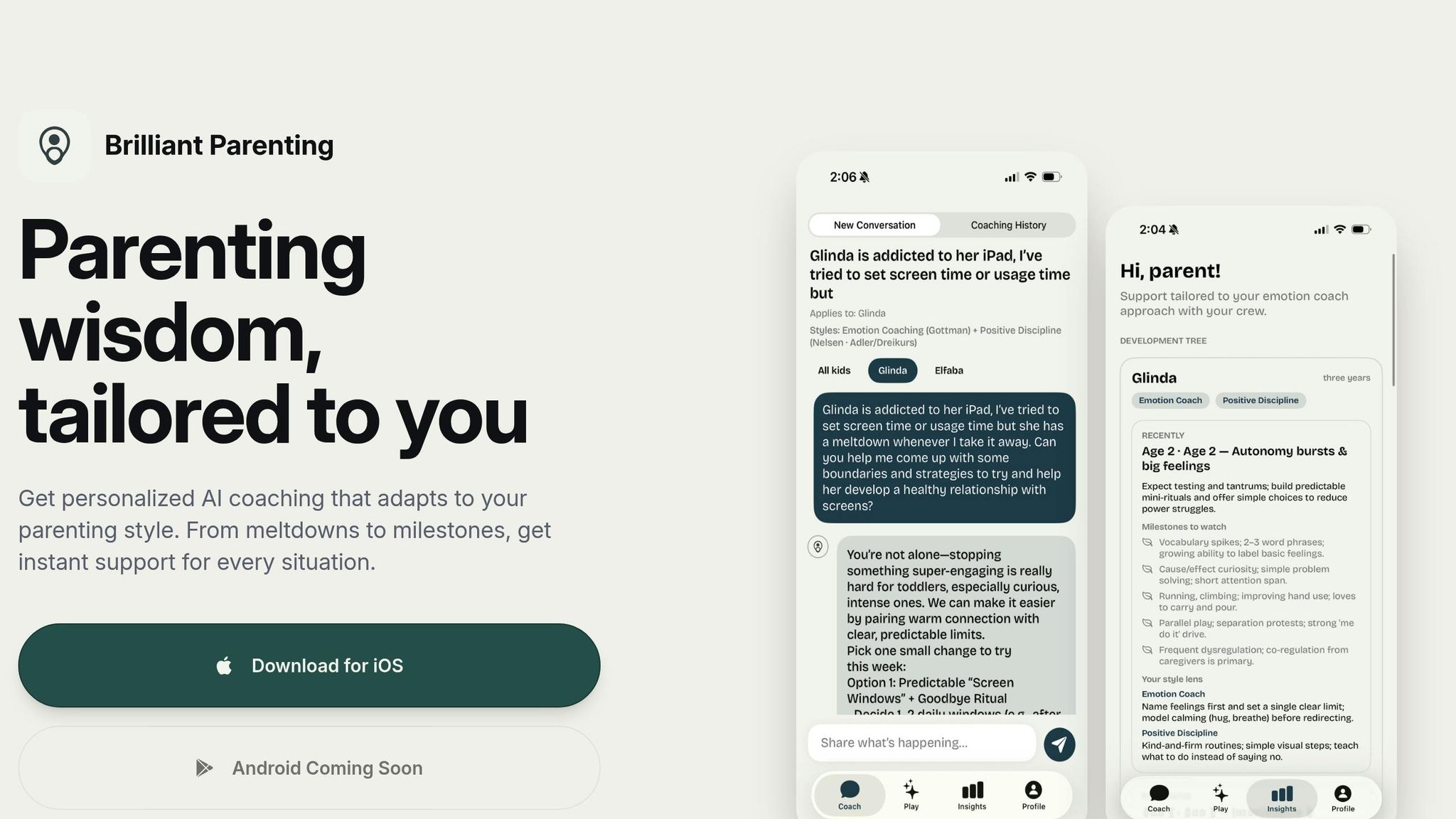
Keeping CPS consistent can be challenging, especially with multiple children or complex family dynamics. That’s where tools like Brilliant Parenting come in, offering personalized AI coaching to support your efforts.
This platform provides practical, evidence-based advice tailored to your parenting style and family needs. Whether you lean toward a more structured approach or prefer gentle parenting, the guidance helps you integrate CPS into your daily life seamlessly.
You can also access support anytime. If a family meeting doesn’t go as planned or you’re struggling to mediate a disagreement, the platform offers immediate, personalized strategies. Its multi-child support feature is especially helpful for navigating the unique needs and personalities of each child.
Another benefit is the progress tracking feature, which lets you monitor your children’s growth in problem-solving skills. This can help you gradually introduce more complex challenges as they gain confidence and independence. Whether it’s resolving major conflicts or maintaining everyday routines, Brilliant Parenting provides the tools to keep CPS on track.
Adapting CPS for Different Backgrounds
CPS works across a wide range of family dynamics, adapting to different cultural, linguistic, and socioeconomic contexts.
For families that emphasize respect for elders or hierarchical decision-making, CPS can be framed as “seeking wisdom from everyone” while maintaining that parents have the final say. This approach honors traditional values while still engaging children in the problem-solving process.
Language matters too. If English isn’t your family’s primary language, have these discussions in the language that feels most natural. Emotional nuances and cultural concepts often come through more clearly in your native tongue, leading to better understanding and collaboration.
For families with strong religious or spiritual values, CPS can align beautifully with teachings about compassion, understanding, and working together. You might incorporate practices like prayer or meditation into your problem-solving sessions to create a meaningful and unified approach.
Finally, socioeconomic factors can shape the types of challenges your family faces. Whether you’re dealing with financial constraints or an overscheduled household, the principles of CPS remain the same. The focus is on working together to find practical solutions, no matter the circumstances. Whether it’s deciding how to stretch a budget or balancing extracurricular activities, CPS helps families navigate their unique challenges with empathy and teamwork.
Conclusion: The Power of Collaborative Problem-Solving
Collaborative problem-solving (CPS) transforms family conflicts into meaningful opportunities for growth. It doesn’t just address immediate issues – it equips kids with essential life skills like critical thinking, effective communication, and understanding different perspectives. These tools turn everyday challenges into stepping stones for personal and family development.
Start small by focusing on one recurring issue and using the three-step CPS method: active listening, sharing concerns, and co-creating solutions. As you and your children grow more comfortable with this approach, gradually apply it to other aspects of family life. Remember, setbacks are part of the process – they’re opportunities to adjust and improve.
For extra support, consider using Brilliant Parenting’s personalized AI coaching. This platform provides evidence-based guidance tailored to your parenting style and family dynamics. Whether you’re managing sibling conflicts or fine-tuning your problem-solving strategies, it offers tools to help you stay on track.
The moment you see your children actively proposing solutions, you’ll witness the transformative impact of CPS. These problem-solving skills lay the groundwork for healthier relationships, academic achievement, and emotional strength that will benefit them for years to come.
FAQs
How can families from different cultural or religious backgrounds use Collaborative Problem-Solving (CPS) effectively?
To make Collaborative Problem-Solving (CPS) effective for families from diverse cultural or religious backgrounds, it’s crucial to honor and integrate their unique values, traditions, and ways of communicating. Culture plays a big role in shaping perspectives on relationships, authority, and how problems are addressed, so understanding these nuances is key to tailoring the approach to each family.
This might mean incorporating culturally relevant scenarios, simplifying or adjusting language for better understanding, and respecting traditions or customs that influence how family members interact. The aim is to keep CPS effective while ensuring it feels relevant and meaningful for families, regardless of their background.
How can I use collaborative problem-solving in everyday family life without it feeling awkward or unnatural?
To make collaborative problem-solving (CPS) a regular part of your family life, try weaving it naturally into your everyday interactions. Pick a calm moment and a cozy spot to talk about any challenges, making sure everyone feels listened to and respected. Keep in mind that your child usually means well – this perspective can help you approach the discussion with more empathy and patience. For sibling disagreements, bring everyone together to brainstorm solutions as a team. This approach not only encourages cooperation but also builds understanding among family members. By keeping the process straightforward and consistent, CPS can easily become a rewarding habit for your household.
How does collaborative problem-solving help kids build lasting skills compared to traditional discipline?
Collaborative problem-solving (CPS) is all about equipping kids with key life skills like effective communication, managing emotions, and thinking critically. Instead of relying on traditional discipline methods that often focus on quick compliance, CPS encourages children to take an active role in overcoming challenges. This helps them build independence and resilience along the way.
By digging into the underlying causes of behaviors and working together to create solutions, CPS fosters a sense of accountability while also strengthening the bond between parents and children. It’s not just about resolving issues in the moment – it’s about giving kids the tools they need to face future challenges with confidence.