
What builds emotional resilience in kids? Research highlights that parenting styles play a major role. Emotional resilience refers to a child’s ability to manage emotions, cope with stress, and recover from setbacks. Kids with higher resilience handle challenges better and are less likely to face long-term mental health issues like anxiety or depression.
Key findings from the article:
- Authoritative parenting is the most effective style for fostering emotional resilience. It combines warmth, clear boundaries, and open communication.
- Kids raised with authoritative parenting develop better emotional regulation, problem-solving, and social skills.
- Other parenting styles – authoritarian (strict) and permissive (lenient) – can hinder emotional growth by either suppressing emotional expression or lacking structure.
- Emotional resilience is also influenced by schools, friendships, and community connections. Supportive environments and relationships outside the home reinforce these skills.
Practical tips for parents:
- Validate your child’s feelings and model emotional regulation.
- Encourage problem-solving instead of offering immediate solutions.
- Maintain consistent routines and set clear, empathetic boundaries.
- Regular emotional check-ins help kids articulate and process their feelings.
Support tools like Brilliant Parenting offer personalized strategies to help parents build emotional resilience in their children through everyday interactions.
Resilience Video Pt. 2 – Parenting Style and the Emotional Brain
Authoritative Parenting and Emotional Resilience
When it comes to raising emotionally resilient children, authoritative parenting stands out as a highly effective approach. This style blends warmth and support with clear boundaries, creating an environment where kids feel secure enough to take emotional risks and grow from their experiences.
Main Features of Authoritative Parenting
Authoritative parenting finds the sweet spot between being responsive and maintaining high expectations. It creates a home where children feel valued, yet boundaries are firmly in place. This is a stark contrast to permissive parenting, which often lacks structure, or authoritarian parenting, which leans too heavily on control.
At its core, authoritative parenting is built on warmth and emotional availability. Parents actively listen to their children, validate their feelings, and show genuine interest in their lives. For example, if a child comes home upset, an authoritative parent will acknowledge the child’s emotions and help them process what happened, rather than dismissing their feelings or immediately offering solutions.
Open communication is another hallmark of this style. Children are encouraged to voice their opinions and participate in family discussions. Parents take the time to explain the reasoning behind rules, fostering trust and helping kids develop critical thinking skills.
Clear boundaries, paired with flexibility, define the structure of authoritative parenting. Rules are set for essential matters like safety and responsibility, but they are also adjusted as children grow. For instance, a 10-year-old may have a strict bedtime on school nights but enjoy more flexibility on weekends, balancing the need for rest with growing independence.
Encouraging independence is another key element. Authoritative parents allow children to take on more responsibilities as they mature, offering guidance without stepping in to solve every problem. These practices not only shape the parenting style but also set the stage for emotional resilience.
How Authoritative Parenting Builds Emotional Strength
Research consistently links authoritative parenting to better emotional health in the long term. This approach equips children with the tools they need to handle stress and challenges effectively.
By modeling calm and composed responses, parents teach children how to regulate their emotions. Instead of being overwhelmed by frustration, kids learn to pause, reflect, and apply coping strategies.
This method also strengthens problem-solving skills. Parents encourage children to think critically about situations, explore possible solutions, and build confidence in their ability to tackle challenges independently.
Consistent praise for effort plays a crucial role in boosting self-esteem. Recognizing progress, rather than just results, nurtures internal motivation and helps children bounce back from setbacks with resilience.
Social skills naturally develop in this environment. Children observe and practice respectful communication and healthy boundary-setting at home, which translates into positive interactions with peers and adults.
The benefits of authoritative parenting extend far beyond childhood. Kids raised in such environments often experience lower rates of anxiety and depression, perform better academically, and build healthier relationships. They are also more likely to seek help when needed and less likely to engage in risky behaviors during adolescence.
Ultimately, emotional resilience is cultivated through day-to-day interactions. Children thrive when they feel consistently loved, understand expectations, and have opportunities to practice emotional and social skills in a supportive setting. This steady foundation prepares them to face life’s challenges with confidence and strength.
Comparing Different Parenting Styles and Their Effects
Parenting styles play a crucial role in shaping how children handle emotions, cope with stress, and interact with others. The chart below breaks down the differences between these styles and their impact on emotional well-being.
Parenting Style Comparison Chart
Here’s a quick look at how various parenting approaches affect emotional intelligence, stress management, behavior, and self-esteem:
| Parenting Style | Emotional Intelligence | Stress Management | Behavioral Outcomes | Self-Esteem Development |
|---|---|---|---|---|
| Authoritative | Helps children identify and express emotions in a healthy way | Encourages effective coping and stress-handling skills | Promotes self-discipline, cooperation, and accountability | Builds confidence through personal effort and growth |
| Authoritarian | Focuses on obedience, often stifling emotional expression | Can lead to internalized stress and anxiety | Produces compliance but limits independent thinking | Tends to result in lower self-esteem tied to external approval |
| Permissive | Offers warmth but lacks consistent emotional guidance | May create challenges in managing frustration and stress | Can lead to impulsivity and difficulty setting boundaries | Develops self-esteem that may struggle under criticism |
This chart highlights how each parenting style influences emotional development. For example, authoritarian parenting enforces strict rules that can suppress emotional expression, while permissive parenting provides warmth but often lacks structure. On the other hand, authoritative parenting strikes a balance, offering emotional support alongside clear expectations. This approach helps children develop "earned security", where they feel confident in their relationships and better equipped to face life’s challenges.
What Research Shows About Parenting and Emotional Health
Studies consistently show that parenting styles have a profound impact on children’s emotional growth. Research reveals that children who experience both nurturing care and consistent boundaries tend to develop stronger coping mechanisms, healthier stress responses, and more secure relationships. Findings from neuroscience also suggest that supportive and structured environments help develop brain regions responsible for emotional regulation and decision-making.
Long-term studies further emphasize these connections, showing that individuals raised with an authoritative style often report greater life satisfaction and stronger social connections as adults. This evidence underscores how balanced parenting not only shapes childhood development but also lays the foundation for emotional health and resilience throughout life.
sbb-itb-e558fb0
Other Factors That Build Emotional Resilience
While parenting creates the foundation, other experiences play a big part in shaping emotional resilience. Schools, friendships, and community connections all contribute to strengthening a child’s ability to handle life’s challenges, often complementing or balancing what happens at home.
How Schools and Teachers Help
Teachers and school environments have a major influence on building emotional resilience. A supportive classroom gives kids a safe space to express emotions, deal with setbacks, and navigate conflicts with their peers.
Programs focused on Social and Emotional Learning (SEL) help kids identify and manage their emotions. These initiatives teach that feelings are natural and provide tools to cope with obstacles effectively.
Supportive schools also foster resilience by offering calm, structured spaces, clear routines, and staff trained to recognize signs of emotional distress. Teachers who stay composed during tough situations set an example for students, showing them how to manage their own emotions.
Consistent boundaries and expectations enhance this sense of security. Schools that enforce rules with care and compassion reflect the same authoritative parenting style that research links to strong emotional resilience.
But it doesn’t stop at school. Friendships and community connections play a big role, too.
Friends and Community Support
Beyond structured environments, friendships and community ties are essential for building resilience. Through peer relationships, kids learn to handle social conflicts, develop empathy, and find a sense of belonging outside their family.
Even one close friendship can make a huge difference. These meaningful connections provide a space for kids to practice emotional skills, like sharing feelings, resolving disagreements, and supporting others.
Community involvement expands this support system further. Youth sports teams, religious groups, neighborhood activities, and extracurricular programs offer kids opportunities to connect with caring adults and peers beyond their immediate circle. These interactions often become even more important during adolescence, as teens naturally lean more on their peer networks.
When teens feel connected to their community – whether through volunteering, mentorship programs, or group activities – they tend to show greater emotional stability and make healthier choices when faced with challenges.
The variety of relationships a child experiences also matters. Interacting with people from different backgrounds, age groups, and perspectives helps kids develop more flexible thinking and problem-solving abilities. They come to understand that there’s no single way to handle tough situations and that seeking help from various sources is both normal and beneficial. This diversity in relationships complements the emotional foundation laid by authoritative parenting, creating a more well-rounded and resilient individual.
Practical Ways Parents Can Build Their Child’s Emotional Resilience
Helping children develop emotional resilience happens through everyday interactions that teach them to understand and manage their feelings. These strategies tie into the principles of authoritative parenting, equipping kids with tools to handle challenges and emotions effectively.
Parenting Strategies
Start by validating your child’s feelings. Acknowledging emotions helps children feel understood and accepted, even when their behavior needs to change. It’s a simple but powerful way to show that all feelings are okay, even if some actions aren’t.
Model emotional regulation by sharing your own coping strategies out loud. For example, during a stressful moment, you might say, "I’m feeling frustrated, so I’m going to take a few deep breaths and think before I act." You can also use books, movies, or everyday situations to talk about emotions and how to handle them, especially when your child is calm.
Make daily emotional check-ins a habit. Instead of just asking, "How was school?" try questions like, "What was the best part of your day?" or "Was there anything that felt hard?" This normalizes conversations about feelings and helps children articulate their emotions.
Encourage problem-solving by asking questions rather than jumping in with solutions. When your child faces a challenge, ask, "What do you think might help?" or "What are some options we could try together?" This builds their confidence and teaches them to approach problems independently.
Stick to consistent routines during stressful times. Predictability provides a sense of security when life feels uncertain. For example, maintaining bedtime rituals or creating special ways to reconnect after tough days can be comforting anchors for children.
Set clear boundaries with warmth. Research on authoritative parenting shows that kids thrive when they understand expectations and feel supported. Explain the "why" behind rules and, when appropriate, involve them in creating family guidelines. This balance of structure and empathy fosters trust and cooperation.
These strategies provide a solid foundation for nurturing emotional resilience, but putting them into practice can sometimes feel overwhelming. That’s where additional tools can make a difference.
How Brilliant Parenting Can Help
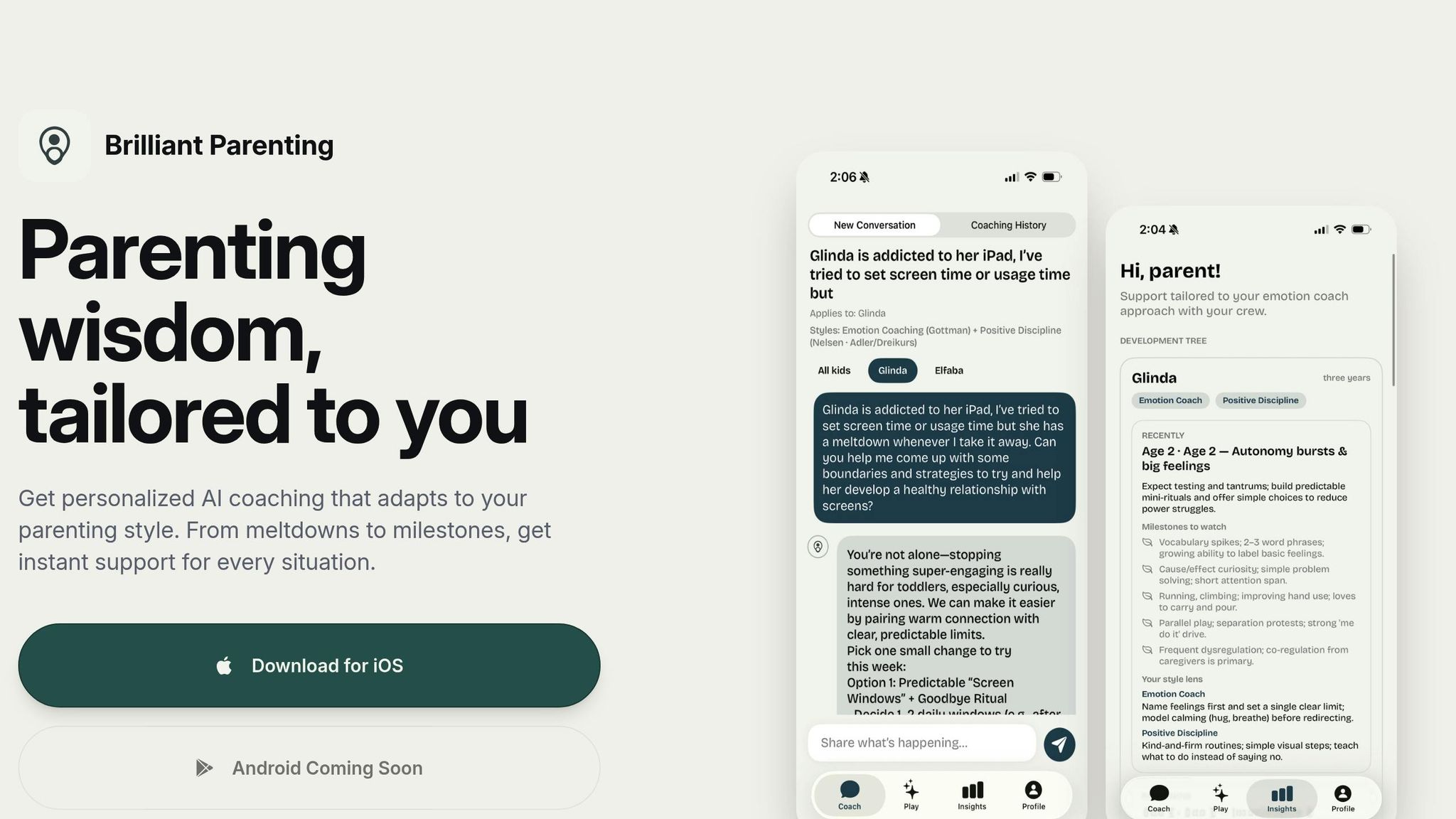
For parents looking to implement these strategies more effectively, Brilliant Parenting offers personalized, research-backed support tailored to your family’s needs.
The platform begins with an onboarding quiz to identify which of seven parenting styles aligns with your approach. From there, it provides customized advice to address specific challenges – whether it’s managing frequent emotional outbursts, boosting a shy child’s confidence, or navigating big life changes.
What sets Brilliant Parenting apart is its 24/7 availability. Let’s say your child is having a meltdown on a Tuesday evening; instead of waiting for a class or appointment, you can access practical scripts and strategies immediately. This ensures you respond in ways that nurture emotional growth, not just manage the moment.
The platform also includes a library of play ideas, connecting emotional learning with fun activities. This helps children practice resilience skills in positive settings, not just during conflicts. Additionally, the development tracking feature allows you to spot patterns in your child’s emotional growth, celebrating progress that might otherwise go unnoticed.
For families with more than one child, the multi-child support feature tailors recommendations to each child’s personality and needs. After all, what works for a sensitive 6-year-old might not be as effective for a bold and independent 9-year-old.
Finally, the platform’s evidence-based guidance ensures that every strategy aligns with the latest research on emotional development, giving you the confidence that you’re equipping your child with skills they’ll use for a lifetime.
Key Points for Parents
To help children develop emotional resilience, there are a few important strategies to keep in mind. Studies highlight that authoritative parenting – a combination of warmth and clear boundaries – plays a crucial role in fostering resilience. This approach teaches kids self-regulation while helping them understand and respect consequences. When parents consistently validate their children’s emotions while maintaining boundaries, it strengthens their ability to manage emotions effectively.
Support doesn’t stop at home. A child’s ability to bounce back from challenges is also shaped by consistent encouragement at school, in friendships, and within community networks. These environments work together to reinforce coping skills and build confidence.
Taking time for regular emotional check-ins during calm moments can make a big difference. These conversations not only help kids process their feelings but also prepare them to handle bigger emotional challenges. When parents model healthy coping mechanisms – like using deep breathing to manage stress – children naturally learn by observing and practicing these strategies themselves. Over time, this process equips them with a personal toolkit for managing emotions.
It’s important to remember that building emotional resilience isn’t a one-and-done lesson. Kids need repeated chances to practice these skills in a safe and supportive setting before they can use them confidently in tough situations.
For parents looking for extra support, Brilliant Parenting offers structured, personalized guidance to incorporate these strategies into everyday routines.
FAQs
How does authoritative parenting help children build emotional resilience?
Authoritative parenting strengthens emotional resilience by blending firm boundaries with the encouragement of independence. Kids raised with this approach tend to feel secure in their surroundings while also being given the space to explore and make their own choices.
This style places a strong emphasis on open communication and validating emotions, which helps children build problem-solving skills, boost their self-confidence, and learn how to manage their emotions effectively. By creating a nurturing yet empowering environment, authoritative parenting prepares children to tackle challenges with confidence and flexibility.
How do schools and communities support authoritative parenting in building emotional resilience in children?
Schools and local communities play a key role in amplifying the benefits of authoritative parenting by creating environments that nurture emotional resilience in children. When kids have access to safe and supportive spaces, they can develop social skills, tackle challenges, and grow their confidence – perfectly aligning with the balanced and nurturing style of authoritative parenting.
Initiatives like mentorship programs, extracurricular activities, and emotional learning classes in schools help kids learn critical skills like problem-solving, empathy, and self-control. Beyond the classroom, community resources such as youth groups or neighborhood events provide opportunities for positive peer connections and a sense of belonging, further boosting their emotional adaptability and growth.
What are some practical ways parents can use authoritative parenting to help their child build emotional resilience?
Parents can help their children build emotional resilience by using authoritative parenting techniques. Begin by establishing clear, consistent rules and explaining why those rules exist. This not only sets boundaries but also creates a sense of security for your child.
Make room for open communication by actively listening to what your child has to say. Involve them in decisions, whether it’s about setting goals or discussing expectations. This approach nurtures their confidence, strengthens problem-solving abilities, and encourages a sense of responsibility. Striking the right balance between warmth and structure is essential for supporting your child’s emotional development and resilience.