
Parents play a critical role in teaching kids how to manage their emotions. Children learn emotional regulation by observing how their parents handle stress, disappointment, and frustration in everyday situations. For instance, when a parent calmly addresses a problem instead of reacting impulsively, it models healthy coping skills. These lessons are reinforced through consistent emotional support, validation of feelings, and teaching practical tools like naming emotions or calming techniques.
Key takeaways:
- Kids mimic parental behavior: Children learn emotional responses by watching how parents react to challenges.
- Validation matters: Acknowledging a child’s feelings helps them feel understood and teaches emotional awareness.
- Practical tools help: Techniques such as deep breathing, naming emotions, and problem-solving are essential.
- Parent-child bonds are crucial: A secure, responsive relationship builds emotional safety and resilience.
What Is Emotional Regulation in Children
Defining Emotional Regulation
Emotional regulation is a child’s ability to identify, understand, and handle their emotions in healthy ways. Think of it like a thermostat for feelings – it helps adjust emotional intensity when things feel overwhelming.
When kids can regulate their emotions, they recover from setbacks, calm themselves when upset, and express their needs without resorting to tantrums. It’s not about ignoring feelings or always being cheerful. Instead, it’s about recognizing that emotions are temporary and figuring out how to manage them effectively.
This skill develops over time as the brain matures. For example, toddlers often have big reactions – like crying over a broken cracker – because their prefrontal cortex, the part of the brain that helps with decision-making, isn’t fully developed yet.
As children grow, they learn to pause before reacting, think through their options, and respond in more constructive ways. For instance, instead of lashing out when frustrated, they might ask for help or use words to explain how they’re feeling.
Mastering emotional regulation early on has lasting benefits. It helps kids build stronger relationships, perform better in school, and bounce back from challenges. It also teaches them that emotions are signals to pay attention to, not threats to avoid. A secure bond with a parent or caregiver plays a big role in helping kids develop this crucial skill.
How Parent-Child Bonds Matter
While individual abilities are important, the relationship between a parent and child is key to emotional growth. The quality of this bond directly influences how well a child learns to manage their feelings. A secure attachment, formed through consistent and responsive caregiving, lays the groundwork for healthy emotional development.
When you consistently meet your child’s needs, they learn to trust that the world is a safe place. This sense of security helps them explore their feelings without fear of being overwhelmed or left to handle things alone. Children with secure attachments are more likely to seek comfort when upset and are open to guidance when learning new ways to cope.
Your home’s emotional climate also plays a big role. In families where emotions are openly acknowledged and discussed, kids learn that all feelings are okay – even if certain behaviors aren’t. They understand that being angry doesn’t mean they’re unlovable and that sadness is something they can work through with support.
On the flip side, when emotions are dismissed, criticized, or punished, children often struggle. They might hide their feelings to avoid conflict or act out because they haven’t been taught healthier ways to express themselves.
What matters most are the small, everyday moments. When you stay calm during your child’s meltdown, validate their feelings while setting boundaries, or help them solve a problem, you’re teaching them how to handle emotions one step at a time. These repeated interactions show them that feelings are manageable and that they can rely on you to help navigate tough times.
The parent-child bond also provides a safe space for kids to explore their emotions. They need to feel confident that they can express their full range of feelings without losing your love or support. This safety net allows them to practice regulating emotions in a low-pressure setting before they encounter bigger challenges out in the world.
How Children Learn from Parents’ Emotional Responses
Children Learn by Watching
Kids are like emotional sponges – they soak up everything they see and hear from the adults around them. From how you react to a traffic jam to how your tone shifts when you’re upset, your child is paying attention. These moments become their guide for handling life’s ups and downs.
Here’s the interesting part: when children see someone experiencing emotions, their brain’s mirror neurons activate. This means they don’t just observe your feelings – they actually experience a version of them. So, if you slam a door when you’re stressed, your child might learn that anger equals physical outbursts. On the flip side, if you take a deep breath and speak calmly, they see that conflicts can be handled with patience.
Even subtle shifts in your tone – like the difference between a sharp "Fine!" and a warm "That’s okay" – teach them about the intensity and expression of emotions. They pick up on these nuances, learning that how you express a feeling can be just as important as the feeling itself.
Your reactions to stress are especially powerful teaching moments. If you tend to snap at others, rush around, or shut down when overwhelmed, your child may adopt these same habits when they face challenges at school or with friends. And it’s not just about words – your body language speaks volumes, too. Whether it’s pacing when anxious, avoiding eye contact during tough conversations, or using hand gestures to explain something, your child is taking notes.
These everyday moments highlight behaviors worth modeling intentionally.
What Behaviors to Show Your Child
One of the most impactful skills you can model is pausing before reacting. When your child sees you take a moment to gather your thoughts – whether by counting to five, taking a deep breath, or saying, "Let me think about this for a second" – they learn that immediate reactions aren’t always the best choice.
Naming your emotions out loud is another powerful teaching tool. Instead of just acting frustrated, you could say, "I’m feeling really overwhelmed because I have so much to do right now." This not only helps your child understand that emotions have names but also normalizes talking about them. Be specific – use words like "disappointed", "worried", or "excited" rather than vague terms like "good" or "bad."
Demonstrating healthy outlets for intense emotions gives your child practical strategies they can use. For example, they might see you go for a walk when you’re angry, call a friend when you’re sad, or do jumping jacks to shake off anxiety. These actions show that emotions need an outlet – and that there are constructive ways to handle them.
When you make mistakes, apologizing can be a powerful lesson. If you lose your temper and yell, going back later to say, "I’m sorry I raised my voice. I was feeling stressed, but that wasn’t okay", teaches your child that it’s okay to mess up as long as you take responsibility and make amends. This models emotional maturity and accountability.
Active listening is another behavior worth modeling. When your child is upset, putting down your phone, making eye contact, and reflecting back what they’re saying shows them how to be present with someone’s emotions. This teaches them that feelings deserve attention and that listening is a meaningful way to show care.
Finally, problem-solving out loud can help your child see that emotions often point to issues that can be addressed. For instance, if you’re worried about something, you might say, "I’m concerned about this situation, so I think I’ll talk to someone who might have advice." This shows them that emotions don’t have to create chaos – they can guide thoughtful actions instead.
Daily Steps Parents Can Take
Managing Your Own Emotions First
Before helping your child navigate their emotions, it’s essential to check in with your own. How you handle your feelings sets the tone for your interactions. If you’re feeling drained or overwhelmed, it’s much harder to guide your child through their emotional ups and downs.
Start by recognizing what triggers your stress. Is it the constant whining, the clutter of toys, or the pressure of running late? When you sense tension building, try the 4-7-8 breathing technique: inhale for 4 counts, hold for 7, and exhale for 8. This simple exercise can help calm your nervous system and give you a moment to reset.
If you feel yourself getting heated, say something like, "I need a minute to calm down", and step away briefly. This isn’t about avoiding your child – it’s about showing them how to handle strong emotions in a healthy way.
Also, don’t underestimate the impact of basic needs. Hunger, fatigue, or dehydration can make emotional regulation harder. Stay hydrated, eat well, and take short breaks when you need them.
Practicing mindfulness can also make a big difference. Take a moment to notice what you’re feeling – whether it’s frustration, sadness, or joy – and observe how it shows up in your body. This small habit helps you respond thoughtfully instead of reacting impulsively, modeling the kind of self-awareness you’d want your child to learn.
When you manage your emotions effectively, you’re better equipped to understand and support your child’s feelings.
Accepting Your Child’s Feelings
One of the best things you can do for your child is to show them that all feelings are okay, even if certain behaviors aren’t. Acknowledging their emotions while gently guiding their actions is key.
Validation doesn’t mean agreement. For example, if your child is upset because they can’t have ice cream for breakfast, you might say, "You’re really disappointed that you can’t have ice cream right now. That’s a big feeling." You’re not saying ice cream for breakfast is a good idea, but you’re letting them know their disappointment is valid.
Avoid dismissive phrases like "You’re fine" or "Stop crying." Instead, reflect what you’re observing: "I see you’re upset – something must be bothering you." These small moments of acknowledgment can make your child feel seen and understood.
Stay curious about their emotions. Ask open-ended questions like, "What was the hardest part about that?" or "Can you tell me more about how you felt?" This helps your child build an emotional vocabulary and feel heard. Often, they don’t need a solution – they just need someone to listen.
When your child is experiencing intense emotions, match their energy with a calm presence. If they’re yelling, don’t yell back, but don’t whisper either. Speak in a steady, firm tone that shows you’re in control and capable of handling their big feelings. This reassurance creates a safe space for them to express themselves.
By accepting their emotions, you teach your child that feelings are normal and worth exploring. For example, you can say, "I understand you’re really angry at your sister, but throwing toys isn’t okay. Let’s figure out a better way to show how you’re feeling." This separates the emotion from the behavior, showing them that emotions are signals, not instructions.
Teaching Children How to Cope
Once your child feels validated, it’s time to equip them with tools to manage their emotions. The goal isn’t to eliminate tough feelings but to help them handle those emotions in constructive ways.
Start by helping your child name their emotions. Use a feelings chart or read books about emotions during calm moments. You can also connect emotions to physical sensations: "Does your stomach feel tight when you’re nervous? Does your heart race when you’re excited?" This kind of body awareness helps kids recognize their emotions before they spiral out of control.
Introduce coping strategies when things are calm, not during a meltdown. Practice deep breathing together or create a "calm down kit" filled with stress balls, coloring supplies, or a favorite stuffed animal. These tools will be familiar and comforting when emotions run high.
After the storm has passed, have a problem-solving conversation. Ask questions like, "What could we do differently next time?" or "What might help you feel better if this happens again?" Let your child brainstorm ideas – they’re often more invested in solutions they come up with themselves.
Role-playing can also be a great teaching tool. Act out scenarios like losing a game, making a mistake, or dealing with a canceled playdate. This gives your child a chance to practice handling emotions in a low-pressure setting, building their confidence for real-life situations.
Finally, create family rituals around emotional check-ins. During dinner, everyone could share one feeling from their day, or you could ask bedtime questions like, "What was the best part of your day? What was the hardest?" These regular conversations make emotions a normal topic, giving you insight into your child’s inner world while helping them develop lifelong emotional skills.
Solving Common Problems
Handling Your Own Stress and Triggers
Life can feel like a juggling act when you’re balancing work deadlines, household responsibilities, and your child’s emotional needs. Parenting can push you to your limits, and it’s easy to lose your cool when everything piles up. That’s why it’s so important to recognize your own stress patterns and have a plan in place before things boil over.
Start by paying attention to early warning signs like tense shoulders, a clenched jaw, or a racing heart. When you notice these, try quick resets – take a short walk, do a few jumping jacks, or even send a supportive text to a friend. These small actions can help you reset your nervous system and regain control when parenting feels overwhelming.
Be kind to yourself and set realistic expectations. No one can be perfect all the time, and your child doesn’t need you to be. In fact, they learn more from watching you handle mistakes with grace than from seeing you strive for an unattainable standard. If you slip up, own it. Apologize and make amends right away – it’s a powerful lesson for your child about accountability.
Taking care of your basic needs – like getting enough sleep, eating well, and taking breaks – isn’t selfish; it’s necessary. When you’re tired, hungry, or stretched too thin, keeping your emotions in check becomes much harder. Prioritizing your well-being helps you show up as the parent your child needs.
If anger, anxiety, or other intense emotions feel like a constant struggle, consider reaching out to a therapist or counselor. Even a few sessions can provide you with tools to better manage your emotions, which benefits not just you but your entire family.
Staying Consistent with Emotional Responses
Once you’ve got a handle on your stress, the next step is maintaining consistent emotional responses. Children thrive on predictability, especially when it comes to how their parents react. If your responses vary wildly from day to day, it can leave your child feeling confused and unsure of what to expect. Consistency helps them feel secure and gives them the freedom to explore their own emotions.
Consistency doesn’t mean suppressing your emotions. It’s about responding in ways that align with your values, even when you’re stressed. For example, if you usually stay calm when your child spills something, aim to use that same tone – even on tough days.
Consider creating family emotional rules that everyone can rely on. Simple guidelines like "We don’t yell when we’re angry", "It’s okay to cry when we’re sad", or "We take breaks to calm down" set clear expectations. When these rules are consistent, your child knows what’s acceptable, no matter the situation.
Pay attention to patterns in your own emotional energy. Many parents notice they’re more patient in the morning but struggle later in the day. If you know certain times are harder for you, plan ahead – schedule easier activities or ask for extra help during those moments.
And when you do have an off day and react differently, acknowledge it with your child. For example, you might say, "I was grumpier than usual today because I didn’t sleep well. That’s not your fault, and I’ll try to do better tomorrow." This teaches your child that emotions are normal and shows them how to take responsibility for their own actions.
Build routines around emotional check-ins and problem-solving. Whether it’s a quick chat at dinner or a weekly family meeting, having regular times to talk about feelings helps normalize emotional conversations. It also gives your child a predictable space to share what’s on their mind.
sbb-itb-e558fb0
Supporting Your Child With Emotional Regulation
Using Tools Like Brilliant Parenting
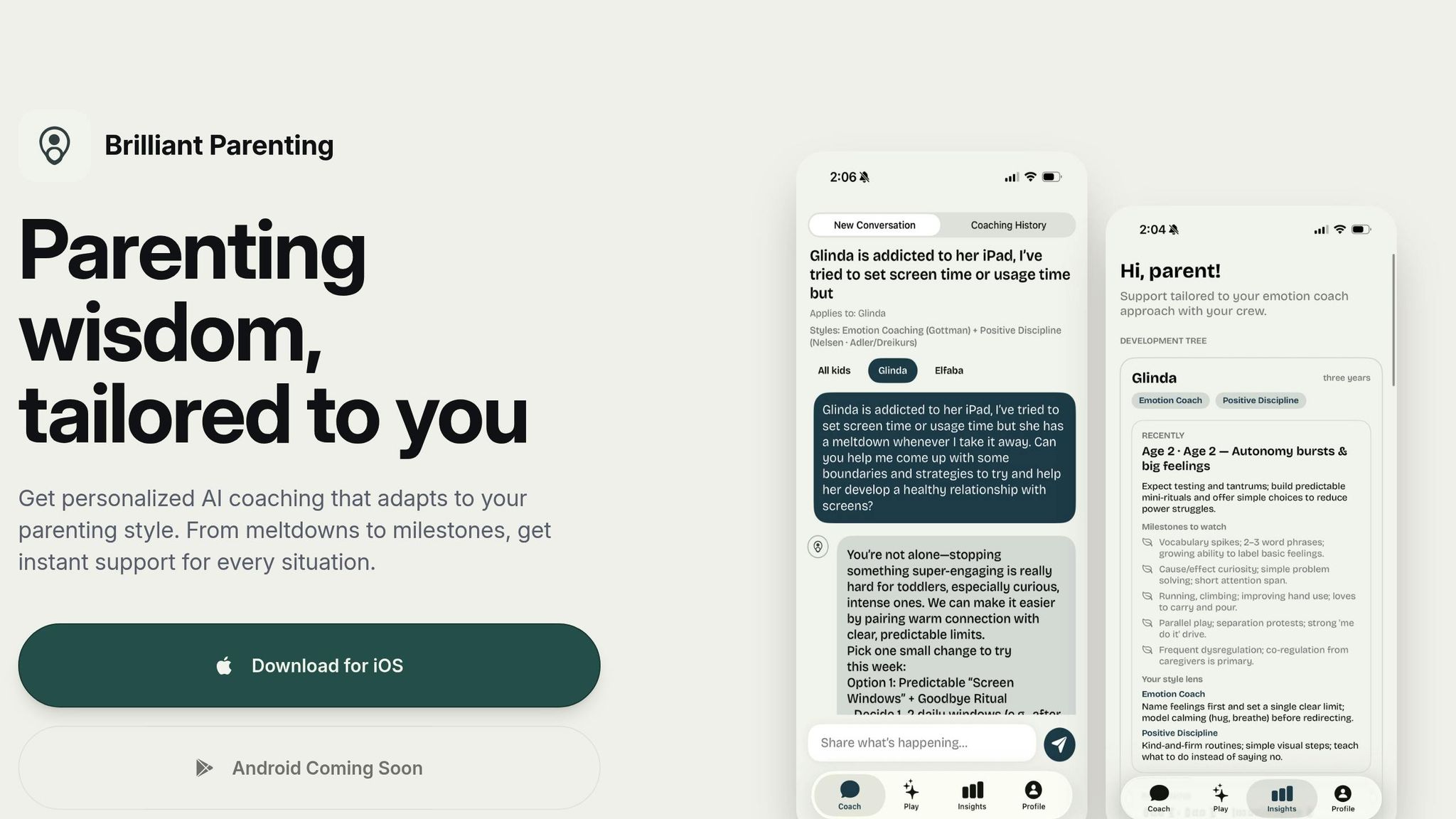
Parenting comes with its fair share of emotional challenges, and even the most patient and composed parents can feel stretched thin at times. That’s where digital tools can step in to provide much-needed support. By integrating tools like Brilliant Parenting into your daily routine, you can gain assistance in managing your emotions while guiding your child through theirs, especially during high-stress periods.
How Brilliant Parenting Supports Parents
Brilliant Parenting takes emotional coaching to the next level with features designed specifically for parents. It offers personalized AI coaching that adapts to your parenting style and your child’s unique needs. By addressing your family’s specific challenges, the platform delivers tailored guidance that aligns with your natural instincts while incorporating proven strategies for emotional growth.
The onboarding process includes a quiz that identifies one of seven evidence-based parenting styles. This ensures the advice you receive feels intuitive and matches your approach, while also introducing techniques that promote emotional development.
With 24/7 availability, the app is there when you need it most. Whether it’s an unexpected meltdown or a tricky emotional moment, you’ll have access to practical scripts and conversation starters. These tools provide ready-to-use, research-backed phrases to help you navigate difficult situations while supporting your child’s emotional needs.
Brilliant Parenting doesn’t stop at offering immediate solutions. It also helps parents track patterns in their child’s emotional development and their own responses. This feature allows you to spot triggers, celebrate progress, and adjust your strategies as your child grows and their needs shift.
Features That Encourage Emotional Growth
The app includes a play ideas library filled with games, crafts, and activities designed to build emotional vocabulary in a natural and engaging way. These activities reinforce the emotional regulation skills you’re teaching, making learning fun and interactive for your child.
Another standout feature is its development tracking tools, which let you monitor milestones like tantrum recovery time, verbal expression of feelings, and success with calming techniques. Seeing measurable progress over time can be incredibly motivating, especially when daily improvements might feel subtle.
For families with more than one child, the app’s multi-child support offers tailored strategies for each child’s unique emotional needs and developmental stage. For example, it can guide you through handling a toddler’s tantrums while also providing advice on helping an older child navigate social challenges. This ensures that your approach is age-appropriate and effective for each child.
The platform also includes practical scripts for common parenting scenarios like bedtime resistance, sibling conflicts, or disappointment over canceled plans. These scripts help you validate your child’s emotions while maintaining boundaries, giving you the confidence to handle tough moments calmly and constructively.
Finally, all the strategies provided are backed by evidence-based research. The app draws on established psychological principles and child development studies, so you can trust that the techniques you’re using will contribute to your child’s long-term emotional well-being.
Together, these features work to enhance the emotional coaching you’re already practicing, making it easier to raise kids who are emotionally resilient and self-aware.
Building Strong Emotional Skills for Life
When you model calm reactions and validate your child’s emotions, you’re helping them develop a toolkit to navigate stress and challenges. Each time you guide them through tough feelings, you’re shaping the way they’ll approach relationships and obstacles throughout their life.
Simple actions, like taking a deep breath before responding, show kids that emotions can be managed. Talking through your own problem-solving process out loud reinforces the idea that working through emotions is a normal and healthy part of life.
Studies back this up: consistent efforts to teach emotional regulation lead to better behavior and academic outcomes. Kids whose parents actively engage in this process often show stronger emotional management, healthier habits, and better relationships. By coaching them through challenges and gradually stepping back, you’re helping them build the inner guidance they’ll rely on as adults.
It’s also important to remember that taking care of yourself isn’t selfish – it’s necessary. Prioritizing your well-being allows you to model healthy emotional regulation for your child.
Teaching your child to pause and think before reacting fosters self-reflection and awareness – skills that will serve them for a lifetime.
For additional support, tools like Brilliant Parenting provide research-backed strategies tailored to your child’s development. Features like progress tracking make it easier to celebrate milestones and adjust your approach, ensuring your emotional coaching grows with your child.
FAQs
How can I support my child in learning emotional regulation if I’m still working on managing my own emotions?
Supporting your child in managing their emotions begins with small, deliberate actions – even if you’re still working on your own emotional skills. Kids often learn by watching, so try to demonstrate calm and constructive ways to handle feelings. For instance, if you’re feeling frustrated, say it out loud: "I’m frustrated right now", and share how you’re dealing with it, like taking a few deep breaths or stepping away for a moment to gather yourself.
Make your home a safe space for emotions by acknowledging your child’s feelings and promoting open conversations. Let them know it’s normal to feel upset and help them explore healthy ways to process those emotions. Keep in mind, the goal isn’t perfection. Your commitment to growing emotionally will have a meaningful impact on your child’s ability to do the same.
How can I validate my child’s emotions without encouraging negative behaviors?
Validating your child’s emotions plays a key role in building trust and helping them learn to manage their feelings. Here’s how you can do this while steering clear of encouraging negative behaviors:
- Recognize their emotions by calmly identifying what they might be feeling. For example, you could say, "It seems like you’re feeling frustrated." This not only shows empathy but also helps them understand and name their emotions.
- Maintain your composure during tough situations. When you stay calm, you’re showing them how to handle emotions in a balanced way. Kids often mirror the emotional responses they see in adults.
- Reinforce positive actions by acknowledging when they express their emotions in a healthy way or try to solve problems constructively. Praising these efforts encourages them to repeat such behaviors.
By validating their feelings and gently guiding them toward better ways of coping, you’re helping them build emotional resilience and navigate their emotions more effectively.
How does a strong parent-child bond help kids manage their emotions, and what can I do to nurture this connection?
A strong bond between parents and children plays a crucial role in helping kids learn how to manage their emotions. When children feel safe and supported, they’re more inclined to trust their emotions and adopt healthy coping strategies. This connection also creates a space for open communication, where kids can share their feelings without fear of being judged – a vital step in building their confidence to navigate emotions.
To strengthen this bond, focus on spending quality time together. Join your child in activities they love, genuinely listen to what they have to say, and demonstrate calm and composed behavior during challenging situations. These small but impactful efforts can deepen your relationship and encourage your child’s emotional development.