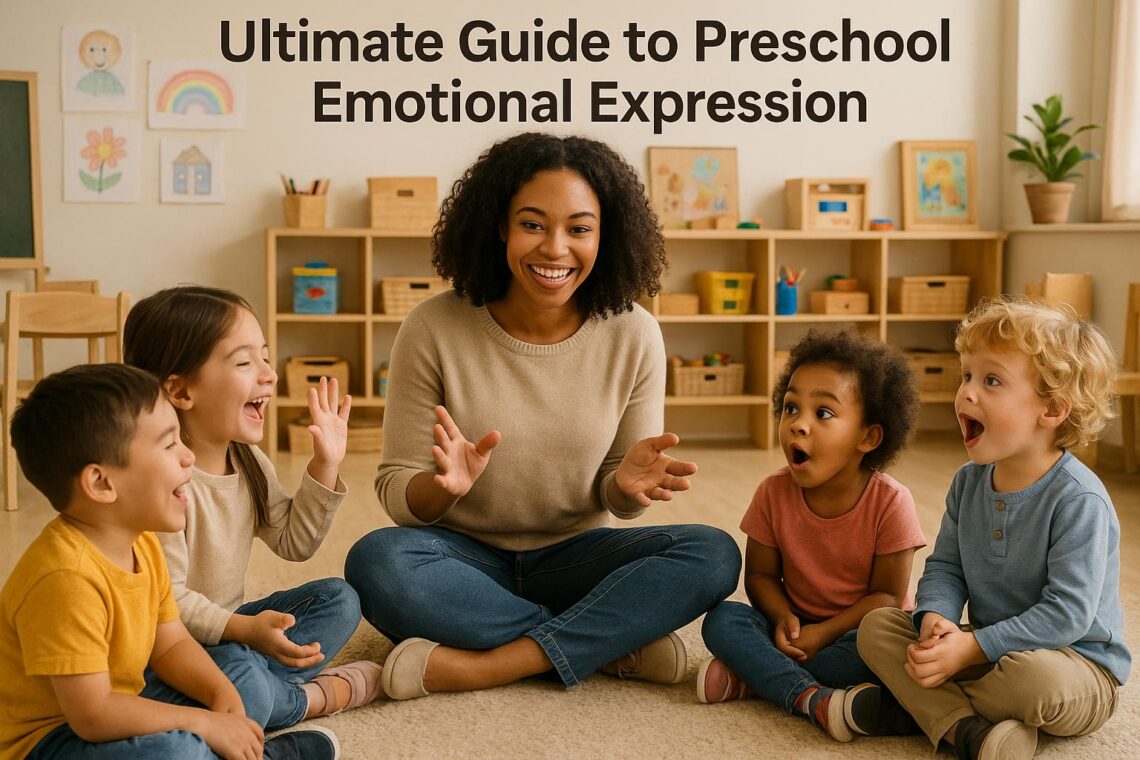
Preschoolers experience big emotions daily – meltdowns over toppled blocks or joy from a butterfly’s flight. These moments are crucial for their emotional development. Between ages 3–5, kids learn to recognize, express, and manage feelings, shaping their ability to handle stress, build relationships, and solve problems.
Here’s what you need to know:
- Emotional milestones include naming feelings, developing empathy, and managing emotions.
- Play helps kids process emotions, from pretend play to physical activities.
- Parental modeling teaches emotional regulation through everyday actions and words.
- Tools like books, games, and routines make learning emotions fun and natural.
3 Activities for Teaching Emotions to Preschoolers and Toddlers
How Emotions Develop in Preschoolers
Understanding how emotions develop in preschoolers can help you respond more effectively during tough moments. Between the ages of 3 and 5, children’s brains go through major changes that influence how they feel, express, and manage their emotions. These shifts are tied to rapid neurological development.
The prefrontal cortex, the part of the brain responsible for decision-making and emotional regulation, is still maturing during these years. This is why a 4-year-old can swing from joy to frustration in seconds. Their emotional reactions are often intense because the brain structures that help control and balance feelings are still a work in progress. Around age 4, children also begin developing theory of mind – the understanding that others have their own thoughts and feelings. This new ability changes how they relate to family members and peers, making interactions more complex.
Key Emotional Milestones for Ages 3-5
Preschoolers hit several emotional milestones that parents can look out for. At age 3, children start recognizing basic emotions like happiness, sadness, and anger in themselves and others. They may use words to express these feelings, though physical reactions like crying or hitting are still common when they’re overwhelmed.
By age 4, their emotional vocabulary grows to include words like frustrated, excited, and disappointed. This is also when empathy begins to take root. A 4-year-old might comfort a crying friend or willingly share a toy to cheer up a peer.
By age 5, children show more advanced emotional skills. They can recognize mixed emotions, such as feeling both nervous and excited about starting kindergarten. They also begin using simple strategies to regulate their feelings, like taking deep breaths when upset or asking for help when they’re stuck.
That said, emotional growth isn’t always steady. Preschoolers might master a new skill one day and struggle with it the next, especially during stressful times, illness, or big life changes.
How Play Helps Children Express Emotions
Play is a powerful tool for helping children navigate their emotions. Through pretend play or role-playing, kids process feelings they might not yet have the words to explain. For instance, when a child plays "doctor" and gives a stuffed animal a shot, they’re likely working through their own fears about visiting the doctor. Or, they might act out a scene where a doll gets angry and then experiment with ways to comfort the doll. These scenarios help children explore cause-and-effect in emotional situations and build problem-solving skills.
Physical play also plays a role in emotional development. Activities like running, jumping, and climbing let kids release built-up energy and stress. Movements like spinning when excited or stomping when frustrated are ways preschoolers naturally regulate their emotions.
Social play, such as playing with peers, teaches kids how to read facial expressions, respond to emotional cues, and resolve conflicts. These interactions are essential for developing empathy and understanding how their actions affect others.
How Culture and Social Settings Shape Emotional Learning
In the United States, cultural values influence how children learn to handle emotions. For example, there’s a strong focus on individual expression and encouraging kids to "use their words" to communicate feelings. This approach helps children verbalize emotions instead of bottling them up.
Family dynamics play a central role in emotional development. When parents openly talk about feelings and demonstrate healthy emotional responses, children tend to develop stronger emotional skills. Preschool and daycare programs often include social-emotional learning activities that teach kids how to identify feelings, cope with challenges, and resolve conflicts.
Gender norms can also shape emotional growth. In some families, boys may be subtly discouraged from expressing certain emotions, while girls might be given more freedom to show their feelings. Similarly, a child’s socioeconomic environment can have an impact. Kids facing stress from financial struggles or family conflict may show different emotional patterns compared to their peers in more stable situations.
Core Emotional Skills Every Preschooler Needs
Helping your preschooler develop emotional skills is a crucial step toward effective communication and building healthy relationships. By focusing on three core abilities, you can equip your child to better understand their feelings, manage emotions, and connect with others. These skills form the foundation for navigating their emotions and forming meaningful bonds.
Teaching Children to Name Their Feelings
Building an emotional vocabulary is the first step in helping children understand their feelings. When kids can label their emotions, they gain a sense of control over their reactions instead of feeling overwhelmed by unrecognized sensations.
Start with the four basic emotions: happy, sad, mad, and scared. These are the emotions preschoolers most often encounter. Use simple, relatable language like, "I see you’re upset because your blocks fell" or "You look scared from that loud noise." This helps them connect physical sensations to words.
Feeling faces charts can be a handy tool for teaching this concept. Place a chart at your child’s eye level that displays various facial expressions paired with emotion words. When your child is struggling to express themselves, guide them by saying, "Can you point to the face that shows how you feel right now?"
Incorporate emotion check-ins into your daily routine. For example, during a car ride, you might ask, "How are you feeling about going to grandma’s house?" or "What did you feel when your friend shared their snack with you?" These small moments make identifying emotions a natural part of their day.
Reading books with emotional themes is another effective way to practice. Pause during storytime to discuss how characters feel. For instance, "Look at the bunny’s face. How do you think he feels when his balloon flies away?" This not only builds vocabulary but also helps children recognize emotions in others.
Helping Children Manage Strong Emotions
Once kids can name their emotions, they need strategies to handle them in a healthy way. Developing self-regulation takes time but becomes easier with practice.
Deep breathing exercises are a simple and effective starting point. Teach them the "smell the flower, blow out the candle" technique: pretend to inhale the scent of a flower (slowly through the nose) and exhale as if blowing out a candle (slowly through the mouth). Practice this when they’re calm so they know how to use it during emotional moments.
Create quiet spaces where your child can reset when feelings become overwhelming. Set up a cozy corner with soft pillows, a favorite stuffed animal, and perhaps a few books. Introduce this space as a calming tool, saying, "I can see you’re frustrated. Would you like to spend some time in your cozy corner?"
For intense emotions, physical outlets can help release pent-up energy. If they’re angry, encourage them to stomp their feet, punch a pillow, or do jumping jacks. For sadness, calming activities like coloring or playing with playdough can be soothing. Match the activity to the energy level of the emotion.
Teach problem-solving language to show them they have options beyond reacting emotionally. For example, if they’re upset because a friend took their toy, guide them with, "What are some things you could do? Could you ask for the toy back, find another toy, or ask a grown-up for help?" This approach builds their confidence in handling challenges.
Building Empathy and Understanding Others
Developing empathy helps preschoolers recognize and respond to the emotions of others. This shift from self-centered thinking to understanding others is key to forming strong friendships.
Encourage emotion spotting in everyday life. If you see someone crying at the grocery store, quietly point it out: "That person looks sad. I wonder if they’re having a hard day." Similarly, during a movie, pause to ask, "How do you think that character feels after getting hurt?" These observations teach kids to notice and understand other people’s emotions.
Ask perspective-taking questions to help them think beyond their own experiences. After a disagreement with a sibling, you might say, "How do you think your brother felt when you took his crayon? What could you do to make him feel better?" These questions encourage them to consider others’ feelings and viewpoints.
Model empathy through your actions. For example, if your child falls and gets hurt, respond with care: "Oh no, you’re hurt! That must feel scary. Let me help you feel better." When they see you consistently respond this way, they’ll start mirroring those behaviors with their friends and siblings.
Encourage acts of kindness to give them tangible ways to practice empathy. Suggest drawing a picture for a sick grandparent, sharing a snack with a friend, or comforting a crying peer. These small gestures show them how their actions can positively impact others.
Use emotional storytelling to help them understand that everyone experiences feelings. Share simple anecdotes from your own childhood, like, "When I was little, I felt nervous on my first day of school too. My tummy felt funny, and I didn’t want my mom to leave." These stories reassure kids that their emotions are normal and relatable.
Practical Ways Parents Can Support Emotional Expression
Supporting your child’s emotional expression isn’t just about big gestures or formal lessons – it’s about the small, everyday moments. As a parent, you’re their first teacher, shaping how they understand and process feelings. By weaving emotional learning into daily interactions, you can help them build skills that last a lifetime.
Showing Children How to Express Emotions
Kids learn a lot by watching how you handle your own emotions. When you model healthy emotional expression, you’re giving them tools to manage their own feelings.
Use "I feel" statements to show emotions are natural and manageable. For example, say, "I feel frustrated by the traffic, so I’m taking deep breaths", or share your excitement: "I feel so happy thinking about our trip to the zoo tomorrow!" These moments show kids how to name and handle emotions.
Demonstrate ways to cope with tough feelings. If you’re stressed about chores, let them see how you manage: "I’m feeling overwhelmed by all this cleaning. I’m going to sit quietly for five minutes, then tackle one room at a time." This teaches them that it’s okay to feel stressed and that there are steps to work through it.
When emotions get the better of you, apologize. If you raise your voice, acknowledge it: "I’m sorry I yelled. I was feeling overwhelmed, but that doesn’t make it okay. Next time, I’ll take a break first." This shows them that everyone struggles with emotions and that it’s important to take responsibility for our actions.
Share stories from your own childhood to help them feel understood. For instance, "When I was your age, I felt nervous about starting kindergarten too. My tummy felt funny, and I didn’t want to leave mommy. But after the first day, I made a friend and felt much better." These stories create connection and normalize their feelings.
Next, let’s dive into some interactive tools that make emotional learning fun and engaging.
Using Books and Games to Teach About Emotions
Books and games offer a playful and safe way to explore emotions without the pressure of real-life situations.
Emotion-focused picture books are great conversation starters. While reading, pause to discuss characters’ feelings: "Look at Max’s face when his mom leaves. How do you think he’s feeling? Have you ever felt that way?" Books like The Way I Feel by Janan Cain or In My Heart by Jo Witek introduce emotional vocabulary and relatable moments.
Turn emotions into a game. Try guessing emotions based on facial expressions or body language. Take turns making faces and guessing: "I’m showing you how I look when I’m really, really excited! Can you guess what I’m feeling?" Keep it lighthearted and fun.
Play emotion charades to connect feelings with physical sensations. Act out emotions like anger with clenched fists or happiness with bouncy movements. This helps kids recognize how emotions show up in their own bodies.
Use a feeling thermometer to gauge the intensity of emotions. Draw a thermometer and ask, "Is your anger at the bottom, like a little mad, or at the top, like volcano mad?" This helps them understand that emotions come in different levels of intensity.
Try emotion sorting activities with photos or drawings. Cut out pictures of faces from magazines and sort them into categories like happy, sad, angry, or scared. Talk about the clues they used: "What about her eyebrows makes you think she’s angry?"
Making Home a Safe Place for All Emotions
To support emotional growth, create a home environment where all feelings are accepted – even when certain behaviors aren’t.
Start by validating emotions before addressing behavior. For example, if your child hits their sibling out of frustration, acknowledge the feeling: "You’re really angry that your brother knocked down your tower. It’s okay to feel mad." Then set boundaries: "But hitting isn’t okay. Let’s think of another way to show you’re upset."
Use language that welcomes emotions. Instead of saying, "Don’t be sad", try, "I see you’re feeling sad. Can you tell me what happened?" This approach acknowledges their emotions without dismissing them. Avoid phrases like "That’s not a big deal" or "You’re being too sensitive", as they can make kids feel unheard.
Incorporate emotional check-ins into predictable routines. At bedtime, ask questions like, "What made you happy today? Was there anything that worried you?" When these conversations become part of daily life, kids feel more comfortable sharing.
Stay calm during emotional outbursts. Your calm presence shows them that big feelings are manageable. Use a steady, low voice and say, "I’m right here with you. These big feelings are hard, but they won’t last forever."
Provide comfort tools around the house. Keep soft blankets, cozy reading nooks, or favorite comfort items accessible. When emotions run high, these can help kids self-soothe.
Finally, celebrate emotional progress. Acknowledge their efforts with encouragement: "I saw how you took deep breaths when you were frustrated with that puzzle. That was a great way to handle it!" Recognizing their growth builds their confidence and reinforces healthy emotional habits.
sbb-itb-e558fb0
Using Brilliant Parenting for Emotional Development Support
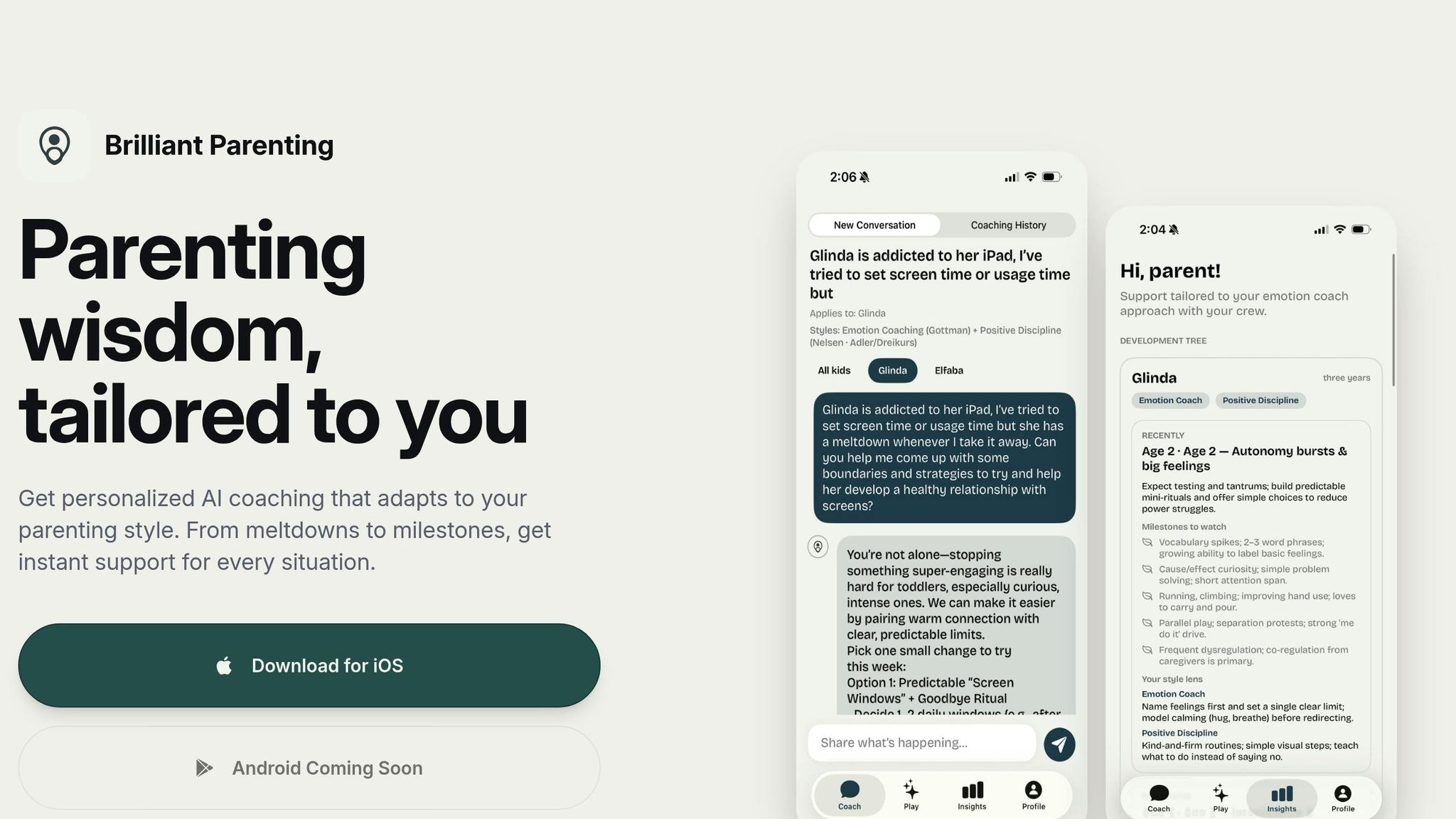
As mentioned earlier, providing steady, research-backed guidance is essential. Brilliant Parenting takes this a step further by offering personalized digital coaching that aligns with your family’s unique needs. It adapts its advice based on your values and your child’s personality, giving you a deeper, more tailored approach to emotional development.
Personalized Advice and Coaching
The journey with Brilliant Parenting starts with a quick onboarding quiz designed to identify your parenting style from seven proven approaches. Based on your answers, the app delivers customized strategies and insights that address your family’s emotional needs. This ensures the guidance feels natural and practical, helping you navigate daily emotional situations with confidence.
Play Ideas and Progress Tracking
To complement your daily routines, Brilliant Parenting introduces engaging, age-appropriate play activities aimed at strengthening emotional skills. The app also includes a development tracking feature, letting you log milestones and spot patterns over time. This is especially useful for families with more than one child, as it helps fine-tune strategies for each child’s growth.
24/7 Emotional Support
Parenting doesn’t follow a schedule, and emotional challenges can pop up anytime. That’s why Brilliant Parenting offers round-the-clock support. Whether it’s a sudden tantrum or an ongoing social issue, the app provides instant, evidence-based advice to help you respond effectively. This constant availability ensures you’re always equipped to nurture your child’s emotional development, no matter the situation.
Solving Common Emotional Problems in Preschoolers
Preschoolers, no matter how well-prepared, often face emotional hurdles as they navigate their early years. These challenges are a natural part of growing up and provide opportunities for children to learn healthier ways to express their feelings. Knowing how to address these moments can make a world of difference in helping your child build essential coping skills. Here are some practical strategies to guide you.
Managing Tantrums and Emotional Meltdowns
Tantrums are a preschooler’s way of expressing emotions that feel too big to handle. Since their coping skills are still developing, your calm response is crucial during these moments.
During a tantrum, safety comes first. If your child is hitting, biting, or throwing things, move them to a safe area where they can’t hurt themselves or others. Avoid trying to reason with them in the heat of the moment – logic often takes a backseat when emotions run high.
Instead, acknowledge their feelings: "I see you’re really upset right now. It’s okay to feel angry." This simple validation helps them feel understood without encouraging the behavior.
Once the tantrum passes, that’s the time to reflect and teach. Help your child put words to their experience: "You felt really frustrated when it was time to leave the playground. It made your body feel all worked up." Then, discuss other ways to handle those feelings in the future, like asking for help, taking deep breaths, or even requesting a hug.
Preventing tantrums is often the best approach. Pay attention to patterns – does your child get cranky when they’re hungry or overtired? Adjust routines to meet their needs, and teach them to recognize their own warning signs. These small adjustments can help build their emotional awareness and resilience.
Helping with Friend Problems and Social Conflicts
Preschoolers frequently encounter social challenges, such as sharing or taking turns. Your role is to guide them in developing the skills to navigate these situations independently.
If your child struggles with sharing, help them understand timing: "Sarah is using the blocks right now. You can have a turn when she’s done." This approach teaches patience and respect for others.
Turn-taking conflicts can also be managed with clear expectations. For example, use a timer to ensure fairness: "Everyone gets five minutes with the special toy." Having set rules can ease tensions and make playtime smoother.
When disagreements arise, encourage problem-solving rather than stepping in to fix everything. Ask questions like, "How do you think your friend felt when that happened?" or "What could you do differently next time?" These conversations help your child develop empathy and problem-solving skills.
Practice specific phrases your child can use during conflicts, such as "I don’t like that" or "Can I have a turn when you’re done?" Role-playing these scenarios at home can prepare them for real-life situations. The more tools they have, the more confident they’ll feel in managing social challenges.
Supporting Children Through Big Changes and Fears
Big transitions and emerging fears are common during the preschool years. These can feel overwhelming for children who thrive on routine, but your steady support can help them navigate these changes with confidence.
Starting preschool or daycare is a significant milestone. Begin preparing weeks in advance by introducing the idea through books, visiting the school building, and talking positively about what to expect. Establish a simple goodbye routine, like a special hug or phrase, to create a sense of predictability.
Moving to a new home can disrupt a preschooler’s sense of stability. Involve them in the process by letting them pack their favorite toys or choose decorations for their new room. Maintaining consistent bedtime routines during this time can provide a comforting anchor.
Fears often emerge around age 4, ranging from monsters under the bed to loud noises or unfamiliar animals. Take these fears seriously and work together on solutions. For example, a nightlight can help with fears of the dark, while practicing "brave poses" can make them feel stronger in scary situations. Gradual exposure also helps – if your child fears dogs, start by looking at pictures, then watching dogs from a distance, and slowly build their comfort.
Separation anxiety can resurface during stressful periods, even if your child previously handled goodbyes well. Use a visual schedule to show when you’ll return, leave a small comfort item with them, and always stick to your promised return time. This consistency builds trust and reassures your child.
Every challenge your preschooler faces is a chance to strengthen their emotional resilience and prepare them for the road ahead. With patience and guidance, you’re helping them develop tools that will last a lifetime.
Supporting Your Preschooler’s Emotional Growth
Helping your preschooler grow emotionally is a journey that unfolds gradually, requiring consistent effort and patience. Every day presents an opportunity to guide them toward better self-awareness and emotional resilience.
Daily emotional check-ins are a simple yet powerful way to connect with your child and encourage self-reflection. For example, during quiet moments like car rides or bedtime, ask questions such as, "What made you smile today?" or "Did anything feel tricky or upsetting?" These brief conversations allow your child to process their feelings and know that their experiences matter to you.
When emotions run high, modeling healthy coping strategies can make a big impact. For instance, if you’re feeling overwhelmed, you might say, "I need a moment, so I’m going to take three deep breaths." This shows your child how to handle strong emotions in a calm and constructive way.
Providing consistent responses to your child’s feelings helps them feel safe expressing themselves. Instead of rushing to fix their problems or dismissing their emotions, acknowledge what they’re going through. A simple, empathetic response like, "That sounds really frustrating" or "I can see why you’d feel upset" can go a long way in validating their experience.
Every child develops emotional skills at their own pace. While some may openly share their feelings through words, others might prefer to express themselves through art, movement, or imaginative play. Pay attention to how your child communicates and adapt your approach to meet them where they are.
Recognizing small wins is another effective way to nurture emotional growth. If your child uses words to express anger instead of acting out or comforts a friend who is upset, take a moment to acknowledge it. Specific praise, like "I saw how you told your sister you were upset instead of yelling – that showed great self-control", reinforces their progress and encourages them to keep practicing these skills.
For additional support, platforms like Brilliant Parenting offer expert advice tailored to your parenting needs. Their personalized AI coaching provides practical tips for navigating emotional milestones and challenges, giving you confidence in your parenting decisions.
It’s important to remember that emotional growth isn’t a straight path. Your child might seem to master a skill one week and struggle with it the next. These ups and downs are normal and provide valuable opportunities for learning and growth.
The emotional foundation you’re building now will benefit your child for years to come. With your patience, consistency, and understanding, you’re equipping them with the tools they need to handle life’s challenges as they grow.
FAQs
How can I support my preschooler in handling big emotions like anger or frustration?
Helping your preschooler handle big emotions starts with showing calm behavior yourself. Kids pick up on how you manage your own feelings, so staying composed sets a powerful example.
Help your child recognize and label their emotions by putting their feelings into words. For instance, you might say, "It seems like you’re feeling frustrated because your block tower fell." This not only helps them make sense of what they’re feeling but also builds their emotional vocabulary.
Encourage them to find positive ways to express their emotions, like drawing, telling stories, or engaging in pretend play. You can also teach simple techniques to manage overwhelming feelings, such as taking deep breaths or counting to five. Above all, foster a safe and nurturing space where they feel free to share their emotions without fear of being judged.
How can I help my preschooler develop empathy?
Helping your preschooler grow in empathy is an important step in their emotional development. One of the best ways to start is by showing kindness and being aware of emotions in your own behavior – kids tend to mirror what they see in adults. Another effective approach is reading stories that explore emotions and different viewpoints, giving them a chance to connect with other perspectives.
You can also try role-playing common scenarios to help them practice recognizing and responding to others’ feelings. Simple activities like sharing toys or lending a hand to a friend are great ways to encourage small acts of kindness. Cooperative games are another fun way to teach teamwork and help them understand how others feel. These everyday moments can make a big difference in helping your child develop empathy.
How do family and cultural influences shape a preschooler’s emotional growth?
Family and societal influences are central to how preschoolers learn to understand and express their emotions. Within families, factors like parenting styles, communication habits, and the level of emotional support provided lay the groundwork for a child’s emotional growth. For instance, when children are raised in a warm and supportive environment, they are more likely to feel secure in expressing their emotions openly.
Broader societal norms also shape emotional expression. In some societies, emotional restraint is valued, while others may encourage more open displays of emotion. These cultural cues teach children what kinds of emotional behaviors are considered acceptable and help them navigate social situations with greater ease.